
Storing, transporting, and processing crops produces large volumes of airborne particulate matter (PM). Potatoes or onions brought in from the field carry soil, which is ground into fine dust as machinery and vehicles move through the warehouse. Grain handling generates similar PM during harvesting, drying, and storage.
Using traditional brooms or high-pressure washers often compounds the problem by stirring up dust, leaving fine particles suspended in the air. This creates serious respiratory risks for employees and can lead to chronic lung diseases.
Furthermore, settled dust accumulates in hard-to-reach areas such as conveyor belts, shelves, ceiling beams, and roof structures. Combined with ambient humidity, this dust promotes mould growth, producing hazardous mycotoxins that can contaminate food and feed, threatening both livestock and consumer safety.

Regular floor cleaning: control dust at the source
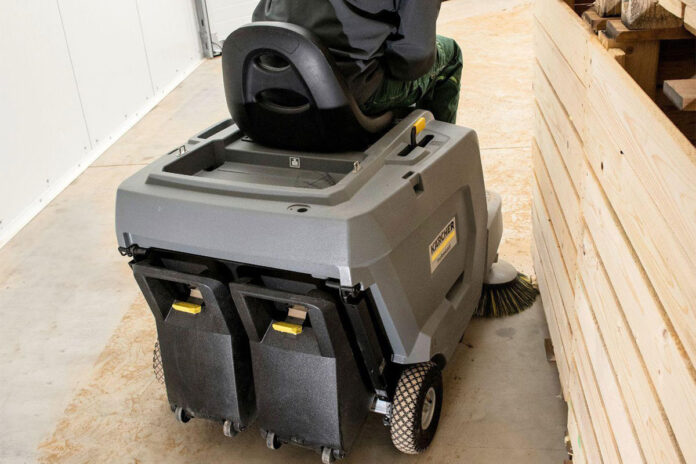
Routine cleaning immediately after crop storage helps prevent severe dust accumulation. Mechanical sweepers collect dust rather than disperse it, allowing the material to be safely disposed of or returned to the field.
To minimise airborne particles, the side brush should only be used for corners and edges, and it should be raised during flat surface cleaning. Additionally, maintaining cleanliness in surrounding outdoor areas limits the amount of dirt tracked into the warehouse.
Selecting the right machinery depends on several operational factors. Container capacity must match dust volume, and the working width must suit the storage layout. Smaller facilities benefit from walk-behind push sweepers, while larger operations require ride-on models. Industrial machines equipped with coarse dirt flaps are particularly effective, as they can pick up larger debris such as stones, soil clumps, and fallen crops.
Wet and dry vacuum cleaners: precise cleaning
For obstructed or confined areas, wet and dry vacuum cleaners offer an ideal solution. Equipped with squeegee nozzles, they efficiently clean floors without releasing PM back into the air.
Filters match dust classes, with class L for lower-risk dust and classes M and H for finer hazardous particles, ensuring safe handling.
Features such as automatic filter cleaning and pre-separators significantly extend machine life and maintain optimal suction performance when handling large volumes of dust.
Preparing for the next harvest
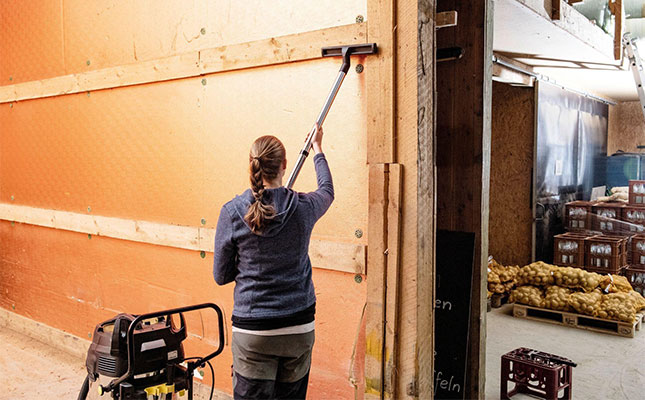
Before new crops are introduced, warehouses must be thoroughly cleared of residual dust, mould spores, and contaminants. Even if floors are regularly maintained, overhead shelves, beams, and machinery require deep cleaning.
Wet and dry vacuums safely remove both dry and moist residues. Using suction extensions or cherry pickers allows for the safe cleaning of ceilings, pipes, and beams, while specialised brushes and scrapers help remove stubborn, compacted deposits from tight spaces.
Special cases and feed hygiene
Thorough decontamination is critical when removing hazardous residues or when converting a facility to organic production. Critical zones include ventilation channels, sorting equipment, and machinery, all of which require comprehensive dry or wet cleaning.
For animal feed storage, strict hygiene standards are mandatory. Removing dust, residues, and old deposits prevents infestations by pests, mould, or mycotoxins, thereby supporting animal welfare and ensuring strict regulatory compliance.
By deploying specialised sweepers and high-efficiency wet and dry vacuum cleaners, agricultural operators can maintain clean warehouses that safeguard crops, workers, and livestock. Efficient dust extraction mitigates occupational health risks, preserves post-harvest product quality, and ensures facility readiness for the next harvest season.
For more information, visit kaercher.com/za.