
When Boeram Venter began working with the Bonsmara breed almost 20 years ago, he didn’t intend to build one of South Africa’s top Bonsmara studs. His goal was simpler: to give his sons room to grow in the family business without their father breathing down their necks.
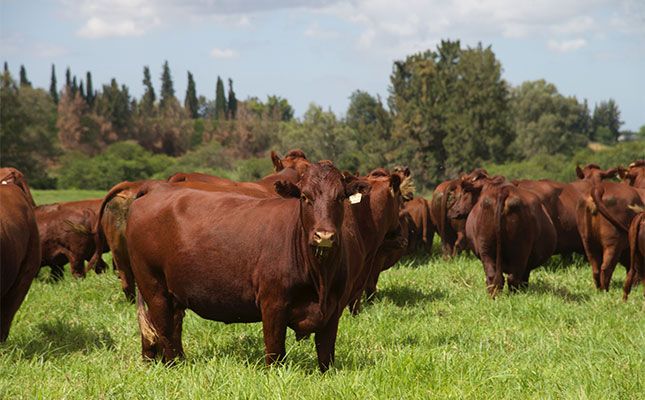
Today, Disco Bonsmara, part of Venter Boerdery near Addo Elephant National Park in the Eastern Cape’s Sundays River Valley, ranks among the country’s top 10 beef cattle stud farms. It has achieved SA Stud Book Elite Platinum status for the past three years and was named SA Stud Book’s top stud in the province in 2024 and 2025.
“I could see the dominance of family-owned businesses in farming. My mission was to ensure the continuity of our farm. It is ironic that my ‘retirement’ project became one of the ways to ensure diversity and sustainability in our business,” says Venter.
He runs Venter Boerdery with his two sons, Nico and Leroux. It is a highly diversified enterprise, with citrus, broiler chickens, and the Bonsmara stud forming its backbone. These are complemented by a Boer goat stud, chicken fertiliser production, eco-tourism, and game farming.
Sundays river roots
“I grew up on a 20ha citrus farm in Kirkwood,” recalls Venter. “While I eventually went on to become a pharmacist, my calling was to be a farmer, and in
1986, I settled into it full-time.”
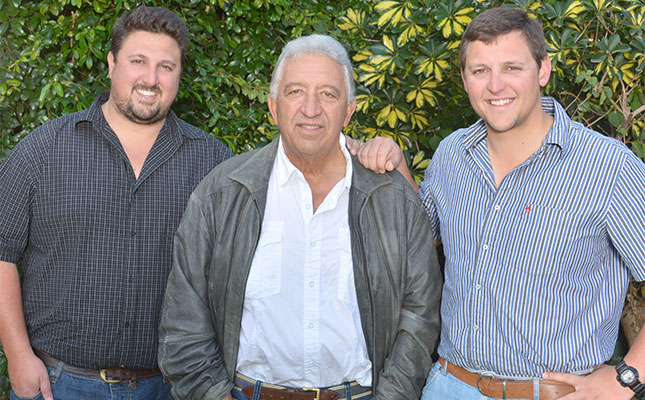
This foundation in farming later allowed his sons to return to the family business. Nico joined the business in 2010 and Leroux in 2011, after completing their BCom degrees and gaining work experience off the farm.
“When my sons arrived on the farm, I didn’t want to tell them what to do. I wanted them to find something that they loved,” explains Venter.
Today, responsibilities are clearly divided: Nico manages the intensive broiler division, equipment maintenance, the tourism department, and new developments, while Leroux oversees the extensive citrus operation. Venter focuses on his stud herd of around 200 registered Bonsmaras.
Why Bonsmara?
Bonsmaras make up between 50% and 60% of South Africa’s national registered cattle herd. They were bred specifically for South African conditions, and Venter believes adaptability is the breed’s biggest strength.
“I like Bonsmaras. They have a good temperament and are very adaptable. We are 70km from the coast and have high humidity. Our bulls are naturally hardy against heat. They need shade, but heat is not a problem.”
When he set off on his Bonsmara journey in 2007, Venter had little experience with livestock farming.
“I knew nothing about livestock. We decided to focus on building a strong genetic foundation and measuring the genomics of our animals,” he explains.
They acquired top genetics by buying breeding cows from established herds, including Zinabos Bonsmara, Hanzyl Bonsmaras and Dikdoorns Bonsmaras in the Free State. Sires were sourced from leading breeders, including Zinabos Bonsmara, Sernick Bonsmara and Syferfontein Bonsmaras in the Free State, Poggenpoel Molopo Bonsmara in North West, Hartebeestloop Bonsmara in Namibia, and Up George Bonsmaras in KwaZulu-Natal.
In 2007, Venter registered Disco Bonsmara with SA Stud Book, and Phase C testing started on the farm a decade later.
“We were the first Bonsmara stud farm in South Africa to complete genomic testing on the entire herd. That was in 2017. To this day, we continue to perform genomic testing on the whole herd. Every decision we make is based on data, and this applies to all our farming divisions,” adds Venter.
As a stud bull breeder, Venter does Phase C testing on 30 to 40 bulls a year. The testing is conducted under controlled feedlot conditions where bulls’ intake of a prescribed feed is measured. Bulls are measured every two weeks to calculate their average daily gain and feed conversion ratio (FCR).
“We use highly respected stud selectors to evaluate the animals’ conformation. If a bull’s index is below 90, he is culled.”
Feeding and breeding
The stud is run on 3 000ha of Uitenhage bushveld, 40ha of kikuyu under pivot irrigation, and 25ha of lucerne.
Female calves are raised on pasture until weaning at 205 days, after which they are sent to the natural bushveld for hardening off. They are brought back to the kikuyu at 18 months for mating.
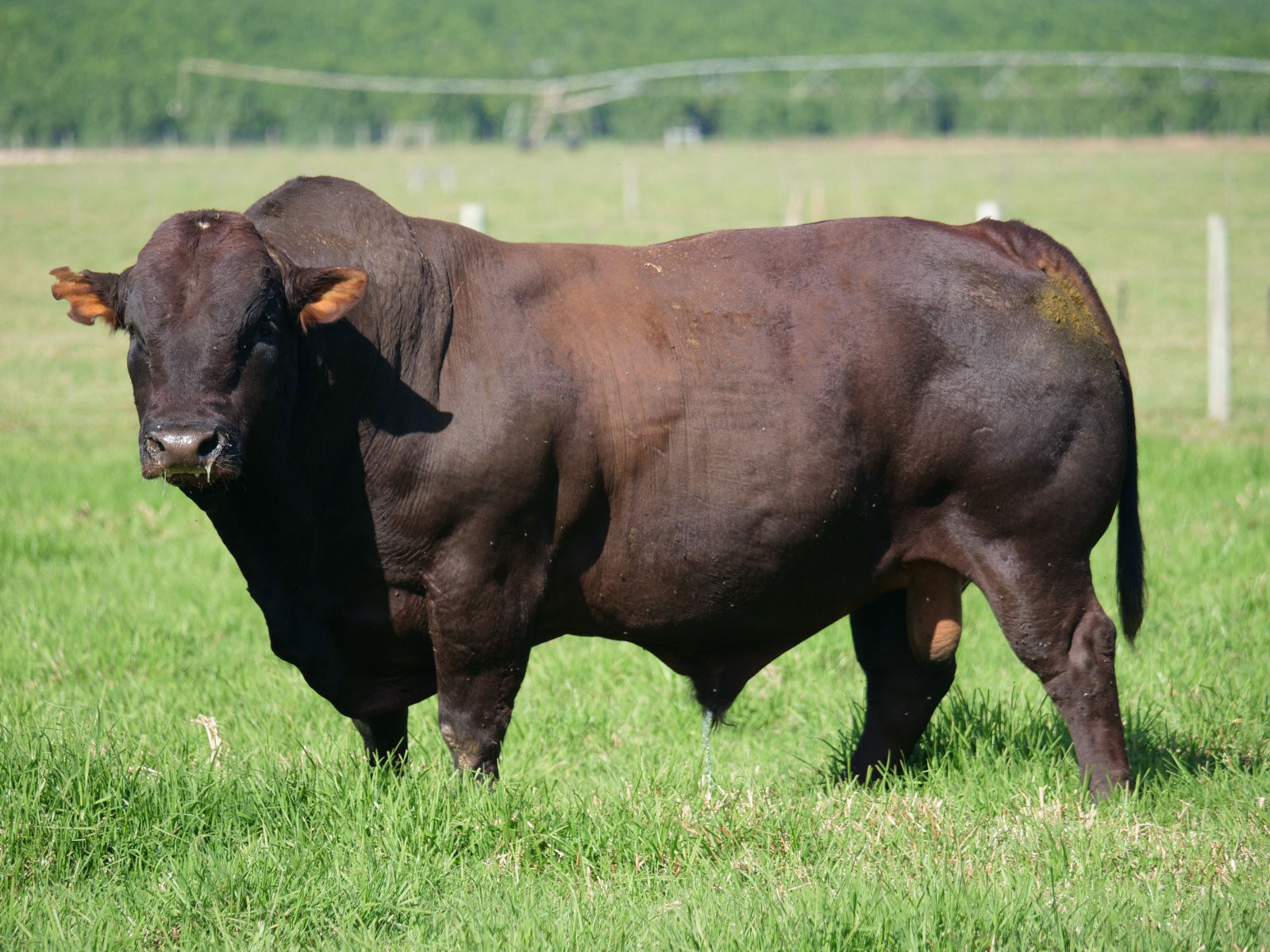
“We strive to sell bulls with outstanding FCRs to ensure farmers gain a financial advantage. Prior to marketing, our bulls spend 18 months on the veld to assist with their hoof conditioning and strengthening. Bulls must be conditioned to natural bush,” advises Venter.
The breeding herd is run in five or six mating groups of 20 cows and one bull each. Artificial insemination and natural mating take place twice a year: from December to February, and again in June and July for 18-month-old heifers.
“All the females are inseminated using semen from top bulls, and then we bring in our bulls after a week. Each bull stays with his group for three months. Paternity is confirmed by genomic testing at weaning,” explains Venter.
Disco’s bulls are either self-bred or purchased.
“We spend a lot of money on bulls, and their figures must be good,” he says.
Measuring what matters
Once a year, before breeding, Venter and his team review the herd with the help of an external adviser.
“We select cull cows based on conformation. We only keep the better-shaped ones – not too beefy – with feminine characteristics,” says Venter.
His selection is guided by two non-negotiables. “First, and most important, a cow must reproduce every year. Skipping even one year is a big financial loss,” he says.
The second is the FCR index, which directly affects the farm’s stocking rate and profitability: “The average [amount of] feed required to gain 1kg of live weight is 6,1kg, but some bulls can go as low as 5kg of feed per 1kg gained. This means a farmer could potentially stock 100 cattle with a high FCR index on 100ha, instead of only 80 with a lower index. Phase C testing provides this insight.”
A frequent criticism of Phase C testing is that it takes place in an artificial feedlot environment, and cattle may not perform the same under normal grazing conditions. Despite this, Venter remains firm in his support of it.
“The Bonsmara is so adaptable; it will produce anywhere. We can only truly measure breeding values under controlled conditions. That allows for direct comparison between bulls from different herds and across years.
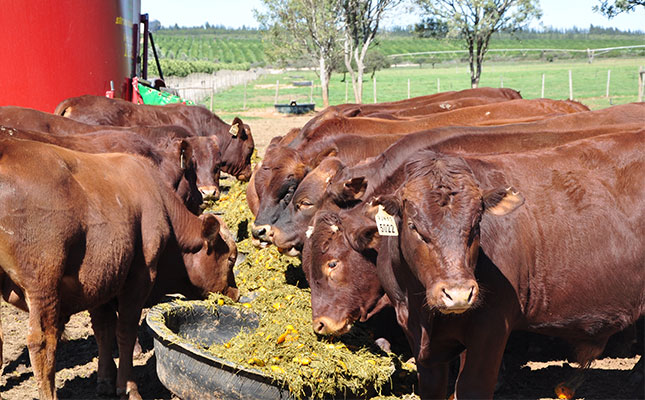
“Generally, the problem is that older-generation breeders are less interested in breeding values, but a generational shift is under way. Over the past 10 to 15 years, younger farmers with degrees have placed far greater emphasis on them. Breeding values will be to beef farmers what precision farming is to grain farmers,” he explains.
Disco Bonsmara holds one auction a year at the end of July, marketing about 20 bulls and a selection of female animals. So far, the highest price achieved for a bull was R380 000.
Securing continuity
For Venter, his stud is as much about continuity as it is about cattle. He explains that his father wasn’t there to guide him, so he had to learn many lessons the hard way.
“My father died when I was in matric. I frequently burnt my fingers on new ventures when I was inexperienced. I got through it, but it was difficult,” he says.
That experience shaped his approach to succession.
“When your children come onto the farm, it’s natural to want to keep them from repeating your mistakes. I see it all the time, and fathers end up pushing their children away by constantly watching over their shoulders. I didn’t want to make that mistake. My sons must burn their own fingers.”
Looking ahead, Venter is confident he has succeeded in his mission to keep the family business going: “We work very well together, and I am 100% sure the family business will go on.”
Email Boeram Venter at [email protected], phone 042 011 0130, or visit venterboerdery.co.za.