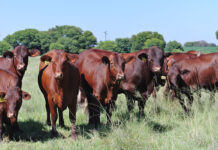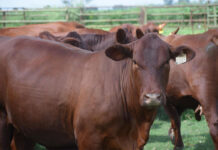
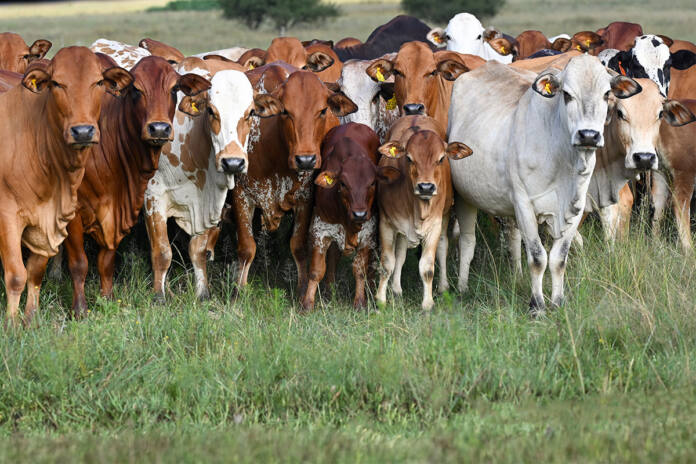
When Charlize Meintjes walks through the camps at Sterkfontein Farms near Tarlton on Gauteng’s West Rand, she observes far more than cattle. She sees years of careful genetic selection, the legacy of a family that built an agricultural enterprise from humble beginnings, and the opportunity to shape the future of one of South Africa’s fastest-growing beef breeds.
In November 2025, Meintjes officially took over the management of the Sterkfontein Boran stud, assuming responsibility for the herd and the marketing of the operation. It was a significant milestone for both the family and the stud, marking the beginning of a new chapter in a business that has steadily grown into a respected name within the Boran industry.

For Meintjes, however, the transition was not sudden.
“I was initially involved in the marketing side of the business, doing the photography and videography for our auctions, advertisements and social media content,” she explains. “The more time I spent with the cattle, the more I fell in love with them.”
Today she oversees a herd that has been more than a decade in the making, and she is determined to build on the strong genetic foundation established at Sterkfontein while carving out her own vision for the future.
A farming legacy built from the ground up
The Sterkfontein story began long before Boran cattle arrived on the farm.
The family’s agricultural journey started in 1987 when Charlene Klinkert established what would become Sterkfontein Poultry. What began with chickens housed in a garage evolved into a fully integrated poultry business with breeder farms, hatcheries, chicken houses and a sophisticated processing operation supplying fresh chicken to retailers, wholesalers, restaurants and butcheries.
Over the years the family diversified, adding Sterkfontein Chicks and eventually expanding into wildlife and livestock enterprises. The cattle division emerged after the family recognised the opportunities offered by the livestock industry and began developing stud herds alongside their poultry operations.
Today, Sterkfontein Farms encompasses poultry, wildlife and cattle enterprises, all built on the same principles of hard work, resilience and long-term planning. Those values continue to influence Meintjes’s approach to farming.
Lessons from family
Although Meintjes now manages the Boran operation, she credits much of her outlook to the lessons learnt from her father, Rohan Meintjes, and grandmother, Charlene Klinkert.
“My father taught me not to stress about things you cannot control,” she says.
“Mother Nature and market conditions can change quickly. You have to keep your head up and do the best you can despite uncertainty.”
Equally important has been the work ethic she witnessed growing up.
“Livestock farming is not a nine-to-five job. The animals still need attention on weekends, public holidays and during bad weather. It teaches you respect for the land and for the animals.”
Her grandmother remains a particularly important source of inspiration. At 80 years old, Klinkert still has an impact on the family business and continues to serve as proof that women can excel in agriculture.
“She has shown me that a woman can achieve great things, even in a male-dominated industry,” says Meintjes. That lesson resonates strongly as increasing numbers of women take on leadership roles within South African agriculture.
Falling in love with the Boran
While Meintjes initially entered the business through marketing, it was the cattle themselves that ultimately captured her imagination. “There is so much that excites me about the breed,” she says. “Their adaptability, resistance to ticks and diseases, their intelligence and their phenomenal maternal instinct.”
Those traits have helped make the Boran one of South Africa’s most sought-after beef breeds. Originally developed in East Africa, Boran cattle are widely recognised for their fertility, hardiness, longevity and ability to perform under extensive conditions. For Sterkfontein, those qualities became particularly evident during periods of drought and extreme temperatures.
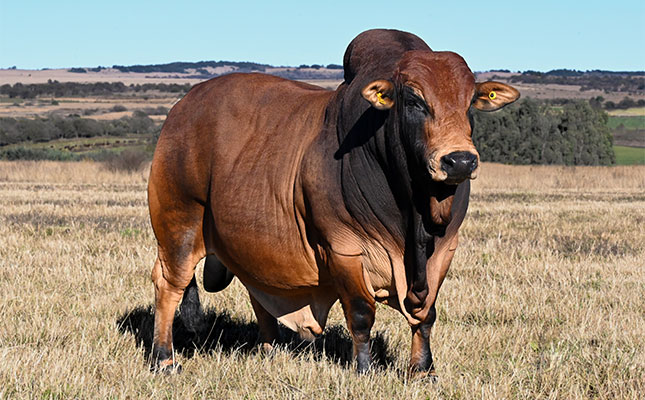
The family had previously farmed several breeds but observed that Boran cattle consistently maintained fertility and production despite challenging environmental conditions. While other cattle struggled, the Boran adapted and continued to perform.
That experience convinced the family that the breed offered a practical and sustainable solution for South African beef production. According to Meintjes, the Boran’s ability to convert veld into beef remains one of its greatest strengths.
“They perform exceptionally well under extensive conditions while keeping input costs lower. That is becoming increasingly important in modern farming.”
Breeding cattle that speak for themselves
Ask Meintjes about breeding goals, and her answer is immediate. “The animals need to speak for themselves.”
Her long-term ambition is to develop cattle that are instantly recognisable as Sterkfontein genetics, even before a brand mark is identified. That goal starts with strict selection criteria. Fertility, milk production and phenotype are non-negotiable traits within the herd. Maternal ability and temperament are equally important.
“Every calf should be better than its parents,” she says. It is a simple philosophy but one that guides every breeding decision made on the farm.
When evaluating bulls, Meintjes focuses first on head characteristics, masculinity and overall balance. Cows, meanwhile, are expected to display femininity, depth and structural correctness while maintaining the productivity required for commercial profitability.
Animals that fail to meet the stud’s standards are removed from the breeding programme. The emphasis is on long-term functionality rather than short-term trends.
“We breed for the veld first and then for the feedlot,” she explains. The objective is to produce cattle capable of thriving under practical farming conditions while still delivering the performance expected by commercial producers.
Technology driving genetic progress
Like many progressive breeders, Meintjes views technology as an essential tool rather than a luxury. Advanced reproductive technologies have become central to Sterkfontein’s genetic strategy.
Embryo transfer and flushing programmes are used extensively to preserve and multiply elite genetics while reducing the risk of losing valuable bloodlines.
“You can never predict what might happen,” she says. “A great animal can be lost through injury or illness. Embryo programmes help ensure those genetics are not lost.”
The stud has also embraced modern marketing tools and digital platforms. As someone who entered the business through photography, videography and social media, Meintjes understands the value of effective communication. 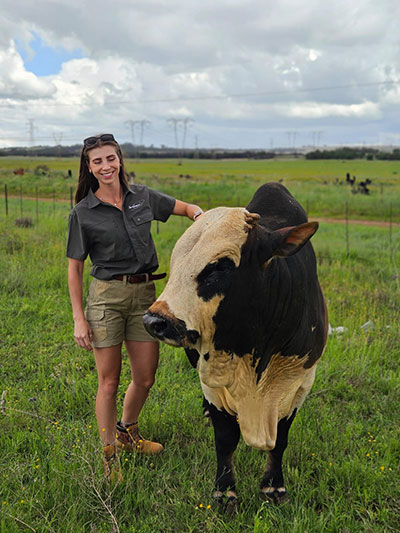
“Technology has become non-negotiable when it comes to marketing livestock today,” she says.
Online auctions, social media promotion and digital performance data have transformed how cattle are marketed and sold. She believes younger farmers are uniquely positioned to help drive this transformation.
The value of youth in agriculture
Meintjes is passionate about encouraging more young people to enter agriculture. She believes the next generation can play an important role in helping the industry adapt to changing technologies, consumer preferences and business models.
“Young people are comfortable with digital tools and data-driven decision-making,” she says. “They can help improve traceability, stock management and market access.”
She also believes younger farmers bring energy and innovation that can create opportunities throughout the agricultural value chain.
At a time when succession planning remains a challenge for many farming businesses, Meintjes represents a growing group of young agricultural leaders stepping forward to secure the future of family enterprises.
Building a recognised brand
One of Sterkfontein Boran’s proudest achievements has been the establishment of its annual production auction. The first auction in 2021 marked a turning point for the stud and signalled its arrival as a serious player within the Boran industry. Since then, the auction has become an important platform for showcasing the farm’s genetic progress.
The stud’s success has been built on influential foundation animals and carefully selected bloodlines that continue to shape the herd today.
Buyer feedback remains one of the most rewarding indicators of success.
“There is nothing more satisfying than hearing that animals are performing well and producing exceptional offspring in other herds,” says Meintjes.
The stud has also expanded significantly since its early years. What began with a small group of foundation animals has grown into a substantial breeding programme with a strong reputation for quality genetics. Yet despite that growth, the focus remains firmly on quality rather than quantity.
“We want buyers to leave our auctions knowing they have purchased animals that will add real value to their herds.”
A family effort
Although Meintjes now leads the Boran division, she emphasises that Sterkfontein remains very much a family operation.
“To be part of a family breeding operation is the true definition of teamwork,” she says. The ability to share ideas, solve problems together and work towards common goals remains one of the business’s greatest strengths.
“We all have the same vision and commitment to the future of the business.”
That shared commitment has helped the family navigate economic pressures, climate challenges and industry uncertainty while continuing to grow and diversify.
Looking ahead
The future that Meintjes envisions for Sterkfontein Boran is ambitious but grounded in practicality. She wants the stud to become one of the standout names in the Boran industry, recognised for elite genetics, functional cattle and exceptional quality.
She is particularly interested in expanding Sterkfontein’s presence within the commercial beef sector, where demand for efficient, low-maintenance cattle continues to grow.
The pursuit of genetic improvement will remain a priority, including the strategic introduction of new bloodlines where appropriate.
Most importantly, she wants Sterkfontein cattle to become instantly recognisable for their consistency and quality. Success, she believes, will not be measured by record prices or rapid expansion alone. Instead, it will be reflected in satisfied buyers, productive cattle and a reputation built over generations.
South African agriculture is undergoing significant changes, and Meintjes exemplifies a new breed of breeders who are merging traditional livestock values with modern technology, marketing expertise, and a clear vision for the future.
If her ambitions are realised, the next chapter of the Sterkfontein Boran story may prove every bit as remarkable as the foundation on which it was built.
For more information, contact Marketing Manager Charlize Meintjes on 079 137 7092 / 010 010 0110, or visit sterkfonteinfarms.co.za.