
When Zelda Greyling first set foot on Frans Stapelberg’s farm outside Marble Hall in Limpopo in 2019, Wagyu cattle were the last thing on her mind. At the time, Greyling was one of South Africa’s leading forensic fire investigators, working across the continent for major insurance companies. She had been dispatched to Limpopo to investigate a blaze that destroyed Stapelberg’s feed barn.
What she did not know then was that this seemingly routine case would redirect her career, reshape her farming enterprise, and ultimately position her as one of South Africa’s rising Wagyu producers.
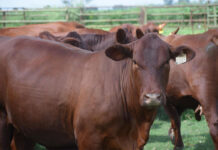
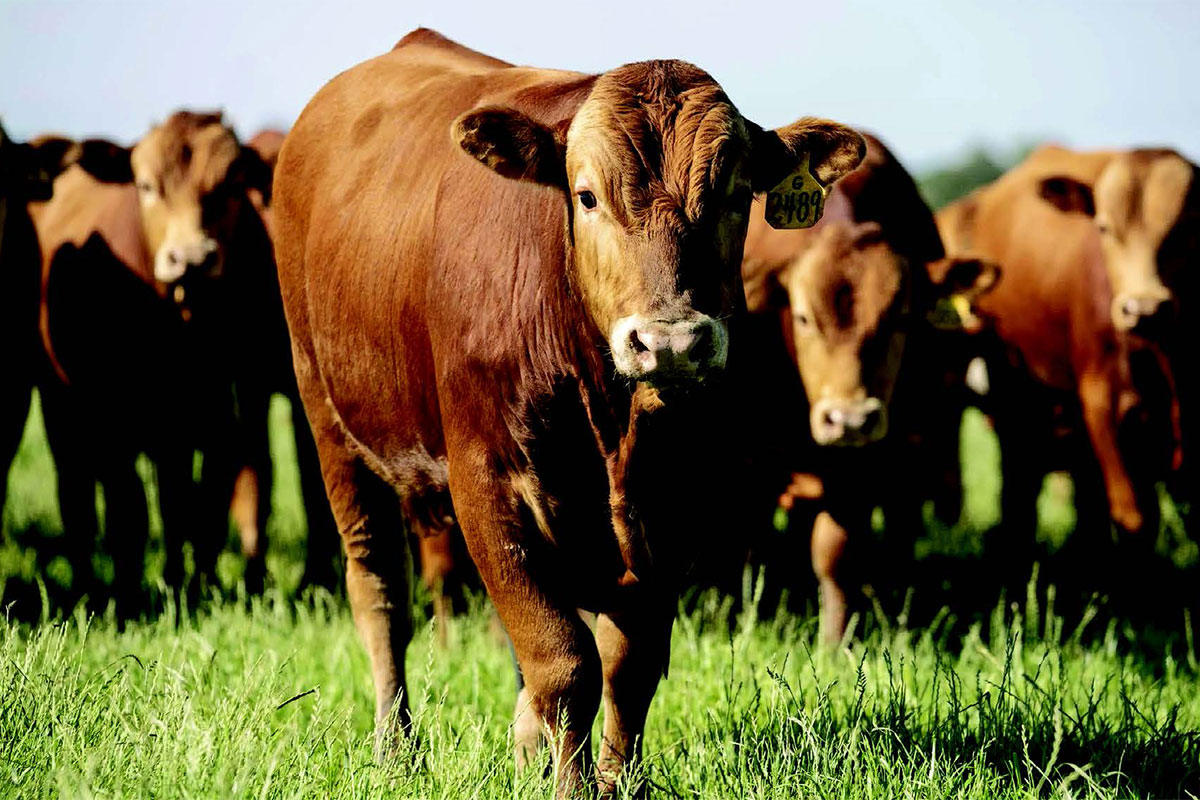
It was during that farm visit that Greyling encountered Mitzi, a striking young Akaushi (red Wagyu) cow with exceptional breeding values that define the breed.
For Greyling, it was love at first sight. Stapelberg, then the chairperson of Certified Wagyu Beef South Africa (CWB) and one of the largest Wagyu breeders in the country, noticed her fascination. He began explaining the breed’s unique genetic value, its global market premium, the strict certification protocols, and the importance of marbling to meat quality. He invited her to his upcoming production auction at the
Atterbury Theatre in Pretoria, an event Greyling attended out of curiosity but left transformed.

There, in the glossy sale catalogue, was Mitzi.
“When I saw her in the catalogue, I knew she had to come home with me,” says Greyling.
After competitive bidding, the hammer finally fell in her favour. Mitzi became the foundation female of what would become Bizon Farming’s Wagyu enterprise.
The arrival of Mitzi on Bizon Farming, located in the Grootvlei area of Hammanskraal in Gauteng, marked the beginning of a new era for Greyling.
She and her late husband had originally bought the farm in 2013 and farmed Simmentalers before his passing in 2016. Although Greyling continued to run the farm, it was Mitzi who provided a fresh purpose and a new trajectory.
Before Mitzi left Marble Hall, Stapelberg flushed some of her embryos and divided them between himself and Greyling. Using her base cows as surrogate dams, Greyling has already produced many purebred Wagyu calves from Mitzi’s genetics over four years. She further expanded her
Wagyu herd using top genetics of Wagyu bulls bred by Stapelberg’s eBuhlanti Wagyu Breeders.
“I attribute so much of my success to Frans,” says Greyling. “He introduced me to the breed, he mentored me, he sold Mitzi to me, and gave me the genetics to expand. Without his guidance, Bizon Wagyu would never have taken off.”
Why Wagyu?
Greyling chose the Wagyu breed not only because it potentially could be lucrative, but because the genetic science behind it resonated with her. After years of conducting highly detailed forensic investigations, Wagyu’s discipline, traceability systems, and data-driven breeding structure appealed to her analytical mindset.
“Everything in Wagyu is measured, tracked, DNA-verified, and certified,” she explains.
“There’s integrity in the system. That’s what convinced me – there is nothing random or unverified about true Wagyu cattle.”
Her breeding goals mirror the objectives of the Wagyu Society of South Africa:
- Enhancing marbling and meat quality
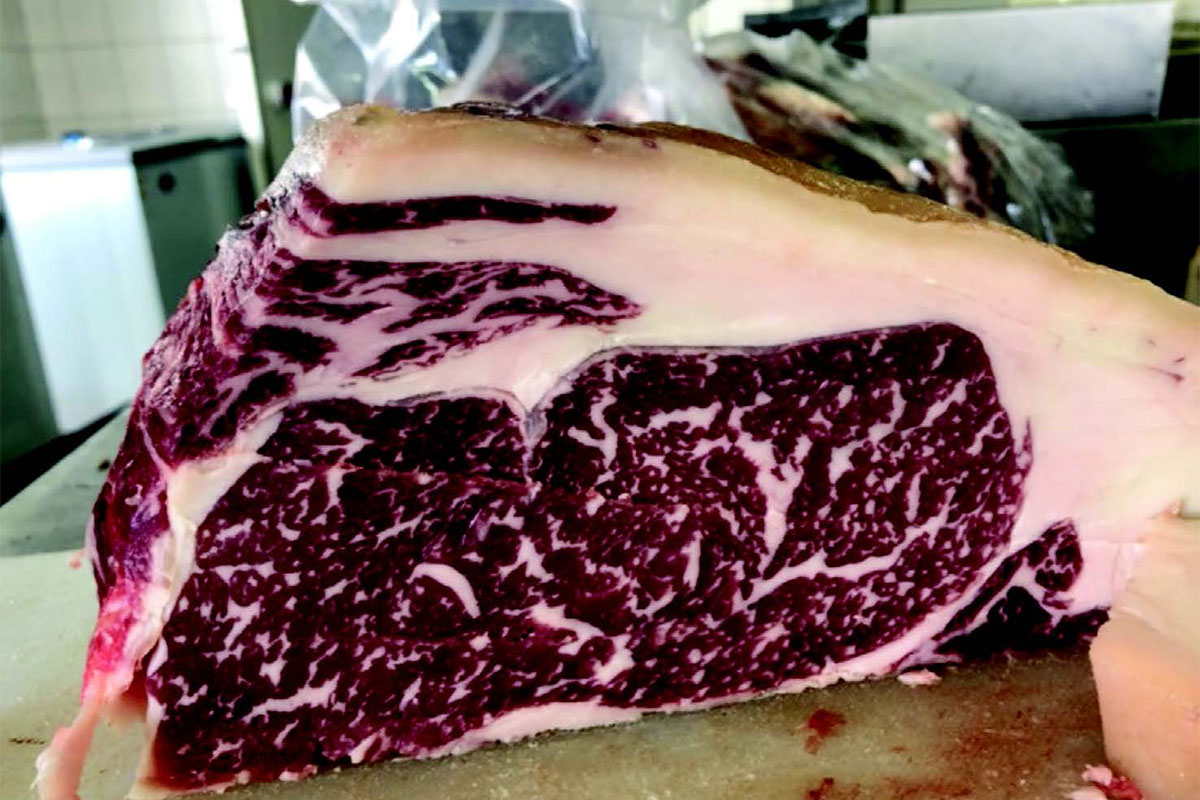
Marbling is the signature of Wagyu. Fine intramuscular fat gives the meat its meltin-the-mouth texture and buttery flavour. Marbling scores run from 1 to 10+, and Greyling currently averages a score of between 3 and 5 in her grass-fed certification – a strong result for pasture-based production.
- Improving genetic gain
Greyling relies heavily on:
- EBVs (estimated breeding values);
- Genomic testing;
- DNA verification; and
- Performance data.
This combination allows her to select for fertility, growth, and marbling, balancing maternal traits and carcass quality.
- Maintaining breed integrity
Every calf born on Bizon Farming:
- Receives its Certified Wagyu Beef (CWB) RFID tag within three months;
- Has a DNA sample processed through a tissue sample unit;
- Is registered on the CWB database held by Logix; and
- Becomes traceable from birth to abattoir.
The result is a fully audited, transparent supply chain – a requirement for anyone producing high-value Wagyu.
- Ensuring authenticity and traceability
True to the CWB system, the lineage behind every Bizon Wagyu carcass can be proven scientifically.
“Someone could literally take a piece of steak from anywhere in the country, send it for testing, and we can trace it straight back to its parents on my farm,” says Greyling.
Breeding management: structure, timing, and calm herds
The Wagyu’s temperament is one of the breed’s characteristics that Greyling cherishes most. “They’re calm, respectful animals,” she says. “That makes them a joy to work with.”
The breed is naturally fertile, and Bizon Farming capitalises on this.
Greyling’s breeding season runs from November to January.
The cows are pregnant for nine months and calve in the spring when the pasture produces tender summer growth for the mother and calf.
Her animals are reared and bred in contemporary groups according to:
- Size;
- Age;
- Genetics; and
- A specific bull allocated to each cohort.
Social stability is central to her management philosophy. “There’s a natural hierarchy in every herd. If you disturb that, you create stress – and stress affects conception.”
Feeding strategy
Bizon Farming follows a grass-fed production model supported by:
- Natural grazing
- Lucerne
- White buffalo grass; and
- Ryegrass
This slow, steady nutritional approach complements the Wagyu breed’s unique physiology. A rapid increase in condition results in external fat layers, not the fine intramuscular marbling prized by consumers.
“The Wagyu needs time,” says Greyling.
“We slaughter them at about three years, almost a year later than other breeds. You can’t rush marbling.”
Grass-fed Wagyu also positions Bizon Farming in a growing ethical-foods niche where consumers seek:
- Hormone-free;
- Antibiotic-free (no routine antibiotics);
- Naturally raised;
- Traceable; and
- Premium beef.
This aligns with CWB requirements
and strengthens her market access.
The first grass-fed certified Wagyu beef slaughter at Renbro Abattoir
In 2024, Greyling achieved a landmark accomplishment: the first CWB slaughter of a fully grass-fed Wagyu cow at Renbro Abattoir in Hammanskraal, now officially recognised as a CWB abattoir. For the Wagyu Society of South Africa, her milestone is evidence that South African producers can deliver worldclass meat from pasture-based systems.
Closing the loop
Greyling is not merely a breeder; she is part of the small but growing group of farmers participating in the entire Wagyu value chain.
Her involvement spans:
- Production;
- Calf raising;
- Genetic selection;
- On-farm finishing;
- Slaughter through a CWBapproved abattoir;
- Direct marketing; and
- Value-added food products.
Her Wagyu Way food stall, which appears at events and festivals across South Africa and aims to become a regular presence at the Pretoria Boeremark, brings her product directly to consumers.
This integration ensures:
- Greater price control;
- Deeper consumer education;
- Brand loyalty;
- Transparency; and
- Immediate feedback from diners.
“Consumers love Wagyu, but many still don’t understand it,” says Greyling. “At the food stall, where we actively interact with consumers, we can explain the marbling, the health benefits, the certification, and the care behind every animal. That’s where people really fall in love with the product.”
Global wagyu market outlook
Globally, demand for Wagyu beef continues to surge. According to Future Market Insights:
- The global market is projected to grow at a compound annual growth rate of 4,8% from 2023 to 2033, reaching US$40 billion (about R684 billion) by 2033, driven by rising incomes, luxury dining, and increased awareness of Wagyu’s health benefits;
- The strongest demand is coming from Asia, the Middle East, North America, and high-end hospitality markets.
Wagyu’s high monounsaturated fat content, rich omega-3 and omega-6 profiles, and elevated levels of oleic acid and conjugated linoleic acid give it a nutritional advantage over most beef. Research from the University of the Free State has proved that Wagyu outperforms conventional beef in several health categories.
South Africa’s adoption of the CWB certification programme, with its DNA traceability and rigorous protocols, is positioning the country competitively. “The world wants certainty,” says Greyling. “With
CWB, we can guarantee authenticity.
That puts us on par with the best.”
The Wagyu women
Greyling is one of a growing number of influential women in the Wagyu industry.
“The industry has many strong women who play critical roles, from genetics to marketing,” she says. “I was empowered by people who believed in me. Now I try to do the same for others.”
Her advice to women entering agriculture: “Surround yourself with people who share your ideals. Listen to good advice. Lead by example. And never underestimate the power of resilience.”
Debunking Wagyu myths
Greyling shares three persistent myths first published on the Wagyu Society of South Africa’s website:
Myth 1: Wagyu is just another expensive beef
Wagyu is a genetically distinct breed with unparalleled marbling. Its flavour, tenderness, and melt-in-the-mouth texture come from finely woven intramuscular fat that no other breed consistently matches. Producing Wagyu requires meticulous management, slow growth rates, and strict certification.
Myth 2: Wagyu is unhealthy because it is too fatty
Wagyu fat is predominantly monounsaturated, containing high levels of omega-3 and omega-6 fatty acids. These are the same heart-healthy fats found in salmon and olive oil. Research shows they can support cardiovascular health and reduce inflammation.
Myth 3: all Wagyu beef is the same
Wagyu quality varies widely. True, fullblood Japanese Wagyu is different from crossbred or Wagyu style beef. Grading depends on marbling, colour, texture, and fat quality – and genetics and feeding systems influence outcomes. CWB certification ensures authenticity and traceability.
A farmer, a fire investigator, and a passion for perfection
From standing in the ashes of a burned-down feed barn to producing some of the first grassfed CWB certified carcasses in South Africa, Greyling’s journey is a testament to passion, resilience, and precision.
Wagyu requires patience. It requires data. It requires unwavering commitment to quality. These are the same qualities that defined Greyling’s fire investigation career– and they now define Bizon Farming.
Wagyu is a breed, an agricultural heritage, a production philosophy, and a culinary experience all at once. It is the product of generations of genetic selection and intensive management practices. Its fat is not unhealthy; its monounsaturated profile sets it apart nutritionally.
Understanding these truths allows both farmers and consumers to appreciate Wagyu for what it really is: a unique, meticulously crafted product that has earned its reputation – not through hype, but through history, science, and craftsmanship.
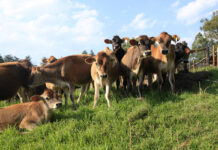
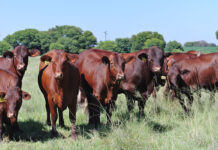
Today, Mitzi’s descendants graze peacefully across the pastures at Bizon Farming, carrying forward the genetics that sparked this remarkable story. Greyling’s integration into the full value chain, from breeding to direct consumer engagement, demonstrates what is possible when vision meets discipline.
As the global Wagyu market continues to expand, Greyling stands ready – not only as a producer, but as a pioneer for sustainable, certified, grass-fed Wagyu in South Africa.