
Farmers have endured movement restrictions, export bans, quarantines, and significant financial losses, with many reporting high livestock mortalities, reduced productivity, and plummeting conception rates.
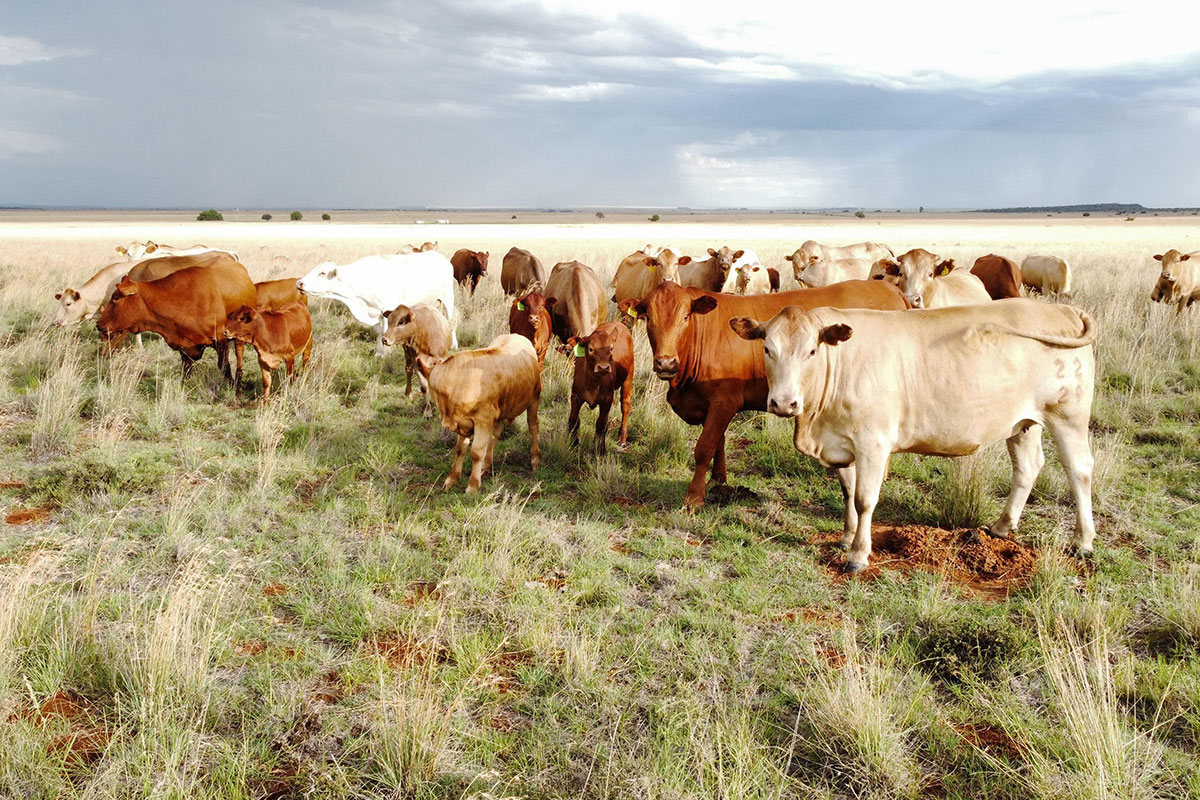
Against this backdrop, the experience at Red Grass Valley Tuli Stud near Dealesville in the Free State stands out as a powerful example of what adapted genetics and sound management can achieve.
High-pressure grazing builds natural hardiness
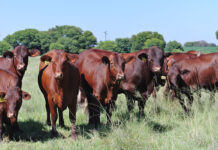
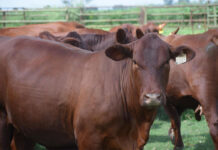
At Red Grass Valley, our Tuli stud and commercial herds operate under high-density grazing systems that deliberately place pressure on the cattle to perform. This approach weeds out weaker animals and ensures that those remaining in the herd are highly adaptive, with strong natural immune systems.
The Tuli breed, renowned for its inherent toughness, excels in this environment.
We follow a minimalist vaccination programme, administering only what is necessary each year. This strategy intentionally allows the cattle to build their own natural immunity rather than relying heavily on repeated vaccinations.
Throughout the year, our animals receive nothing more than salt, phosphate, and McCosker Brew as supplementation; a simple, veld-based approach that aligns with our goal of producing functional, low-input cattle.
When FMD struck
Clinical signs of FMD appeared in one of our commercial herds during the peak of the outbreak. State veterinary services responded swiftly and professionally and confirmed the diagnosis through laboratory testing: all 35 samples tested positive. The authorities immediately placed the entire herd of 100 animals under quarantine, with no animal movement allowed.
The cows were very sick for three to four days. Many stood still and grazed and drank very little. During this critical period, we supported them with Terramycin to control secondary bacterial infections, Finadyne to manage fever and inflammation, and Multimin to support trace minerals and natural immunity.
Even within the group, clear variation in natural immunity became visible; some cows showed very mild symptoms, while others were more severely affected.
Thankfully, this particular group didn’t have any calves at the time, which spared us the higher risks often seen in young stock. Recovery was encouraging: after about five days, the cows began grazing again. By days eight to 10, almost all visible symptoms had disappeared, and the animals returned to normal behaviour.
There were no mortalities in the group, a stark contrast to many reports from across the country. The cows maintained condition on natural pastures, and the bulls continued to perform effectively.
Outstanding conception despite infection
Perhaps the most pleasing outcome was the breeding performance. In the three-month mating season following the outbreak, the conception rate reached 95%. This result, achieved while the animals were still recovering from FMD, underscores the fertility and resilience of our Tuli genetics under real-world stress.
After three or four weeks under quarantine, we received the FMD vaccine and were able to vaccinate approximately 80% of our animals, aligning with national efforts to bring the disease under control.
Lessons reinforced by the outbreak
This experience has once again confirmed what we have long observed in our breeding programme:
- Adaptability, hardiness, and natural disease resistance must form a core part of the selection criteria. These traits cannot be overlooked if cattle are to thrive in South Africa’s variable and disease-prone conditions.
- The Tuli breed consistently demonstrates these qualities. Developed from indigenous Sanga-type stock and refined for African environments, Tulis combine strong immunity, heat tolerance, and high fertility with moderate frame size and efficient grazing ability.
- High-density grazing, combined with minimal supplementation and a lean vaccination approach, helps develop cattle with robust natural defences rather than dependence on external inputs.
- Supportive care during outbreaks – including timely administration of anti-inflammatories, antibiotics for secondary infections, and mineral boosts – can make a significant difference when paired with strong underlying genetics.
- A good working relationship with state veterinary services is invaluable. Their quick response and ongoing collaboration helped us manage the situation effectively.
A message to fellow breeders and farmers
While the FMD crisis has caused widespread uncertainty and financial pain, our story at Red Grass Valley offers hope. It shows that with the right breed, deliberate selection for functional traits, and practical on-farm management, cattle can not only survive such challenges but continue to perform at a high level.
We remain committed to breeding Tulis that are intelligent, fertile, and profitable even when conditions are tough. The current outbreak has reinforced that adaptability and natural resistance are not optional extras in a breeding programme; they are essential.
To fellow Tuli breeders and cattle producers: keep selecting for hardiness, maintain strong biosecurity, and trust in genetics that have been forged by Africa’s demands over generations. With the national vaccination programme gaining momentum, there is light at the end of the tunnel.
Red Grass Valley Tuli Stud is happy to share practical insights with other producers facing similar challenges. Feel free to contact us directly or through the Tuli Cattle Breeders’ Society of South Africa.
Together, South Africa’s cattle farmers, supported by resilient breeds like the Tuli, will rebuild a stronger, more sustainable industry.
For more information, phone Theodor Oosthuizen on 082 496 2995, or visit tulicattle.co.za