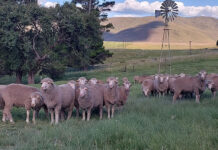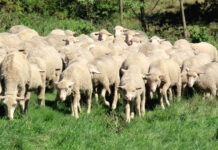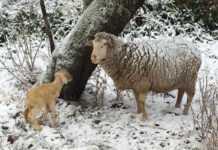

The Phillips family operation in the Tarkastad area in the Eastern Cape is a fifth-generation farming operation with branches in Dorper sheep (both stud and commercial), Merinos, Angora goats, and a beef cattle component comprising a herd of roughly 600 commercial Braford cows.
Ashley Phillips (36) farms in partnership with his father Mickey under the banner of Heathfield Farming, while his brother, Brent, is involved in the full-time administration of the business in addition to practising as a psychologist.
Ashley explains that his great-grandfather had been a big Merino farmer before gradually shifting to Dorpers. Though they still run a Merino component, the emphasis shifted to Dorpers.
Over the years, tests conducted by his father and grandfather on carcass quality repeatedly had the breed ranked at the top, along with performance in their area.
“They did not have a large operation at that stage and decided to go into stud breeding to increase their value per animal,” says Ashley.
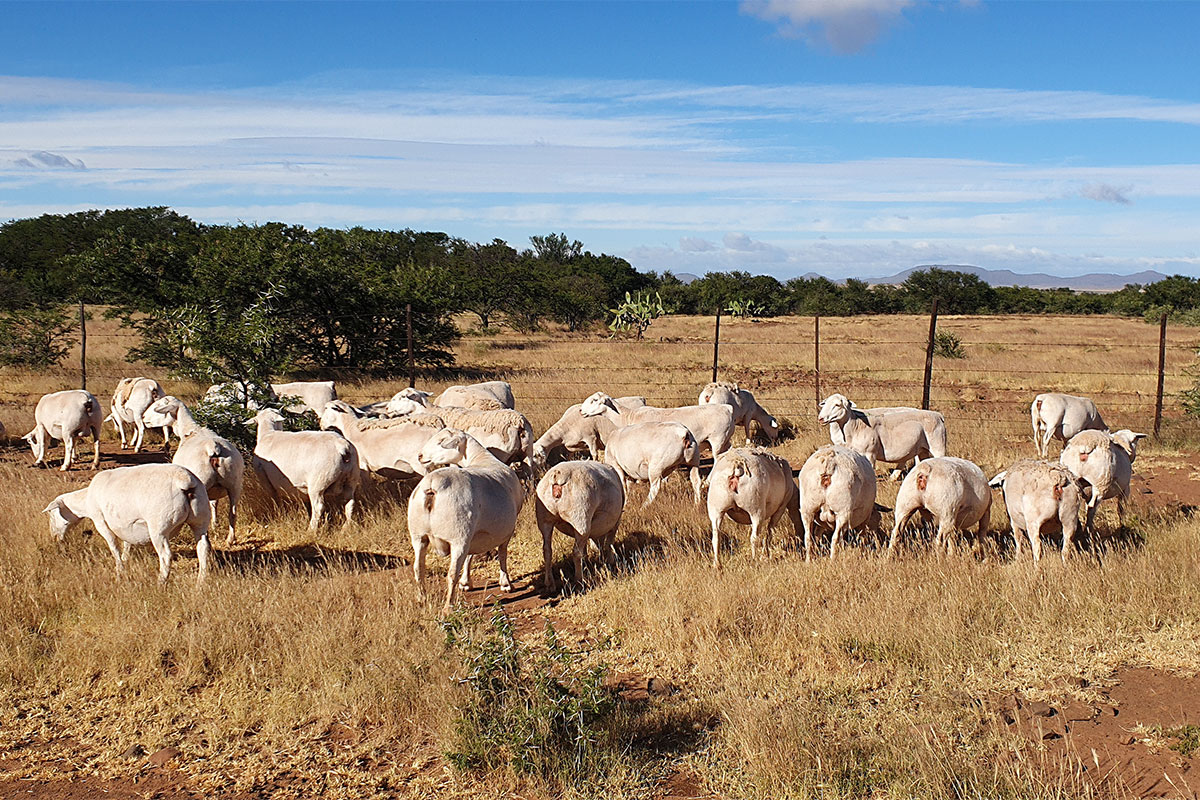
They currently farm about 400 stud Dorpers, with Ashley specifically focused on his own White Dorper stud numbering about 200 lambing ewes, as well as about 600 commercial Dorper ewes (black-headed and White combined).
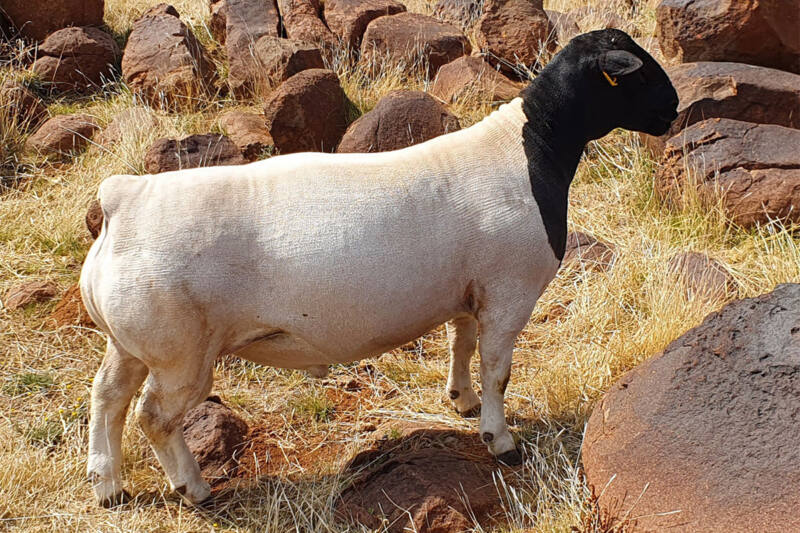
Commenting on the difference between the black-headed and the completely White Dorper, Ashley says in his opinion the two variants perform equally well in terms of production, fertility and carcass quality.
“It is more about aesthetics; I find the white sheep to be beautiful,” he says.
Adapting across the globe
Ashley returned to the farm full-time about 13 years ago and at that point took a liking to the Dorper sheep his father was farming.
“When I came back we started the White Dorpers and I took that project over. Both have been doing exceptionally well.”
The breed has also taken him “all over the world” in the last decade as an inspector and judge, and consulting with clients interested in acquiring their genetics.
“I have probably visited about 10 to 13 countries just working with Dorpers.”

This has also given him an opportunity to observe the breed’s performance in completely different climates and environments to the arid South African rangelands with which they are usually associated.
Countries on the list include numerous South American nations, such as Brazil, Argentina and Venezuela, as well as Mexico, the US, Australia, neighbouring African countries like Namibia and Botswana, and Kenya. In addition, he has spent time in colder countries like Sweden, Germany and Russia.
“I visited Sweden four years in a row. It was a totally different experience to the way in which we run the animals, so I really enjoyed that.”
He says the sheep are farmed very differently there. The extreme cold in winter requires that they are kept in sheds for half the year, with the rest of the year spent on pasture. The feed programme, he explains, contains no grains, with all nutrition supplemented through good-quality fodder. He says this is a scenario where the breed really illustrates its incredible adaptability, adding that it has also shown amazing fertility.
“For us, we have a lot of singles and only about 40% of our ewes delivering twins. In Sweden, they are getting twins most of the time, triplets, and even four lambs at a time.”
Other markets for Dorper genetics include Canada, the United Arab Emirates (UAE) and Pakistan, among others.
HISTORY
The Dorper breed was created from a purpose- driven programme initiated by Grootfontein College of Agriculture in Middelburg, Karoo, in the late 1930s and 1940s. The aim had been to produce a sheep that was hardier and better able to adapt to the harsh climate in South Africa’s arid regions, as well as create a sheep with a fast- maturing lamb and minimal input requirements.
The programme was initiated by crossing Dorset Horn crossbred ewes with Persian rams. The Dorper Breeders’ Society was officially established in 1950.
Dorper genetics were first exported outside of Africa around the 1980s to places like the West Indies. The breed was taken into the US via an embryo centre established in Canada, Ashley says, adding, however, that all of this was before his time.
Ashley’s father Mickey was heavily involved in early efforts to send Dorper genetics to Australia, forming part of a select group of breeders that flushed and exported several thousand embryos in the late 1990s.
“They created a company here in South Africa that flushed a lot of embryos. They got several vets over from Australia to flush sheep embryos obtained from a few breeders they had selected, and sent several thousand embryos that way.
“I think that’s how the Dorpers really took off in Australia,” says Ashley.
From there the breed has migrated to most parts of the world and has a presence on every continent except Antarctica.
Phillips dorpers in demand
Nowadays, the Mickey Phillips and Sons Dorper stud exports live animals, as well as embryos and occassionally semen (where protocols make this feasible) to numerous nations.
“I think we are currently one of the top exporting breeders in the country,” says Ashley.
Most notable are high-end, niche genetics exports to the UAE and Dubai (live animals and embryos), and hundreds of embryos sent to Brazil, Mexico, and other destinations. They also sent their first shipment of about 30 embryos to Russia in 2025.
“It was just to test the waters and they did really well. We got great results.”
Kenya, he says, has really been “heating up” in demand for Dorpers over the last few years.
“There is a massive market for Dorpers in Kenya.
“We (personally) are exporting about 500 ewes per year and about 100 rams.”
He says a large part of the appeal in Kenya lies in the Dorper’s ability to improve the size of resident flocks. “The carcass of their local sheep averages about 15kg, and by crossbreeding with Dorper they are able to increase that to 20kg on the first cross.”
Commenting on carcass quality, Ashley emphasises that the breed comes with a proven track record.
“For the last 40 odd years, the Dorper has won the [national] carcass competition back to back. This just shows the quality of its carcass and meat.”
He says they have good fat distribution and the marbling in the meat is exceptional, with a lovely flavour. “You can’t get much better carcass quality than what the Dorper can produce,” he says. In addition to genetics, there is also a massive slaughter carcass export market, and Ashley says they export several thousand slaughter carcasses to the UAE each year.
Practces and protocols
A large part of the operation is geared towards the global marketing of their genetics, and production practices are aligned with this.
Ashley says they use laprascopy and artificial insemination (AI) programmes to make management easier and synchronise breeding on an eight-month production cycle, with lambs arriving in April/May and again in October.
They use the company Ramsem to do the flushing and collect embryos for export purposes once to twice annually. They will also do their own flushing on the farm to keep up with personal breeding requirements.
Export protocols and permits vary from country to country and require that all genetic stock has to be verified disease-free. Live animals will have to be tested for a host of important diseases, including foot-and-mouth disease, brucellosis, Johne’s disease, several different types of pneumonia, and bluetongue, among others.
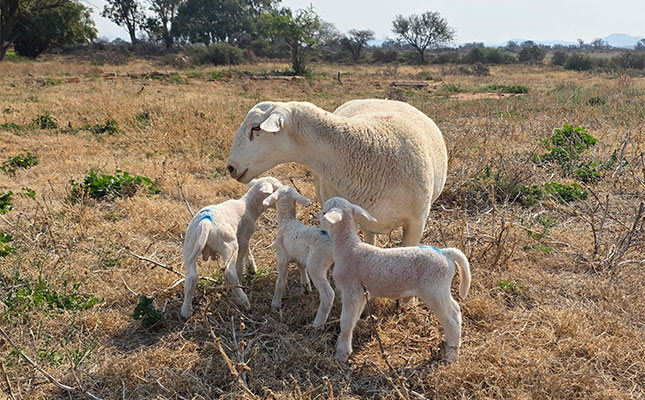
Once they have tested negative they will have to go to a registered quarantine station for the required time and are then tested again before being exported. Their animals are sent to the various quarantine stations located across South Africa, with the duration of the quarantine varying depending on the destination.
In certain cases it is impossible to send genetics to a particular country due to protocols. Ashley refers back to the Swedish Dorpers as an example. He explains that those sheep were sourced from Australia, but that breeders had specifically sourced sheep from the Phillips bloodlines that had been imported to Australia.
“A South African named Lawrence Heathman approached us wanting to import to Sweden, but we were unable to export genetics directly to Sweden (as is still the case).
“We got genetics into Australia through a breeder and veterinarian there named Adrian Veitch, who is a brilliant embryologist, and advised him (Heathman) to source Dorpers from our bloodlines through that channel.”
He says many of the Dorpers imported into Europe are still sourced in this way due to challenges with import/export permits and phytosanitary agreements between specific countries. They also do not export much semen as these protocols are more challenging than embryo exports.
More reasons for dorper’s popularity
The adaptability of the Dorper is something that Ashley says has amazed them.
“We know they can adapt to the different areas in our country, but they have just blown us out of the water how they have adapted so well in several completely different types of climates.”
In places like Australia, for example, he says the fact that Dorpers are natural shedders that don’t need shearing is appealing from a management point of view. They run huge flocks and removing the need to shear saves on labour.
“When it comes to Australia, I think that’s where the Dorper gained popularity. Input costs to shear wool breeds was getting expensive,” he says.
This does not necessarily cancel out the fleece cheque, Ashley admits, but he says the breed then further makes up for this through its ability to provide more lambs ready for slaughter at a younger age.
“If you run them on an eight-month cycle and measure them according to kilograms of lamb produced you see they make good economic sense.
“They also thrive in harsh conditions,” he says, which makes them popular among Australian farmers. On the other extreme are the cold- climate countries, where he says good breeders are selecting appropriately for their needs.
“By selecting animals correctly, you can breed out one or two negatives and then ‘class’ them out according to the areas and climates where they stay to make them really thrive.”
Ashley also highlights the potential for the breed’s adaptability and fertility to be tailored with the vast amount of technology available nowadays.
“If you push the animals, you can push production with AI and laprascopy up to more regular lambing – a good producing female will produce a lamb every eight months and that makes a big difference in producing kilograms of lamb at a young age.”
He says for them personally the Dorper is a wonderful breed and in their business it is the private entity that generates the most income.
“Any breed that you put time and effort into will give back to you and the Dorpers have done that for us tenfold.
“The Dorper has been a real game changer for us and we will certainly continue farming with them for as long as we can.”
He says it makes it so much easier to farm in their area. “There is not much effort that needs to be put into them to produce the lamb that you are wanting.”
For more information email Ashley Phillips at [email protected].