
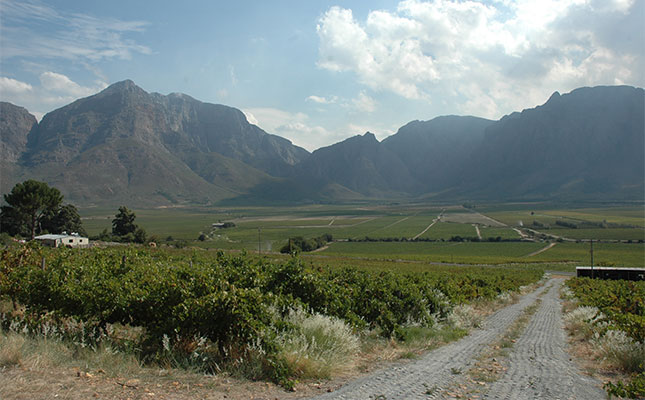
The Slanghoek Valley, located in the Breedekloof near Rawsonville, represents one of the most challenging yet rewarding agricultural pockets in the Western Cape. Nestled between the majestic Slanghoek and Badsberg mountains, this high-rainfall valley is home to Opstal Estate, a seventh-generation family enterprise that has become a case study in diversifying a traditional wine farm into a modern, multi-revenue business.
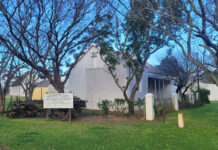
Whether you are looking for an intimate wedding or lunch venue, host a birthday party, kitchen tea, corporate event or school reunion, escape for a much-needed weekend getaway in the secluded hills overlooking the valley and vineyards while lying in a hot tub with an ice-cold glass of crisp Chenin Blanc, the team at Opstal has decades of experience of making dreams come true.
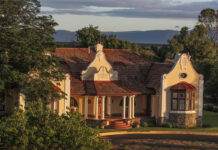
The story of Opstal (meaning ‘homestead’) began in 1847 when JC Rossouw acquired the farm De Opstal bij de Fonteine. While many historic Cape farms eventually merged into large co-operatives, Opstal took a decisive turn in 1950. Fourth-generation farmer Carl Everson chose to continue independent winemaking rather than join the local co-operative, a move that preserved the estate’s autonomy and set the stage for its current ‘estate-grown’ identity.
Today, the farm is managed by the Louw family, with Stanley and Ria Louw at the helm. Their sons, Attie (winemaker and marketing manager) and Zak (production manager), represent the seventh generation, maintaining a legacy that also includes third-generation farmworker families living on-site.

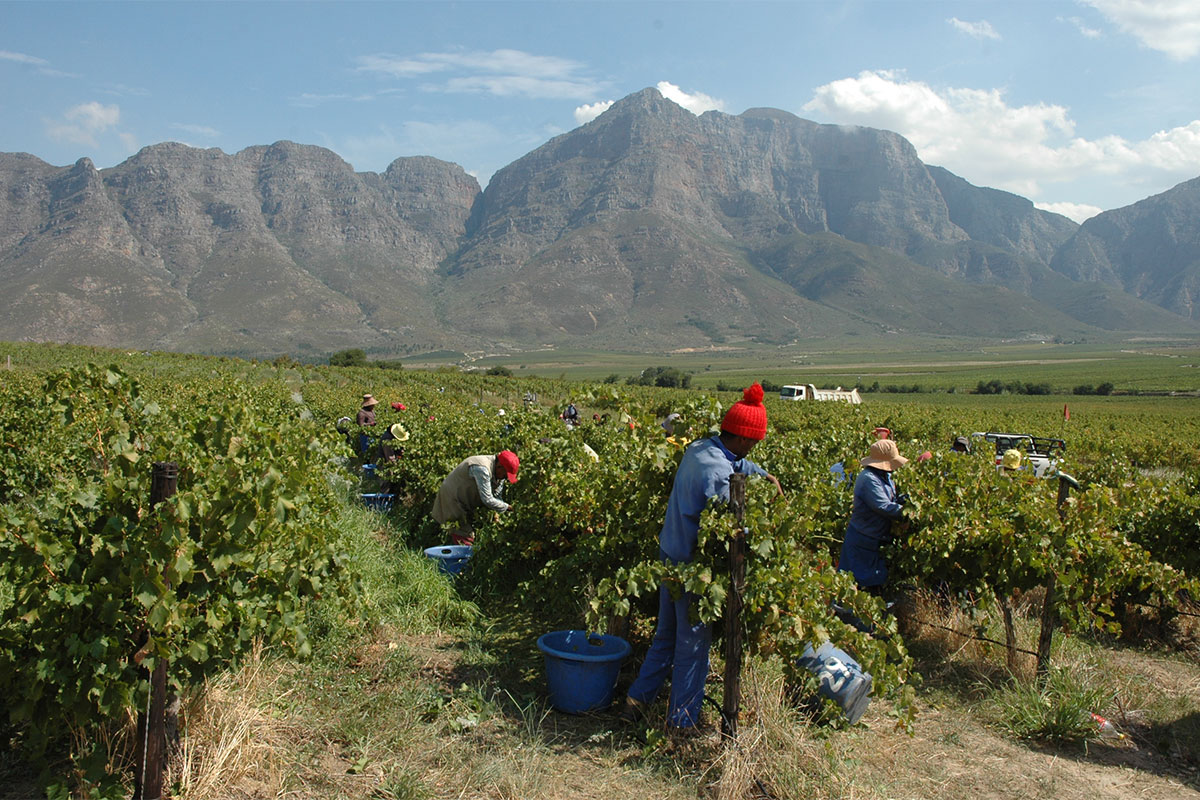
As I arrive at the estate on a warm, humid autumn day, the farm is abuzz with activity as the last of the Cabernet Sauvignon has just been harvested and the teams are moving on to the Hanepoot (Muscat d’Alexandré) vineyards.
As Attie is still tied up in meetings, his father Stanley gets assigned to keep me busy with snippets of interesting information about his history on the farm.
“Hanepoot is still an important part of our business, although many farmers are uprooting their vines due to a number of reasons, including the fact that it is a delicious eating grape and is therefore prone to being stolen and even resold, with farmers getting no compensation for their expenses and effort.
“As a family business, you never stop working, you just get redeployed. Whereas I was still very involved in the cellar until about 2013, I now enjoy providing support for my grandchildren, and fortunately Attie’s son shares my passion for golf, so we try to sneak in a round as often as we can.
“After 22 years of taking responsibility for our restaurant, my wife Ria recently decided to outsource it to a new team; this allows us to enjoy a bit more freedom to do what we want. That said, you never retire from farming. If I am on the farm and come across a broken tap or leaking pipe, my first instinct is not to phone someone to come and stop the water flowing down the road, but rather to do something about the problem.
“My sons have recently embarked on a new career – acting. Check out the Opstal Instagram account where they post short snippets of fun moments on the farm. It gets a lot of traction both locally and internationally, and Gregoire (a harvesting machine manufacturer) even sent us a scale model and thank you letter for featuring our mechanical harvester in the videos.”
The Terroir: A microclimate of extremes
Farming in the Slanghoek Valley means managing one of the most unique and challenging microclimates in the Western Cape.
The farm sits in a high-rainfall pocket, averaging 1 350mm annually, nearly double that of many neighbouring regions. In extreme years like 2023 and 2024, the estate recorded over
2 000mm, with rainfall exceeding 1 000mm in one month. This abundance requires a sophisticated approach to drainage and moisture management to prevent root rot and fungal disease.
“Fortunately, my ancestors installed drainage for the vineyards and orchards in the 1950s, which makes it possible to divert the heavy rainfall back into the Slanghoek River,” says Stanley.
The ‘Worcester Fault’ has created a mosaic of soil types within the vineyard footprint, offering geological diversity that can be exploited to the benefit of different grape varieties or wine styles.
Farming in the Slanghoek Valley requires a deep understanding of soil variation and mountain microclimates. Opstal manages approximately 100ha of vines across diverse soil types, allowing for the production of a range of grape varieties, each matched to the unique conditions of the specific site.
Modernising the vineyard: New cultivars and technologies
Opstal’s recent history highlights a significant shift in business strategy that reflects broader trends in South African agriculture. Fifteen years ago, Opstal sold nearly 95% of its production as bulk wine to producer cellars. Today, the estate bottles about a third of the production under its own label while selling the rest to other producers to satisfy demand.
Another part of the business that has been growing is the sale of grapes to a small group of premium boutique producers who recognise the intrinsic quality of the grapes and the story they can tell when treated with the necessary individual attention.
The Louw family continues to experiment with varieties suited to their warming climate. In 2022, they planted Verdelho, marking the first time this cultivar has been introduced to the Slanghoek Valley. The first harvest of these vines occurred in February 2026.
On the operational side, the farm balances tradition with modern efficiency. While premium blocks are hand-harvested, Opstal utilises mechanical harvesters for larger volume blocks to ensure grapes are picked at optimum sugar levels during the coolest hours of the day.
A critical asset for the farm is its certified Old Vine Chenin Blanc, planted in 1982. From a farming perspective, these vines require meticulous hand-harvesting and yield lower quantities, but they produce the grapes for the award-winning Carl Everson Chenin Blanc as well as the flagship Eenvoud Chenin Blanc.
To capture both freshness and complexity, the team employs multiple pickings over a three-week period, a labour-intensive but quality-driven practice.
Social and environmental sustainability
From a management perspective, Opstal’s greatest asset is its generational labour force. The farm employs roughly 70 permanent staff, with some families now in their third generation of service on the land.
Named after a legendary shepherd on the farm, the Sixpence Community Fund supports the families living on the estate, ensuring that the human element is as resilient as the vineyards themselves.
The estate actively utilises the Cellar Assistants’ Programme (also known as SKOP) to upskill farmworkers, moving them from manual labour into technical roles in winemaking and production management.
The estate is situated within the Cape Floral Kingdom biodiversity, and its farming practices are aligned with the guidelines of CapeNature with whom they co-operate on alien clearing, wetland protection, replanting of indigenous trees along the riverbanks, and preserving indigenous fynbos.
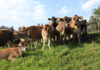
A small herd of Dexter cattle also forms part of Opstal’s philosophy of regenerative farming by improving soil fertility while grazing between the rows, thereby replenishing essential nutrients and suppressing weeds.
Viticultural strategy: High Risk, High Reward
Under the direction of seventh-generation winemaker Attie, the estate has shifted toward site-specific viticulture focusing on quality rather than on yield.
While many farms diversify their cultivars to hedge against market shifts, Opstal has doubled down on Chenin Blanc, although Attie admits that he still doesn’t have the courage to let go of Sauvignon Blanc completely.
“While we have definitely seen a greater appreciation for our Chenin Blanc wines, it is difficult to convince a dyed-in-the-wool Sauvignon Blanc drinker to give Chenin Blanc a chance,” says Attie.
Recognising the warming trend in the Cape, the team has introduced Rhône varietals like Roussanne and Carignan, which are better suited to drought resistance and heat tolerance than traditional European cultivars.
Diversification as risk management
To mitigate the risks inherent in a mono-crop wine system, the estate has diversified into other high-value fruit.
While 80% of the business remains viticultural, Opstal also cultivates persimmons and apples. This diversification ensures year-round labour utilisation and protects the farm against the price volatility of the global wine market.
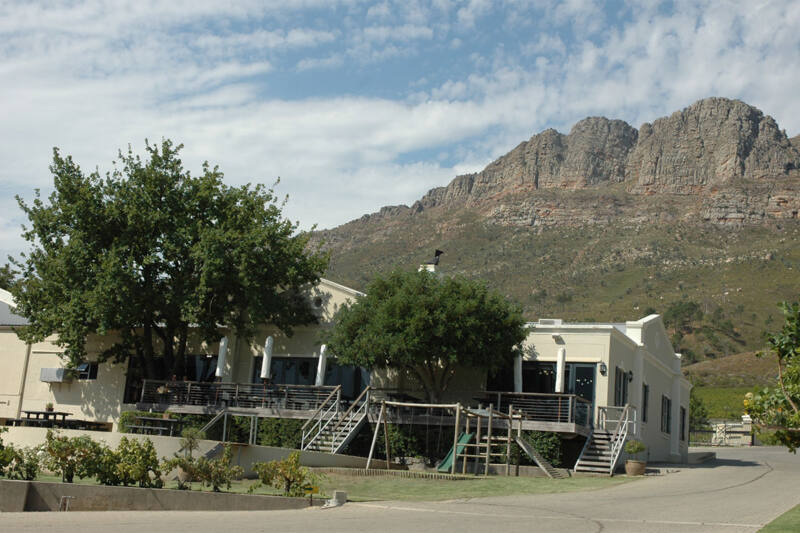
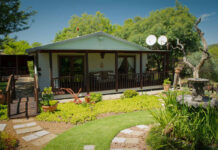
By integrating a restaurant, wedding venue, and the Opstal Stay luxury accommodation, the family has turned the farm’s scenic value into a hedge against the volatile global wine market.
“Our mountainside cottages are a huge success, with excellent year-round occupancy,” says Karmin, wife of Zac, who manages that side of the business.
Winemaking philosophy
Attie joined his father on the winemaking side of the business in 2010, gradually easing into also taking responsibility for marketing duties. In 2013, he was joined in the cellar by Franco Magerman, who had arrived at Opstal after a stint at Slanghoek Winery where he completed SKOP 3 (an advanced programme aimed at developing high-level skills for cellar staff).
“I learnt a lot doing the SKOP courses, but I undoubtedly have learnt the most working in the Opstal winery with Attie,” says Franco. The strength of the team is evident in the fact that Attie has been called out to a family emergency and Franco takes over responsibility in the cellar without a blink.
Harvest dates are often dictated by weather events rather than just sugar levels. In high-rainfall seasons, Attie sometimes opts for earlier ‘forced’ picks to beat downpours, relying on larger oak barrels and partial malolactic fermentation to balance the resulting wine.
Attie’s philosophy with regard to wine is pragmatic and sensible: “One thing I’ve learned over the years is that wine, whether the product itself, the process of making it, or the people behind it, should not be taken too seriously. The key word for me is drinkability. I aim to make our customers’ wine-drinking experience as relaxed and enjoyable as possible.
“While we believe in what we have built over the past few decades, we recently realised that our brand is well understood in, for example, the Netherlands, but we needed to adapt for the US market and will be launching two wines focused on that market under the Dexter brand, featuring a Chenin Blanc as well as a Grenache.
We recently added a motto to the entrance of the farm reading ‘Legacy in Motion’. After being on the farm for so many generations, we have to guard against becoming complacent.
“Yes, we have built a stable and integrated farming business, but we can never rest on our laurels. There should always be a bit of nervousness present to ensure that we stay focused on progress and being at the forefront of what we do.”
Opstal Estate serves as a model for the modern South African farm. They respect their 1847 roots while aggressively pursuing technical innovation, crop diversification, wine tourism, and brand independence to ensure the land remains in the family for the eighth generation and beyond.
For more information, visit opstal.co.za.