
“Burn diesel before you buy sheep.”
For Charles Freeme of B3 Genetics, those six words became the foundation on which he built his Meatmaster enterprise.
Long before purchasing his first sheep, Freeme travelled thousands of kilometres to visit leading breeders, attend auctions, and spend time discussing bloodlines, breeding philosophies, and flock management with experienced stockmen. The money spent learning from others, he said, proved a far better investment than rushing into expensive purchases.
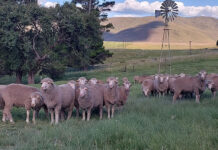
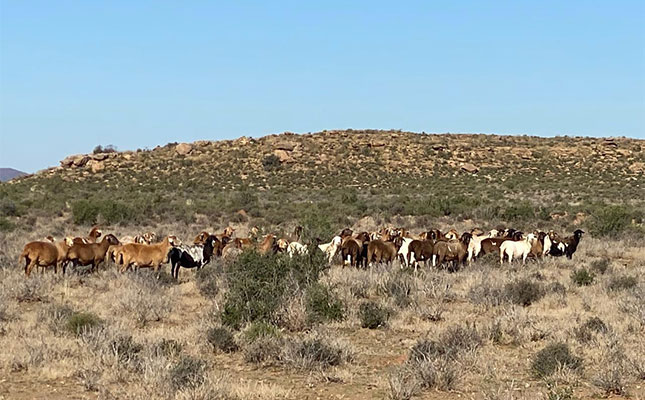
Nearly a decade later, that willingness to learn had developed into a substantial sheep enterprise spanning three Northern Cape farms covering approximately 18 000ha, where around 2 500 breeding ewes were managed under extensive Karoo conditions.
Yet despite the scale of the operation, Freeme maintained that success had never been about numbers.
“It all starts with genetics.”
For him, profitable sheep farming began long before lambs were born. Every mating decision, every replacement ewe retained, and every animal removed from the breeding programme shaped the productivity and profitability of future generations.

From the Border War to the breeding paddock
Freeme’s route into agriculture was anything but conventional.
As a young man, his interests centred on academics and sport, but national service in the South African Air Force during the Border War changed the direction of his life.
It was through his late father-in-law that he became involved in farming and discovered livestock breeding. What began as a small enterprise with broiler chickens, game birds, and South African Mutton Merinos gradually developed into a lifelong fascination with animal breeding.
“I became fascinated by genetics and the pairing process,” he recalled.
That fascination eventually led him into Boran cattle, indigenous veld goats, and Northern Cape Speckled goats before he discovered the Meatmaster breed.
Learning before buying
Freeme was determined not to rush into his new venture.
Instead of buying sheep immediately, he spent months travelling across South Africa, visiting leading breeders, attending information days, and asking countless questions about bloodlines and breeding philosophy.
One piece of advice from respected breeder Johnny Morrison remained with him throughout his career.
“Burn diesel before purchasing any animal. It’s the cheapest animal you’ll ever buy.”
The advice had little to do with fuel.
Instead, it encouraged aspiring breeders to invest time in learning before investing money in livestock.
Freeme adopted that philosophy from the outset.
Rather than purchasing a large number of sheep from a single breeder, he deliberately assembled his foundation flock from some of the country’s most respected Meatmaster studs, selecting animals that complemented one another rather than simply buying what was available.
His first purchase in 2016 consisted of five ewes and a stud ram from Elandsnek Meatmasters, affectionately named Terry in honour of his father.
Over the following years, he incorporated bloodlines from Willem van der Berg, Stephan Kirsten, Roe Wiid, Johann Murray, Boemie Saaiman, Clinton Collette, Willem Boom Steenkamp, and several other respected breeders. Influential sires such as Cowboy, Rocco, Zippo, Azur, Chico, 50 Cents, Diablo, and Fat Bastard steadily strengthened the foundation of the flock.
“I wanted to build a strong foundation rather than simply accumulate sheep.”
A business built on performance
Freeme farmed across three Northern Cape properties.
His own B3 Genetics stud formed the nucleus of the breeding programme, while he also managed sheep on AJ Stofberg’s Draairivier and Nickie Visser’s Rietfontein farms.
Together the three properties covered approximately 18 000ha and carried around 2 500 breeding ewes.
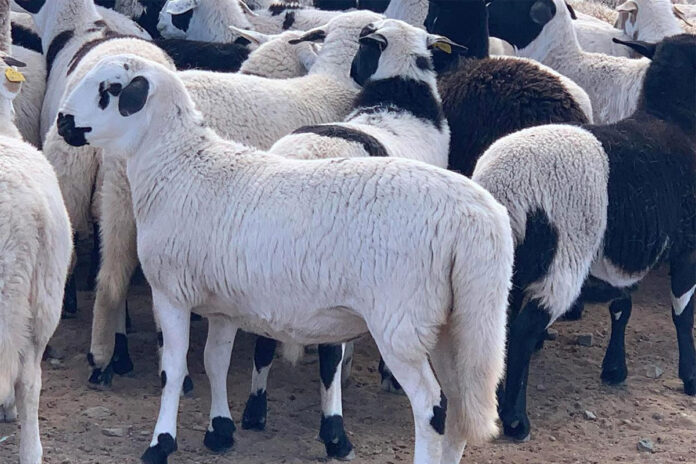
The B3 flock was maintained as a fully registered stud consisting predominantly of red Meatmasters, while the larger commercial component included about 1 750 commercial and 250 stud black-and-white ewes on Draairivier, together with another 450 black-and-white ewes on Rietfontein.
Managing both stud and commercial flocks allowed Freeme to evaluate whether the sheep performed beyond the stud environment.
“They prove whether your genetics work where it matters most.”
For him, the commercial flock provided the ultimate measure of breeding success.
Profit started with disciplined selection
Freeme believed every profitable sheep enterprise began with disciplined selection.
If asked which characteristics mattered most, his priorities were clear: structural correctness, balance, fertility, strong maternal ability in ewes, and masculine, fertile rams with sound serving abilities.
Together these characteristics determined whether sheep remained productive throughout their working lives.
Animals might impress visually, but if they failed to reproduce consistently or remain structurally sound under extensive conditions, they added little long-term value to the breeding programme.
Knowing what to cull
Freeme believed successful breeding depended as much on removing the wrong animals as selecting the right ones.
Any ewe showing structural faults, including jaw abnormalities, was culled immediately. Pigmentation defects in the black-and-white Meatmasters were equally unacceptable.
The same uncompromising standards applied to breeding rams.
“A ram must first look like a ram.”
Masculinity, balance, sound feet and legs, and a well-developed scrotum measuring at least 35cm were non-negotiable.
“In our environment, rams walk long distances during the breeding season. If they aren’t structurally correct, they simply won’t last.”
Pedigrees never outweighed functionality.
Regardless of an animal’s ancestry, structural weaknesses were not tolerated.
Fertility drove the business
Although conformation remained important, Freeme believed profitability was ultimately measured by the number of lambs successfully weaned.
Predation could distort lambing percentages, making weaning performance a more meaningful indicator of flock productivity.
“We measure success by the number of lambs we actually wean.” 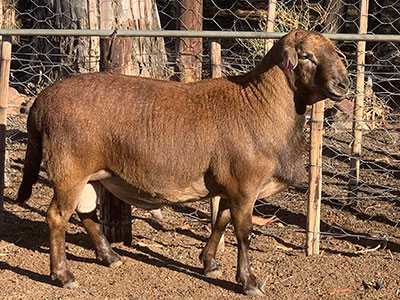
His flock achieved a weaning percentage of approximately 150%, with ram lambs generally weaned at around three months and ewe lambs at about five months.
Rather than operating a single lambing season, Freeme followed a continuous breeding system. Ewes were divided into A, B, and C breeding groups of between 150 and 180 animals. Rams remained with each group for 52 days before being replaced after an eight-day interval, allowing 10 breeding rams to rotate continuously throughout the year.
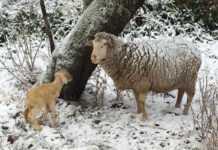
The system ensured a regular supply of lambs while allowing replacement ewe lambs to lamb for the first time between 13 and 15 months of age.
Farming for the next drought
Like most extensive livestock producers in the Northern Cape, Freeme knew that drought was not an occasional setback but an inevitable part of farming.
His breeding philosophy, therefore, centred on producing sheep capable of maintaining acceptable production under fluctuating veld conditions, rather than animals that required increasing inputs to realise their potential.
“You must breed sheep for the years that are coming, not the season you’re having.”
That principle influenced every selection decision.
Animals that remained productive under pressure were retained, while those that required favourable conditions to perform were removed from the breeding programme.
Freeme believed resilience was built over generations through consistent selection rather than quick fixes.
“The veld tells you very quickly whether you’ve made the right breeding decisions.”
Farming with nature
Managing approximately 18 000ha of Karoo veld required balancing production with long-term sustainability.
Freeme believed grazing management and breeding were inseparable. Good sheep could not compensate for poor veld management, while excellent grazing could not make inferior animals profitable.
“Our sheep must fit the veld, not the other way around.”
The flock was managed under extensive conditions with minimal intervention, allowing natural selection to reinforce the breeding objectives established through careful mating decisions.
The system identified sheep that travelled well, utilised natural grazing efficiently, and remained productive without intensive management.
“We don’t want animals that constantly need assistance. We want sheep that work for the farmer.”
That philosophy extended beyond productivity to longevity. Ewes were expected to remain productive for many years, while breeding rams had to maintain their condition and fertility despite covering large distances during the mating season.
Measuring what mattered
While visual appraisal remained important, Freeme believed every successful breeding programme required accurate records.
Complete pedigree information, lambing records, growth data, and reproductive performance enabled informed breeding decisions and helped identify bloodlines that consistently delivered results.
“Good records allow you to see patterns that you would otherwise miss.”
Performance recording provided the foundation for objective selection, while technologies such as BLUP breeding values and genomic evaluation added further confidence when identifying superior animals.
However, Freeme cautioned against relying on figures alone.
“Data is only valuable if you understand the sheep behind the numbers.”
He believed the best breeders combined objective information with years of practical observation, ensuring that measured performance always reflected the realities of commercial farming.
Marketing sheep that added value
Freeme believed a breeding programme was ultimately judged by the success of the animals once they left the farm.
Stud rams were marketed to commercial producers looking to improve fertility, hardiness, and efficiency, while surplus lambs entered premium meat markets.
The enterprise supplied Woolworths through registered feedlots, providing access to a market that rewarded consistent quality.
For Freeme, however, marketing began long before sale day.
“If the genetics are right, marketing becomes much easier.”
Producing uniform lambs that finished efficiently and met market specifications created value throughout the production chain, benefiting both breeder and buyer.
A lifelong student
Despite years of breeding experience, Freeme considered himself first and foremost a student of livestock breeding.
He continued to visit leading breeders, attend production sales, and exchange ideas with fellow Meatmaster producers.
“There is always something new to learn.”
He believed one of the greatest strengths of the Meatmaster fraternity was its willingness to share knowledge.
Experienced breeders regularly assisted newcomers, discussed breeding decisions openly, and encouraged continuous improvement across the breed.
Freeme readily shared both his successes and mistakes with younger breeders entering the industry.
“You learn just as much from the things that didn’t work.”
That openness, he believed, strengthened both individual breeding programmes and the breed as a whole.
Looking ahead
Freeme believed the Meatmaster breed would continue growing as commercial producers placed greater emphasis on efficiency, fertility, and functionality.
Rising production costs and increasing climate uncertainty were encouraging farmers to select sheep capable of producing more kilograms of lamb with fewer inputs.
“The industry is moving towards functional, profitable animals.”
He believed future progress would come from combining proven breeding principles with technologies that improved selection accuracy, without losing sight of the practical realities of extensive farming.
Building a legacy
Looking back, Freeme believed the greatest investment he ever made was not in sheep but in knowledge.
The countless kilometres he travelled to visit breeders, ask questions, and study successful flocks laid the foundation for everything that followed.
Those early lessons shaped the B3 Genetics breeding programme and reflected an approach built on disciplined selection, accurate records, and a willingness to keep learning.
Every mating decision, every ewe retained, and every ram selected reflected years of observation and careful evaluation.
For Freeme, successful breeding was never about chasing fashionable bloodlines or short-term gains. It was about making steady, informed improvements that strengthened each generation and produced sheep capable of delivering value where it mattered most–on commercial farms.
If he could offer only one piece of advice to aspiring breeders, it would have been the same advice that shaped his own journey: “Burn diesel before you buy sheep.”
For him, the greatest investment a farmer could make was not in the first animal purchased, but in the knowledge gained before making that purchase. The countless kilometres he travelled to visit breeders, ask questions, and study successful flocks laid the foundation for a breeding programme built on disciplined selection, sound records, and continuous learning.
It was an approach that shaped B3 Genetics and one that will continue to influence the breeders who had the privilege of learning from him.
Editor’s note:
Charles Freeme passed away on 17 July 2026, shortly after this article was written. Farmer’s Weekly extends its sincere condolences to his wife, family, friends and colleagues in the livestock industry. Through his commitment to disciplined breeding, his willingness to mentor fellow farmers, and his passion for the Meatmaster breed, he leaves behind a legacy that will continue to influence South African sheep farming for years to come.