
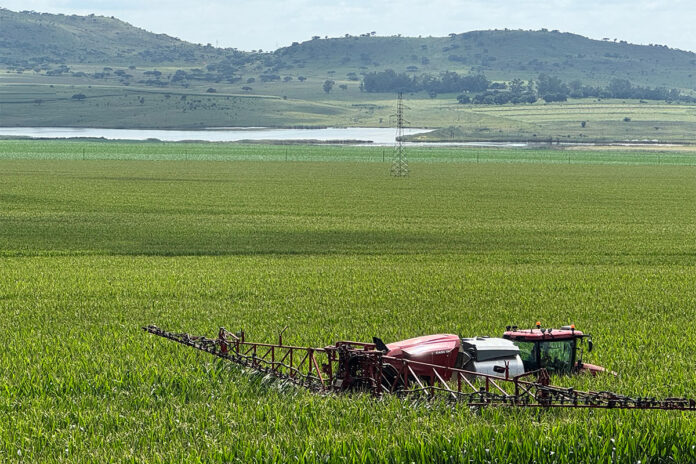
Each season challenges South African grain producers to make a myriad of complex production decisions amid weather variability, changing pest and disease pressures, and constantly rising input costs.
Favourable soil moisture levels and strong dam reserves have set an encouraging baseline for South Africa’s coming summer grain planting season. However, forecasts indicate that El Niño conditions could introduce greater variability in rainfall and the risk of prolonged dry spells during key crop development stages in the coming season.
According to Driaan Bresler, seed product development lead for Corteva Africa and Middle East, these factors will place additional pressure on farmers to make the best possible decisions.
However, he reassures farmers that, given these anticipated challenges, Corteva Agriscience is intensifying its research and innovation efforts to support farmers with technologies aimed at improving resilience under shifting production conditions.
Building resilience through science
Bresler adds that Corteva is focused on building resilience through the application of science in the field.
“For more than a century, Corteva has focused on developing solutions that help farmers manage production risks and unlock the potential of every hectare. Through advanced seed genetics, extensive research programmes, and locally adapted solutions, Corteva Agriscience provides technologies designed to perform under diverse and often challenging agricultural conditions,” says Bresler.
He explains that the development of a new seed hybrid, from initial research to commercial availability, is complex. “Our scientists and plant breeders first identify desirable characteristics such as yield potential, drought tolerance, disease resistance, grain quality, and adaptability.
“Promising genetics then undergo extensive testing across multiple locations, seasons, and production environments to ensure they deliver consistent performance under real-world farming conditions. These evaluations generate valuable data that guide breeding decisions and enable scientists to continuously refine future generations of seed technology.”
Testing for local conditions
For South African farmers, local research remains particularly important. A seed developed without being put through trials under real South African conditions simply cannot show its true potential or vulnerabilities.
Bresler points out that Corteva conducts research and breeding trials across the summer production areas for maize, soya, and sunflower.
“We test our products in specific areas, soil types, and locations where we know disease pressure is normally high. For instance, we will test our products in KwaZulu-Natal for disease tolerance, and likewise in North West and the Free State for heat and drought stress.
“We will also test products in the high-potential areas in the eastern production zones and under irrigation. This variability forms the backdrop to the trials conducted by Corteva Agriscience across the grain-producing areas in the country,” says Bresler.
He adds that heat and drought stress are of particular importance to the company, and the research facility just outside Potchefstroom speaks to this focus. In addition, he says, the company has researchers on location in the irrigation areas.
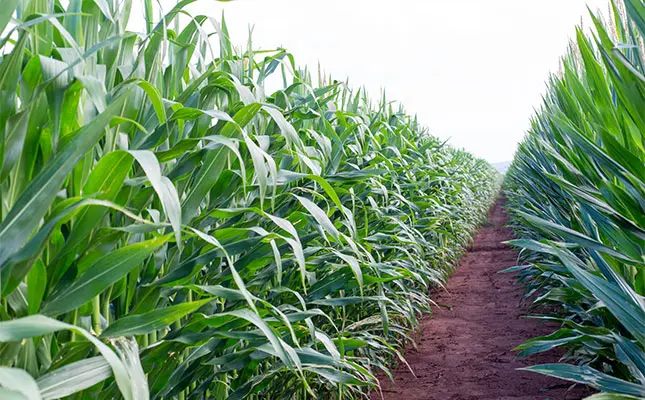
Putting hybrids through their paces
In its testing programmes, the team looks at a hybrid’s performance under:
- Diverse soil types;
- Disease pressure;
- Climate conditions for heat stress, cold nights, frost etc;
- Farmers’ production management practices such as planting dates and planting densities.
Bresler mentions that the team collect data throughout the various plant growth and development stages. “We will look at plant vigour, lodging, insect damage, disease tolerance, as well as performance and yield under different plant density conditions. In this way, we can make recommendations regarding hybrid placement and planting dates.
“We use drones to assist us in collecting data throughout the season. We want to understand how the hybrid reacts and integrates with the specific conditions in an area,” he says.
Because agricultural conditions vary significantly across production regions, with differences in soil types, rainfall patterns, temperatures, pests, and diseases, a hybrid that performs well in one region can falter in another.
“Local adaptation has become one of the most important determinants of crop success. Through multi-location trials and years of environmental characterisation, the company focuses on developing seed genetics that reflect the realities farmers face, not in theory, but in the field. We want to build a picture of how each hybrid responds to South Africa’s diverse environments so that we can base our recommendations to farmers on solid science.”
The continued development of seed and agricultural solutions that support yield stability, adaptability, and resource efficiency will remain critical to strengthening food production systems.
From research to the farm
“It is also important to measure new products against existing products in the market, especially your own. Therefore, we will test new hybrids against the leading products in the market.
“What is important, however, is that with the research tools available, we start new product development with the screening of available material, and early in the process we can already eliminate unsuitable material and identify those lines that we believe can add value in the market.
“These decisions are supported by trials conducted in each stage of product development. We end off with strip trials and commercial trials on farms so that we can test product performance under real farm conditions,” adds Bresler.
Bresler adds that the company’s focus on local relevance is supported by Corteva’s integrated approach, which combines seed technology with crop protection solutions and biological innovations.
“Agriculture is increasingly moving towards solutions that work together to improve plant health, optimise resource efficiency, and support sustainable productivity. Advances in biological products, alongside improvements in genetics and crop management technologies, are creating new opportunities for farmers to maximise crop potential,” he says.
The development of agricultural technology requires long-term commitment, investment, and collaboration between scientists, agronomists, and farmers. Each innovation represents years of research, evaluation, and refinement before it reaches commercial fields.
This sustained investment provides farmers with greater confidence when making planting decisions and helps ensure that new technologies address practical challenges experienced on farms.
For more information, email Lerato Luzipo at [email protected].