Latest articles
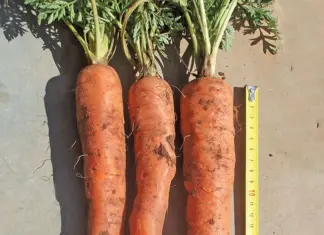
Deeper roots, better carrots
Given the right conditions, a carrot’s extensive fine feeder roots can reach 3m into the soil. It’s important to know this, as it will change the way you treat both the soil and the crop.

Getting your carrot stand correct
Good carrot seed is expensive and it’s therefore important to provide optimal conditions for germination.

Free State grain farmer discusses farming practices
Businessman, farmer and Rhodes scholar Anthony Evans, says that GM technology and advanced farming practices have contributed to the success of his family’s farming business. Anthony is Grain SA/Syngenta’s 2013 Producer of the Year.

Markets training essential
I believe it was Mark Twain who said: “The peach was once a bitter almond; cauliflower is nothing but cabbage with a college education.” His point was that “training is everything”.

Carrots – who said they must be orange?
The carrot – Daucus carota subspecies sativus – has been used by humankind for thousands of years. The vegetable’s wild ancestors look a lot different though.
Counter-seasonal imports
Walking through my local supermarket the other day, I noticed nectarines selling for R60/kg. The sign did not say where they came from, but my guess was Spain.

Challenges of banana farming in South Africa
While Steyl Willemse’s farming operation near Kiepersol in Mpumalanga is still dominated by bananas, he is gradually switching to macadamias to keep the farm running optimally.
Imasa 2013
If you consider the role it has been playing in the fresh produce sector in recent years and its limited resources – both financial and human – then you can’t but agree that the Institute of Market Agents of South Africa (Imasa) has definitely been ‘punching above its weight’.
Understand your market
How many farmers load up their truck with fresh produce, dispatch it to the market, and say to themselves: “I’ll leave it up to the agent now. It’s his job to get me the best prices.”

Growing melons
Melons are more sensitive to disease than most other cucurbits. As the diseases that attack melons are generally associated with rainfall and humidity, the fruit is normally grown in low-rainfall areas.

Beating out a new path in sugarcane
Introducing biological practices was a brave move on the part of Pongola sugar farmer Ernst Holl – but a current yield of 120t cane/ha from 16-year-old cane shows he’s on the right path. Robyn Joubert reports.

SA’s top barley producer trusts crop rotation
Barley farmer Willie Beukes of Haasjeskop Boerdery near Caledon has a proven strategy for success: a crop rotation cycle that ensures effective weed and disease control. Denene Erasmus reports.
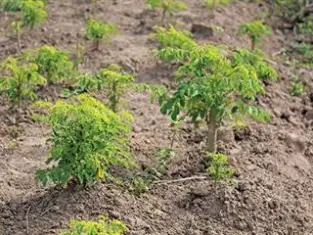
Moringa makes an easy meal with a nutritious punch
There are many pots on the boil on the farm of DAFF’s Best Female Entrepreneur of the Year, but the main course is based on Moringa.
Fresh Produce industry – more competitive
In the fresh produce business today, competition among role players has risen to unprecedented levels as individuals and companies all vie for a share of the proverbial pie.

Producing butternuts: Spacing, yield, diseases
The essentials of growing butternuts are similar to those of other cucurbits. Spacing may vary, however, depending on the cultivar. Some butternuts are compact growers, while others produce long runners.
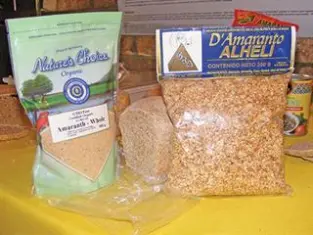
A new grain industry for SA
The newly formed NuGrainSA Consortium recently introduced the so-called pseudo grains quinoa, buckwheat, millet and grain amaranth to the South African agricultural fraternity. William Weeks says the consortium’s vision is to introduce broad-leaf cereal crops to the South African economy.
All ahead for conservation agriculture
At the first annual conference of Conservation Agriculture in the Western Cape, low soil disturbance, mulching lands and crop rotation were recurring themes. Marius Swart was there.
Market agents code of conduct
A Code of Conduct (CoC) ensures stability and purpose within a sector and a measure of confidence for clients. Market agents have a CoC embodied in the constitution of the Institute of Market Agents of South Africa (Imasa).
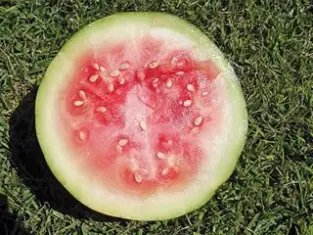
Getting watermelons ready for the market
To obtain high prices on the market, a watermelon grower has to produce fruit that looks good as well as tastes delicious.
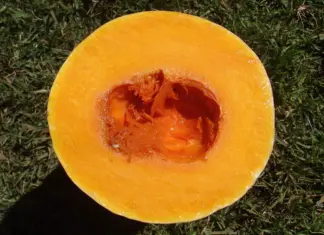
The strange history of the butternut
The butternut has a most unlikely origin. It was bred by a Charles Leggett of Stow, Massachusetts, in the USA in the mid-1940s. He was not a plant breeder, but had been forced to leave the city for the country because of his father’s health.