Photo: Mutwiwa
Before venturing into agriculture, Mutwiwa lived in the small town of Rusape in his home province of Manicaland, where he owned and ran a number of bookshops. When he decided to turn to farming, he sold his old trucks and bought two old tractors. With no support from banks, he relied on contract farming for working capital.
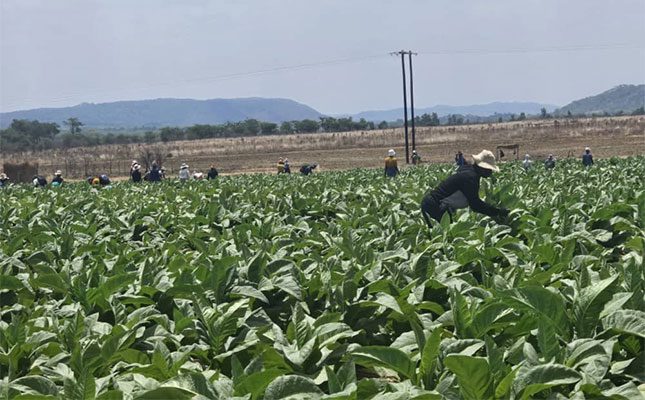
After successfully growing paprika peppers, sunflowers, and maize for three years, in 2004 he started growing tobacco. At the time, he planted 7,5ha to golden leaf tobacco and has since expanded to 320ha on his Teryden Farm in Headlands, Manicaland.
According to Mutwiwa, agriculture is a full-time profession that deserves the same dedication as any corporate office. He has lived by that philosophy for nearly 25 years, and farming has rewarded him generously, providing his family with a comfortable life that many only dream of.
He told Farmer’s Weekly that he has come a long way with farming, adding that there were years when he didn’t make a profit and simply breaking even was a victory. Yet, through every storm, he continued to plant and work the soil.
“Over these 24 years, I have learnt that farming is not for the faint-hearted and definitely also not a hobby. Too many people view farming as something casual, something to do ‘on the side’ or as a weekend getaway.
“But if you want longevity and success, you must run your farm like a business. The land responds to the level of respect you give it.
“The land is not only for those who are tired of the city; it is for those who want to build something real. Agriculture is not old-fashioned; it is the backbone of our economy, and it needs fresh minds and new energy,” he says.
This year, Mutwiwa was named Zimbabwe’s Commercial Tobacco Farmer of the Year at the Tobacco Industry Awards hosted by the Tobacco Industry & Marketing Board.
Chinese funding makes a difference
Mutwiwa says that when Tian Ze Tobacco Company, a subsidiary of China Tobacco International, entered Zimbabwe’s tobacco industry, it transformed contract farming and gave farmers a major boost. The company provides inputs, financial support, and technical assistance.
According to him, local banks charge between 18% and 42% interest, while Tian Ze charges 4%. He adds that all operational funding and interest is paid back at the end of the season.
“When Tian Ze came into the country, they changed the tobacco landscape. Contract farming improved significantly for farmers. I joined Tian Ze eight years ago, and with no funding from banks, it has been a work in progress.
“[Tian Ze] has helped us develop the farms with mechanisation, infrastructure, and everything else needed. It’s been very workable,” said Mutwiwa.
“If you want to acquire [equipment], they’ll buy the tractors for you, and
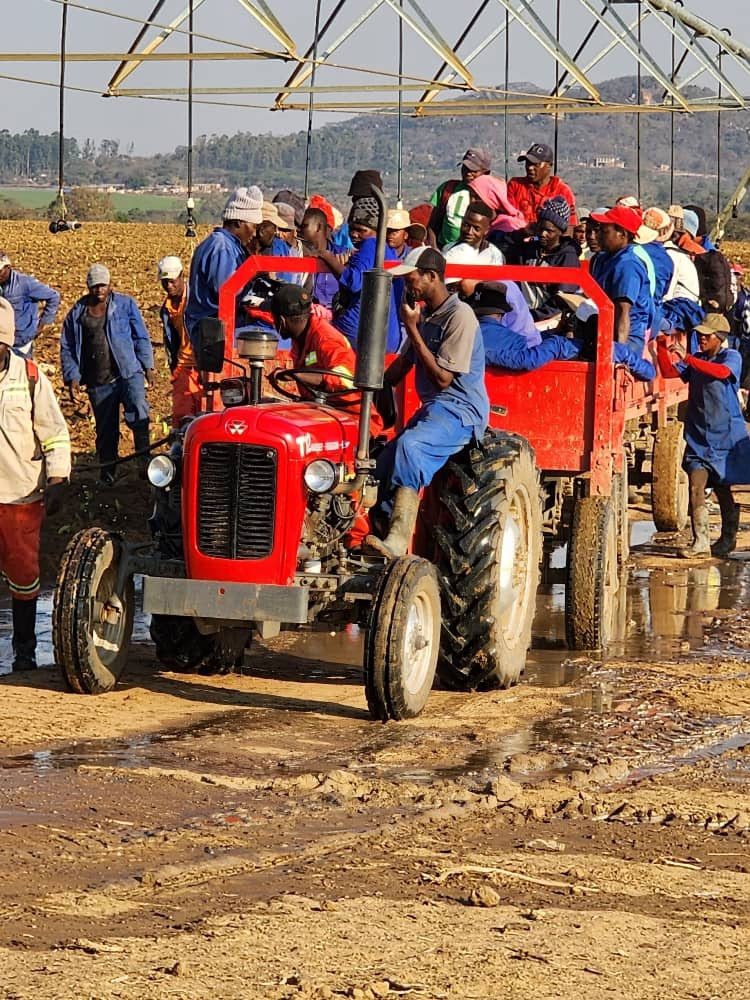
then you have to pay back the costs together with the inputs. I’ve been able to buy centre pivot units for irrigation and now have around 18 to cover more than 600ha. I also now have four tunnels – the new tobacco curing systems – which are the most advanced systems on the market at this moment.”
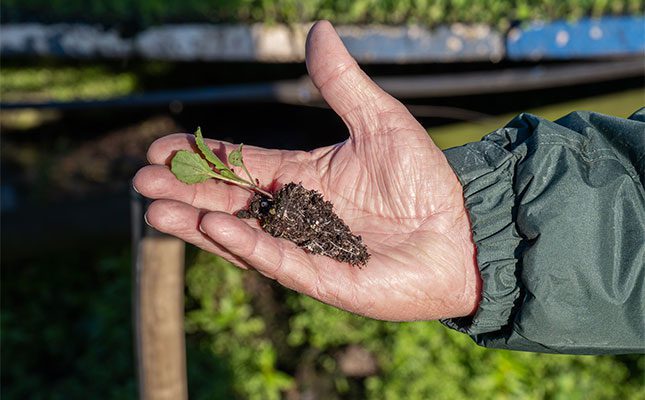
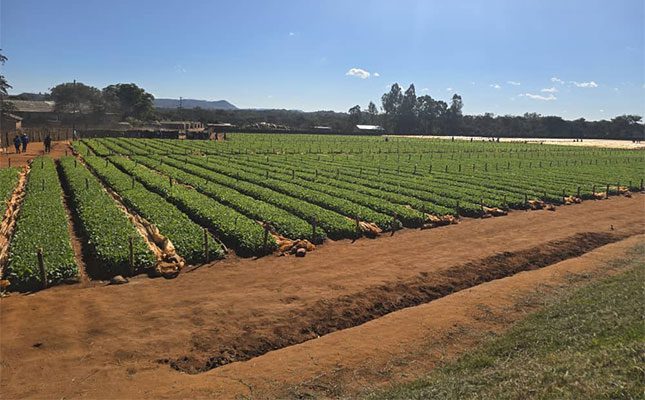
He says that with proceeds from tobacco sales, he has established an irrigation system that allows him to grow other crops: winter wheat on 250 hectares, maize on 200 hectares, and seedlings.
He adds that tobacco farming has also enabled him to send all three of his children to study at colleges in the US. His last child is graduating in the coming months, and his first child, together with his wife, works with him on the farm.
“I remember when I started, my output was 3 200 kg/ha. Currently, I’m farming 320 hectares. My highest yield was in 2014, when I did 4 100 kg/ha, and at the moment, I’m sitting at 3 700 kg/ha. Considering the hectares, that’s pretty awesome,” says Mutwiwa.
Powered by renewable energy
In the intervening years since he began farming, Mutwiwa has put up a 1MW solar power plant on the farm, a move that has reduced his reliance on the national grid and diesel generators.
“This investment has transformed how we produce tobacco and our row crops. We have stabilised our energy supply and significantly lowered our operational costs. The solar plant powers irrigation systems, tobacco curing facilities, and day-to-day farm operations.
“This project has become one of my proudest sustainability achievements and a model for what renewable energy can do for agriculture in Zimbabwe,” he explains.
“Last season, Zimbabwe produced 354 000 t of tobacco, exceeding the national target by 54 000 t. Golden leaf remains the country’s largest foreign currency earner after gold, providing livelihoods to thousands of rural households,” adds Mutwiwa.
China is Zimbabwe’s largest single consumer of tobacco, importing roughly one-third of the annual crop.