
Situated on the R44 outside of Stellenbosch towards Somerset West, sandwiched between world-famous wine estates, is the Banella Ankole Stud. Banella Ankole Stud is located on the wine farm Yonderhill, which was purchased by the Naudé family in the early 1990s as a wine-producing enterprise. Daniël Naudé first started farming with Ankole cattle on the farm in 2017.
His journey was long and winding to end up where he is today. Naudé, a Stellenbosch native, studied photography and has had a fascination with cattle ever since he was little.
“We have always had some cattle on the farm and they always fascinated me,” he says.
It was through his photography that he was first introduced to Ankole cattle.
“I wanted to illustrate the beauty of cattle and what they represent to different people in different cultures,” he says.

It was on one of his trips to Uganda for his book Sightings of the Sacred that he was first exposed to the Ankole.
When he first encountered the breed, they were severely endangered, and purebred Ankole were confined to isolated pockets in rural Uganda. Concerted conservation efforts in Uganda helped stabilise the breed, but it was not until outside investors took note that the breed started gaining international notoriety.
In South Africa, it was President Cyril Ramaphosa importing the first genetic material into the country for his own herd that brought the breed to prominence locally. It was coincidentally also through Ramaphosa that Naudé was exposed to local Ankole breeders.
“The president saw the work I did on the cattle for my book and commissioned me to do a book showcasing his herd, Cattle of the Ages. It was through this partnership that I acquired my first animals in 2017,” says Naudé.
The breed is still extremely young in terms of its footprint in South Africa. The first genetic material only entered the country in 2006. Today, there are a total of about 1 300 breeding animals in South Africa, scattered among a handful of breeders. Banella Stud currently has 50 breeding animals. Because of the limited number of animals, artificial insemination and surrogate animals are still the main way of ensuring faster growth of the breed. The majority of calvings on Banella farm still happen through the use of surrogates.
Value of Ankole
Strict animal biocontrols also mean that almost all new genetic material entering the country still does so through egg and sperm imports. Because of the limited number of Ankole animals, the commercial market is still very limited. The main customers at the moment are the exotic animal trade. The unique look of the cattle makes them very appealing for tourist-focused farms, from the Western Cape through to Limpopo.
“People drive through from Cape Town to us in Stellenbosch specifically to come and look at the cattle,” says Naudé. The Ankole cattle form an integral part of the value-add offering on Yonderhill.
The exotic nature of the cattle has also made them appealing for the hunting industry, with international clients willing to pay for the privilege of hunting these unique animals. This has helped create an additional offering to many game farming enterprises.
The high price of the Ankole has limited experimentation with the cattle in a commercial setting. Currently, a purebred cow sells for around R160 000 per animal, while bulls go for around R60 000 per animal.
Traditionally, Ankole cattle served as a dual-purpose breed, offering both milk and meat to the farmers keeping them. Its potential as a beef-producing breed is something that Naudé is investigating. This comes on the heels of work done in Uganda to promote the breed’s beef as a premium offering in line with Wagyu, being promoted as the ‘African Wagyu’.
“You see it advertised and promoted as an exclusive offer on the menu in five-star hotels and lodges in Uganda,” says Naudé.
The meat has very little subcutaneous fat. Most of the fat is located intramuscularly, identified by the marbling effect seen in breeds like the Angus and more famously the Wagyu. Banella is also looking at the effect of Angus and Wagyu crosses to observe the impact on marbling and whether a supply chain for the meat can be established. However, the current pricing of Ankole animals places any efforts at commercialisation of the beef firmly in the luxury product market.
About the breed
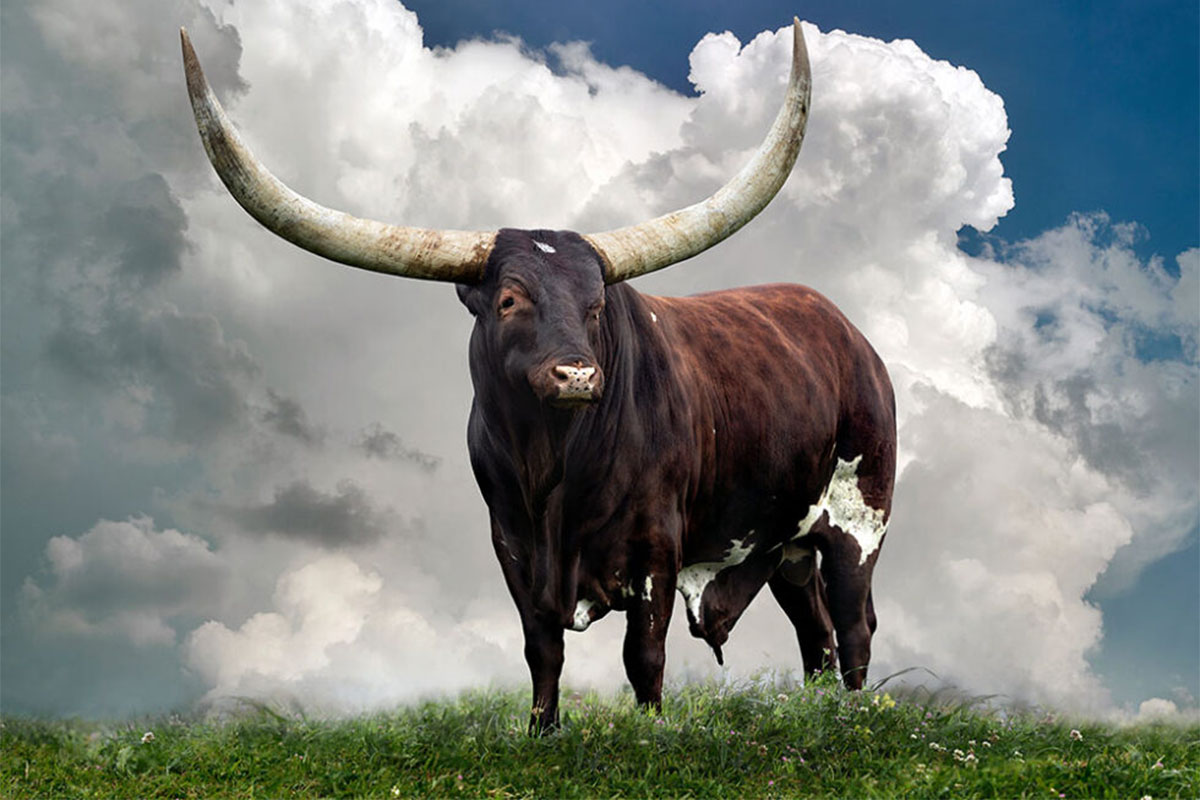
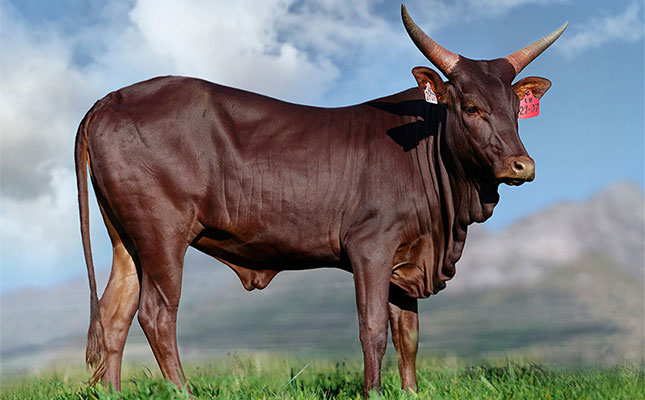
The most distinctive feature of the Ankole breed is its massive, imposing horn growth. Much like how skin patterns and colours were coveted by indigenous breeders of local cattle in South Africa, horn growth and forms were seen as paramount to the Ankole’s worth by their Ugandan counterparts. Still today, it is one of the major considerations when making breeding decisions for Banella.
Horn growth is very energy-intensive for the animal, and Naudé has found that breeding heifers too young can inhibit their horn growth. Banella does not breed their cows until they are fully grown at about two-and-a-half years old. It is also important to give the correct supplements to ensure proper horn growth, with Banella augmenting their cattle feed with enriched licks.
Naudé is also part of the spearhead to establish a breeders’ association in South Africa. Because of the limited number of Ankole breeders in the country, there is already good cooperation between them, but as the breed grows, they would like to maintain that level of openness and cooperation. An association will go a long way to ensuring that.
Breeders are also busy solidifying the breed standards for South Africa to ensure animal health and breed quality are maintained. One breed standard that is unique is the regulation around horn form and growth, which forms the key identifier of the breed and is preserved to maintain this distinctive feature.
Value to the wider industry
The Ankole breed also holds potential for commercial crossbreeding. They are extremely hardy and show exceptional fertility even under stress conditions and well into old age. Banella has 15-year-old cows that still calve every year.
They are also very resistant to ticks and show good resistance to disease. These characteristics make their genetic material a good choice for extensive cattle farming management systems.
The genes that regulate extreme horn growth are not dominant, with Banella finding that constant selection for horn growth has to be made to ensure the iconic horn length. Crossbred cattle show horn growth much more in line with commercial breeds.
Ankole cattle have proven to be a great value addition to breeders who have integrated them into their enterprises, amplifying other agricultural-adjacent enterprises through tourism. Banella Ankole Stud strives to both protect and enhance the breed to, in the words of Naudé, “exemplify the beauty that cattle add to our human experience”.