
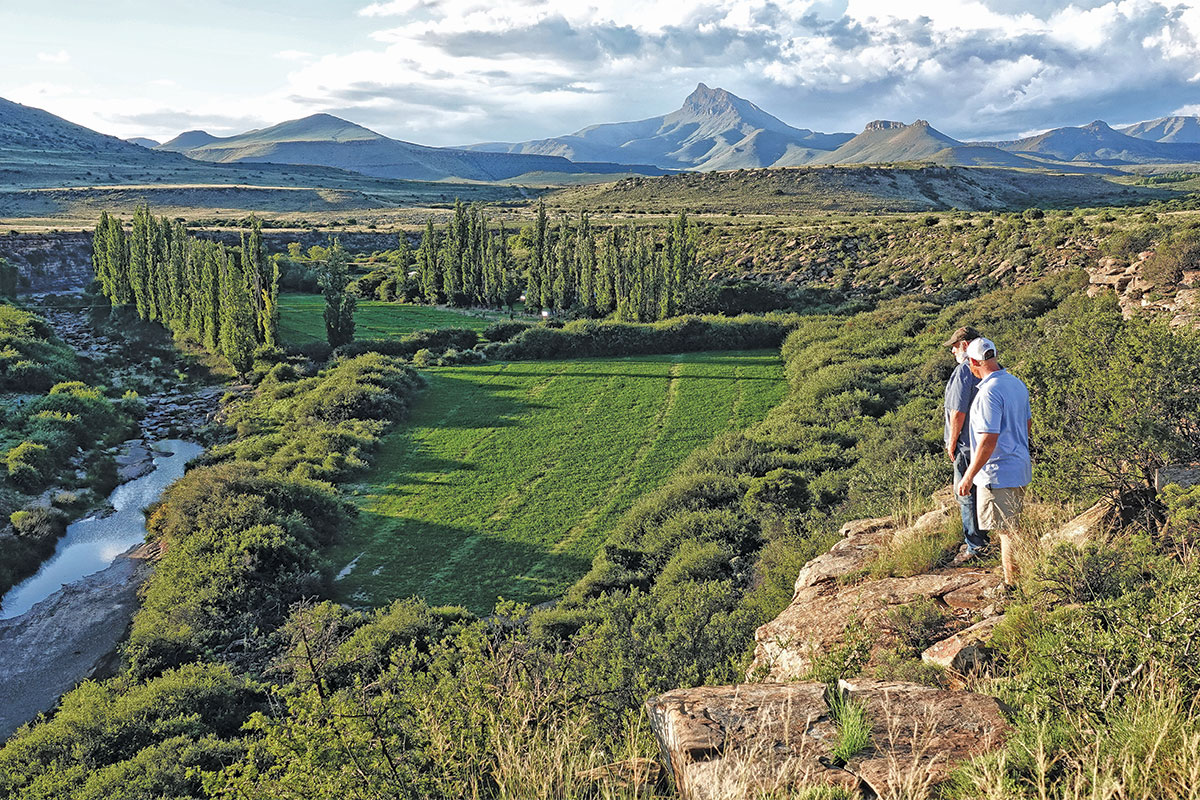
The first pleasure of the day at Ganora Guest Farm outside Nieu-Bethesda in the Eastern Cape Karoo is to simply wake up early and watch the dawning sun touch the mountain ridges around us.
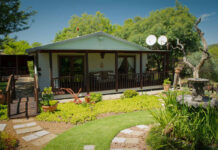
As the sky lightens, the kettle boils and a cup of coffee is soon at hand on the stoep of Khoisan Cottage on the hillside overlooking the farmstead.

Dassies emerge onto nearby rocky ledges, keeping an eye out for swooping Verreaux’s eagles hunting for breakfast. Water gurgles in the furrows below, a Karoo bush rat scrambles through a guarri tree, and pearl-breasted swallows gather on a powerline like excited children queueing for cool drinks.
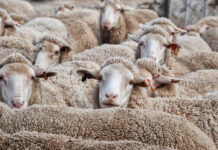
Presently, farmer JP Steynberg heads out in his single-cab Toyota bakkie to fetch the stockmen in the village. By the second cup of coffee, he has returned, and the men have begun herding the Dohne Merino rams from the night paddock to the larger day paddock. It’s a week before the ram auction in Graaff-Reinet, and they’re getting special attention from their minders.
A very big chunk of rock
This is just another morning on Ganora Farm, and as guests we are seamlessly involved in it. It’s shearing day.
By all means, bring the kids to come and watch. If there’s a hanslam, let the children bottle-feed it.
Feel like a walk in the veld? Take one of the six clearly marked hiking trails, most of them within sight of the imposing ‘Matterhorn of the Karoo’, the free-standing Compassberg Peak in the distance, jutting 2 503m into the sky.
We’ve never climbed this mountain, but we know chaps who have done it wearing jackets and bowties. It’s a huge sawtooth chunk of ironstone (dolerite) from which, on a clear day, you have a 360° view of the Karoo Heartland. Lurking up there is the only butterfly of its sort in the world, the Compassberg skolly.
Something else, even more special, bears the Compassberg name. JP simply calls it his Mona Lisa.
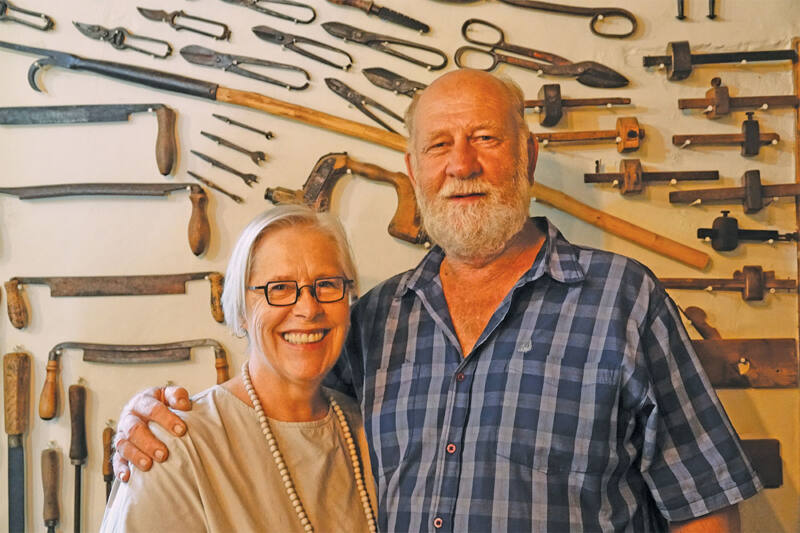
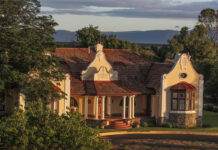
At breakfast in the stately old main house down below, Hester and JP, well-known in the region for running a gold-standard Karoo farmstay, tell us they fell into the hospitality business “almost by accident”.
“When we came here in 1996, after selling our farm in the Agter-Sneeuberg, we fixed up the cottage on the hill for our manager, but he didn’t stay long,” says Hester. “That became our first guest accommodation. We built more suites as demand grew.”
JP then takes up the story: “The previous owners told us there were San paintings on the farm, but did not pinpoint their location. Our two young sons, Louis and Renier (five and seven at the time) went out into the veld to look for the paintings and found an overhang full of them.
“Ever since I was a child growing up on a farm, I’ve collected fossils. I could see that Ganora had a lot of mudstone, perfect for yielding fossils in good condition.”
So off father and sons went, and soon they discovered several interesting fossils gleaming in the brittle Karoo shale. The tourism adventure company Drifters contacted the Steynbergs, heard about all the interesting discoveries on the farm, and began bringing large groups of visitors to explore.
The hiking trails were then cut and developed so guests could venture out on their own, and a large campsite followed.
Last word in multitasking
The affable JP has a lot on his plate, and does it all with a measure of style.
He repairs dwellings in Nieu-Bethesda for city runaways who yearn for village life.
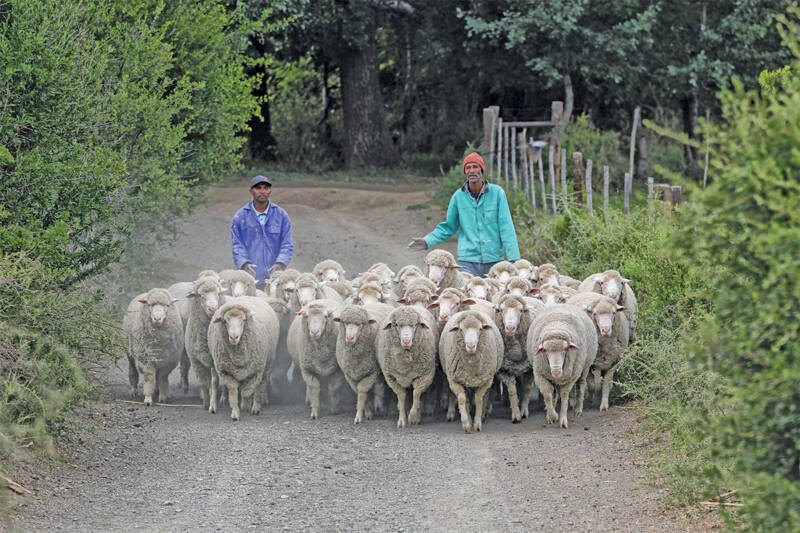
He also raises and sells prize-winning Dohne Merinos and takes care of guest-room maintenance.
“You have to be a lavatrician around here,” he quips. He has also become something of an expert in fossil hunting.
A fish called Mona Lisa
About 255 million years ago – give or take a million or so – a fearsome-looking predator called a gorgonopsian died somewhere on this farm, trapped in mud.
Artists’ impressions of the gorgonopsian show a powerful, low-slung predator with long sabre-like teeth, built like a cross between a crocodile and an oversized Boerboel.
The gorgonopsian would have preyed on clumsy-looking creatures we would not recognise today, the pig-sized Aulacephalodon, the fern-munching Pareiasaurus, and, in a pinch, a few Diictodons, the size of dassies, but with strange, beak-like mouths.
JP welcomes palaeontologists and researchers onto Ganora and they share their findings with him. In turn, he has a rich story to tell his guests just before supper, when he shows them his discoveries in the Ganora Museum’s Fossil Room.
In those days, the Karoo was a vast inland basin, a lush Okavango of unimaginable size. Long before the land dried out and the sea floor buckled to form peaks like the Compassberg, the gorgonopsian’s bones had turned to stone, buried far beneath the surface. But erosion and weathering had exposed it.
They all roamed this part of the world at least 50 million years before Jurassic-era dinosaurs appeared.
Palaeontologist Robert Broom wrote in 1932: “The mammal-like reptiles of South Africa may be safely regarded as the most important fossil animals ever discovered, and their importance lies chiefly in the fact that there is little or no doubt that among them we have the ancestors of the mammals, and the remote ancestors of man.”
JP points at an object in one of the display cabinets and says: “And here’s the Mona Lisa.”
Before us is displayed a complete, exquisitely preserved Permian-era fossil fish, with delicate scales and stubby fins, Kompasia delaharpei, found by JP himself on Ganora, and one of the most complete examples of its kind ever discovered.
Veld-walking with Henry
The next morning, we leave JP to his farming routine and join Henry Witbooi on an early veld walk to the overhang containing the San art, thought to be about 7 000 years old.
It may have been used by San shamans, a mystical place with ochre images of an eland with a snake head, a man with a wolfish head, and a faint figure of a lion with people armed with bows and arrows attacking it.
There is also the figure of a tortoise, apparently the only known San painting of such a creature in the country.
With a blade of grass, Henry points out the eland with the snake head, the leaping springbok and the old marks of a swallow nest.
Henry says the San regarded swallows with great reverence, in part because they made their mud nests in these very overhangs and rocks.
Their movements were thought to communicate with the ancestors who resided within the rock.
“And they also indicated the coming of rain by their low flights,” he says.
On the return walk, Henry shows us the pink candelabra flower, known locally as the bobbejaankandelaar.
As he was growing up between Nieu-Bethesda and on farms (his parents worked on Ganora), Henry used to constantly roam the veld.
“At home, my parents taught me about the medicinal powers of Karoo veld plants. Wilde-als (African wormwood or Artemisia afra) for colds and congestion, katjiedrieblaar (Knowltonia vesicatoria) to, amongst other uses, clean out the kidneys.”
The Davel family
Near the San overhang, we find a rock etching of a young girl praying before a cross. Next to it is a carved message in faulty Afrikaans: “Nooit sal ons weer mekaar die liefde kan bewys tot in die hemel want dit te laat wees.”
Roughly translated that means: “We will not be able to prove our love to each other until we are in heaven when it is too late.”
At breakfast later, Hester relates a poignant tale that goes with the etching.
“A young man called JA Davel sheltered in the overhang during the Anglo-Boer War after his father, mother and sisters had been sent off to a concentration camp in Port Alfred, and he was in hiding,” she relates.
“An English neighbour used to leave baskets of food out for the youngster. Davel was clearly sad about a romance gone wrong, hence the rock etching.
He died shortly after, some say of typhoid, some say of a broken heart.”
After a sunset drive with JP and Louis, where we had impressive views of Ganora Canyon carved by the Wilge River, with the ever-present Compassberg in the distance, we adjourned to the Old Bones Bar for pre-supper drinks.
Old bones bar
If you’re into ancient farm implements, you’ll be there all night. Ancient farming artefacts adorn the walls: a wooden wheat-tossing shovel, cunning old scales, spurs, scythes, pitchforks, brick moulds, a staggeringly clever floor nail extractor, old sheep mouth openers (for medication), gunbelts, bandsaws and muzzle-loading voorlaaiers from more than 150 years ago.
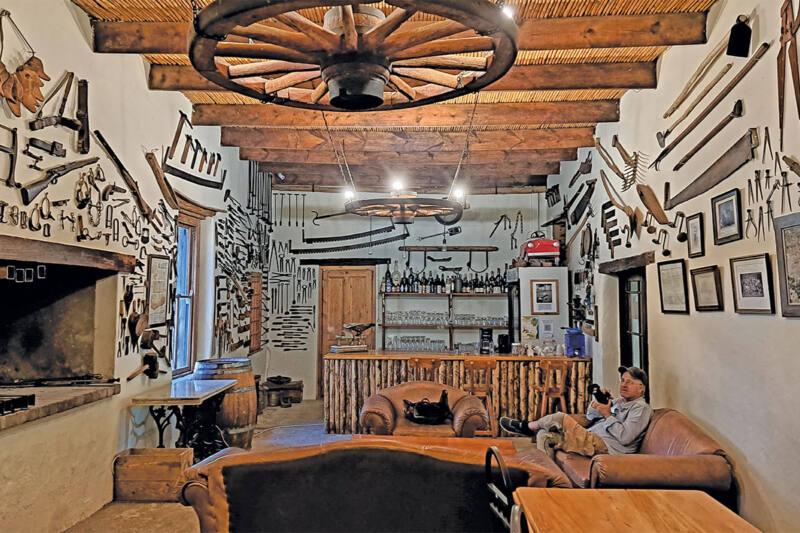
What catches my eye is a faded aerial photograph of the Ganora farmstead, with its wrap-around stoep, shearing shed, dam and hillside cottage.
“During World War II, there were German spies all over South Africa,” says JP. “This one was particularly clever. He used to overfly farms in the Karoo, photograph the farmsteads and then sell the images to the owners below.”
Ganora Guest Farm Details
There are 10 en-suite rooms, elegantly furnished, of varying sizes. The Khoisan Cottage sleeps six and is geared towards self-catering guests (rates at the other rooms all include breakfast).
Dinner is optional and charged separately, and Wi-Fi is available.
Activities include a guided farm museum visit, the interesting Bushman and Anglo-Boer War tour, and the fascinating medicinal plant walk.
There are also six marked hiking or mountain biking trails to choose from and is available to the guests.
For more information email [email protected], or visit ganora.co.za.