
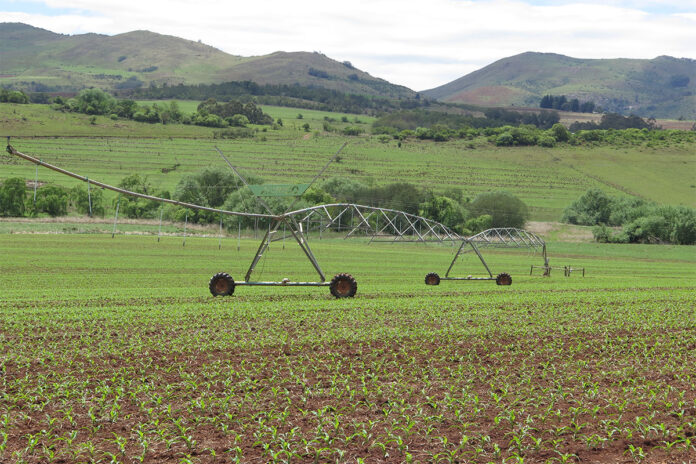
South African farmers face an important financial planning question: if the 2026/27 production season is drier than normal, can their farm businesses still cope?
In a mid-September press release, Paul Makube, senior agricultural economist at FNB, said the focus shouldn’t be on predicting a drought but rather on preparing financially for uncertainty.
El Niño has historically been associated with below-normal rainfall across Southern Africa and an increased probability of hotter and drier conditions across parts of the summer-rainfall region.
Makube said that for farmers, the financial question therefore extends beyond the seasonal outlook to whether their businesses have sufficient cash flow, working capital, and debt flexibility to manage weaker production outcomes.
Why a dry-season scenario matters
A weaker production season can affect considerably more than farm revenue.
Makube explained that lower yields, poor grazing conditions, quality losses, or delayed deliveries could place pressure on cash flow and reduce the funds available for the next production cycle.
The implications differ between farming enterprises. Livestock producers may face increased feed costs and slower animal performance, while farmers who rely on irrigation could face higher energy costs, water constraints, or quality-related losses.
The important consideration, therefore, is not only whether production may decline but whether the farm business has sufficient financial flexibility to absorb the consequences.
Makube advised farmers to pay attention to early warning signs that their businesses are becoming financially stretched.
These could include using overdraft facilities earlier than expected, carrying supplier balances forward, becoming increasingly reliant on short-term credit for seasonal inputs, or basing repayment plans on optimistic yield and price assumptions.
Working capital is often one of the first areas to come under pressure.
A dry-season scenario could create additional liquidity requirements for replanting, supplementary feed, irrigation energy, transport adjustments, repairs, insurance excess payments, or delayed income receipts.
Without sufficient financial buffers, Makube warned that short-term decisions could become more expensive and could ultimately weaken a farm’s future productive capacity.
Test the numbers before pressure builds
One of Makube’s key recommendations is for producers to test their cash flow against different possible production outcomes.
He said every farm should consider at least three cash-flow scenarios:
- A normal season;
- A moderate downside scenario; and
- A severe dry-season scenario.
Rather than simply calculating the final financial outcome under each scenario, Makube said the exercise should help identify when the first point of financial strain occurs. This could be the point at which the business moves into a negative cash position, its overdraft facility becomes fully utilized, or scheduled repayments become difficult to honour under lower production assumptions.
Identifying this point before the season unfolds gives the farmer a clearer indication of how much financial flexibility the business actually has.
Don’t wait to speak to your financier
Makube also emphasised the importance of timely discussions with financial institutions.
Farmers should engage their financiers as soon as updated cash-flow projections indicate that repayment capacity, working-capital requirements, or covenant headroom could deteriorate under a plausible downside scenario.
Early engagement, he said, provides more room to consider practical options before the farm business comes under visible financial pressure.
Producers should prepare the relevant financial and production information before these discussions. Makube recommended having updated management accounts, revised cash-flow forecasts, production assumptions, input commitments, existing debt schedules, and a practical response plan available.
The objective is to demonstrate that the potential risk has been identified early, quantified, and proactively managed.
Prepare for risk, not failure
For Makube, El Niño should ultimately be approached as another production and financial risk that needs to be incorporated into farm planning, rather than an assumption that the season will fail.
“El Niño is a risk factor, not a forecast of failure,” he said.
According to him, farms that are better positioned to withstand a dry-season scenario are those that understand their financial position early, protect their working capital, avoid unplanned carry-over debt, and begin financial discussions before the pressure becomes visible.