
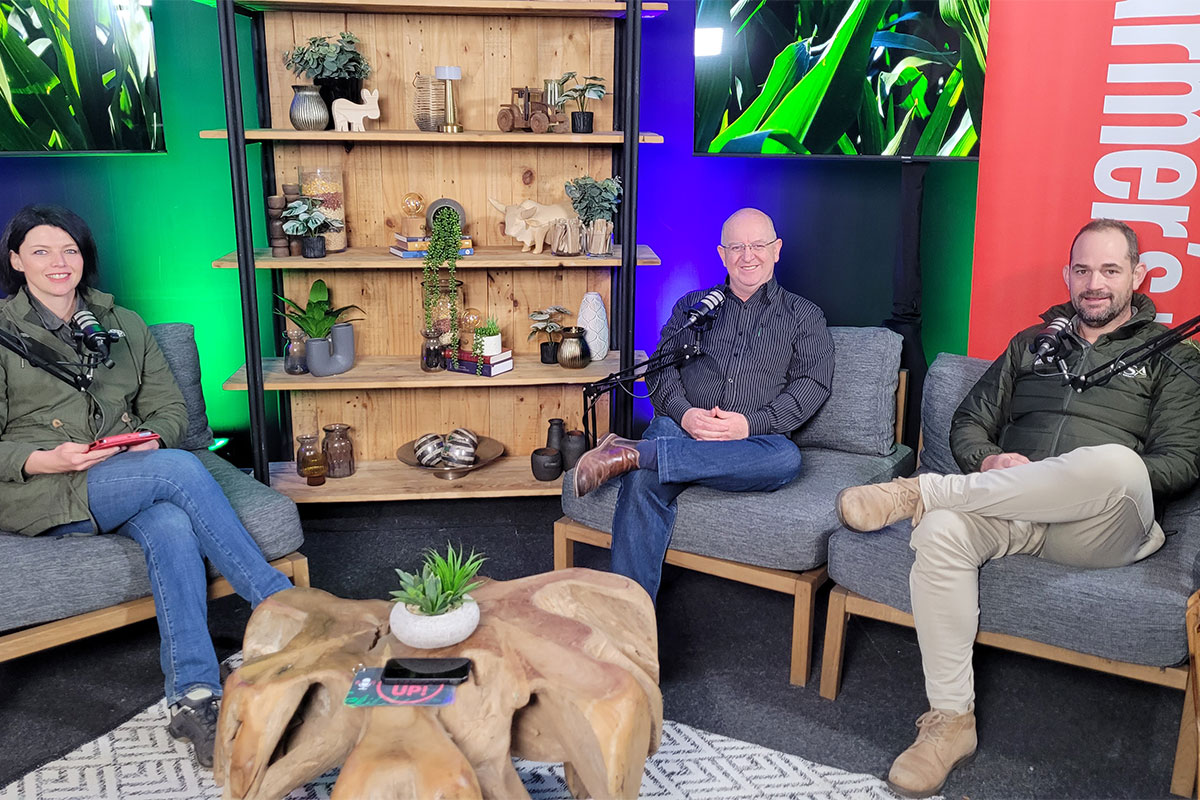
Speaking to Farmer’s Weekly during a panel discussion at Nampo 2026, Dirk Strydom, managing director of Nampo, said pressure on farmers has intensified sharply as input costs continue to climb while grain prices remain subdued.
“Farmers are price takers; they need to absorb increases like the more than 50% rise in diesel prices we’ve seen over the past two months,” he added.
While strong grain seasons over the past few years had created some financial buffers for many producers, Strydom warned that the next planting season could become “crunch time”.
He noted that pressure differs across commodities, with wheat farmers particularly vulnerable after several difficult seasons marked by poor prices, rising costs, and production setbacks.
He added that soya bean production had helped cushion many farmers against rising costs during wetter production cycles.
However, global oversupply is now weighing heavily on grain markets. “We are seeing an overabundance of stock in global markets, and we need to find new markets to absorb it,” Strydom said.
Focus on profitability, not volume
Dawie Maree, head of agriculture information and marketing at FNB, stressed that simply chasing higher yields is no longer enough. Instead, farmers need to identify the “sweet spots” where profitability, rather than maximum production, can be achieved.
“It’s not about producing the largest crop anymore. It’s about doing the calculation to determine how a farmer can make the most money per hectare,” he explained.
Maree added that farmers are increasingly scrutinising technology investments and only adopting systems that demonstrate a clear return on investment.
He and Strydom agreed that the remaining opportunities for farmers lie largely in small efficiency gains through better data use, tighter cost management, and informed decision-making. These incremental gains can add up over time and have a meaningful impact.
In addition, Maree said farmers need to work closely with financial advisers, bankers, and technical experts to guide decisions during difficult cycles.
“Rassie [Erasmus] didn’t win the World Cup twice on his own. He did it with a team of experts,” he added.
Record-keeping and financial analysis are also becoming increasingly critical as margins tighten and opportunities for major production gains narrow.
Strydom added that managing fixed costs is becoming particularly important, as these are often harder to adjust during downturns than variable costs.
Infrastructure and policy reform needed
While farmers can still improve on-farm efficiencies, many of the biggest solutions are outside of producers’ control.
Strydom said South Africa’s logistics bottlenecks, port inefficiencies, and failing rail infrastructure are limiting export opportunities and costing farmers significant income.
“If we can get the rail network running and ports functioning properly to capitalise on export markets, it could easily put R300/t to R400/t back into grain producers’ pockets,” he said.
Strydom also highlighted opportunities to increase exports of meat and livestock products, effectively putting “grain on legs” through value-added exports rather than shipping raw grain.
He added that South Africa’s farmers have become exceptionally efficient, often outproducing demand growth in regional markets, meaning the country urgently needs to develop deeper export markets.
Both experts warned that while countries such as the US and those in Europe heavily support their farmers through subsidies and market interventions, South African producers largely have to weather global cycles on their own.
“The producer space has very limited movement left. The external market is where the big opportunities lie, but those changes take time, policy, and negotiation,” Strydom concluded.