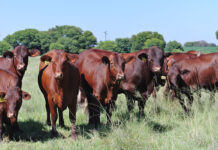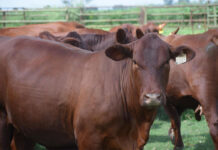


The Ankole is a versatile breed that is highly sought after in South Africa due to the animals’ exclusivity and scarcity. This is according to Anton de Swardt, president of the Ankole Breeders’ Society of South Africa and owner of the Ubhejane Wildlife stud near Bela-Bela, Limpopo.
“We firmly believe that Ankole has a bright future due to their resilience and relatively low production costs. They are sought after and versatile, and do well notwithstanding all the challenges nature could possibly throw at them,” says De Swardt.
Ankoles are sometimes mistaken for Watusis, but De Swardt points out that the Ankole in South Africa comes from Uganda. Traditionally, Watusi cattle come from Rwanda. The Watusi herds in South Africa are descendent from animals that were in the Bloemfontein and the then Port Elizabeth zoos, and from animals imported in the late 1980s and 1990s.
First arrivals
According to an article written by Dr Morné de la Rey, Jacques Malan and Sally Blaine and published on the society’s website, the Ankole, a Ugandan landrace, was brought into South Africa by Cyril Ramaphosa and De la Rey. This followed a visit by Ramaphosa to Uganda. A nucleus herd of Ankole was bought from Ugandan President Yoweri Museveni and moved to an approved facility at Ol Pejeta Conservancy in Kenya.
The animals were flushed, and the first embryos arrived in South Africa and were transferred in 2003. The first offspring from these embryos were put through all the testing required by the Directorate of Animal Improvement. The Ankole was consequently listed as a breed being evaluated in terms of the Animal Improvement Act and was finally approved as a recognised breed in May 2019.

“The official approval of the Ankole was a true bonus for South Africa. The Ankole is extraordinarily hardy and does well across all South African provinces. They are a low-maintenance breed with excellent returns on investment. The breed’s extreme resilience and genetic distinctiveness give the breed great potential to become a valued player in the local beef production industry, although the production of Ankole beef is still in its infancy,” according to the article.
Crossbreeding
“The Ankole performs well on very marginal land with little to no supplementary feeding. They are very heat tolerant, which makes the breed ideal for South African farming conditions. The breed shows excellent promise as far as crossbreeding is concerned. The Ankole will improve, among others, calving ease, pest and disease resilience, and the impartation of hybrid vigour to its offspring,” the article continues.
De Swardt says there is a substantial demand for the animals’ meat, horns and skins. Work is being done to develop the health and luxury beef markets for Ankole cattle as the beef is lean, low in cholesterol and high in omega-3 and omega-6 fatty acids. Although the intention is to develop the Ankole as a beef breed, it will take some time before the marketing of commercially available Ankole beef will commence because of the limited numbers of animals in the country at the moment.
Ankole numbers
There are fewer than 2 000 registered purebred Ankole cattle in South Africa, and 79 stud breeders registered with the Ankole Cattle Breeders’ Society of South Africa. De Swardt says local Ankole cattle prices range from comparatively modest to high, depending on quality and pedigree.

“The society is actively educating and encouraging prospective breeders, emphasising the benefits and best practices of Ankole breeding. We are lucky in the sense that new genetics were brought in from Kenya in 2024 to improve the local pool. This happened just in time, as the quarantine and breeding centre in Kenya has since been closed, meaning that additional genetics are not likely to be brought in for the foreseeable future,” De Swardt explains.
A natural cooling system
The Ankole cattle horn is an outstanding example of evolutionary adaptation. The horns, with small capillaries running inside them, serve a critical biological function in terms of thermoregulation. The horns act as a natural cooling system, which cools the animals off as their blood circulates through the capillaries, helping to regulate the cattle’s body temperature.
Ankoles are therefore exceptionally heat tolerant, a very sought-after trait in light of the reality of global warming.
The ideal Ankole appears elegant and graceful, with long, thick and symmetrical horns. There should be a neck hump with a straight topline and a sloping rump. Ankole cattle are multicoloured, ranging from black to white.

The breed is medium-framed, with mature cows weighing between 380kg and 550kg, and bulls between 500kg and 800kg.
The deep dewlap, loose skin, short straight hair coupled with thermoregulation through the horns add to the dispersal of body heat.
Ankole cattle, if worked regularly, are calm. Cows are fierce mothers and can become quite feral if not regularly worked. They survive in Africa in areas populated by the predators of the Big Five.
Precision and passion
In the 70-strong Ubhejane Wildlife stud, precision and passion are at the forefront. Says De Swardt: “For our own stud, my wife Sally and I mainly use embryo transfer to optimise return on investment. We work with the best genetics in the industry and grow this by using in vitro, in vivo and artificial insemination. Natural breeding is also used.
“The animals are artificially inseminated within 90 days of them giving birth in order to optimise herd productivity. Selective pairing is implemented to safeguard genetic diversity.
“We monitor our herd of recipient cattle daily to proactively manage the health and well-being of the animals.
Our objective is to be the most genetically diverse Ankole breeders in South Africa through use of scientifically advanced breeding techniques and effective management. The rest of our farming concern focuses on buffalo, sable, kudu and nyala breeding.”
Genetic diversity
The Ubhejane Wildlife herd is known for outstanding genetic diversity, through the introduction of genetics from the most prominent bulls in the country. We pay particular attention to breeding out to optimise diversity. We have invested in the new genetics and this will maintain our herd as one of the most genetically diverse herds in the country,” De Swardt explains.
The Ubhejane Wildlife herd is kept on typical sourveld bushveld with lots of karee and acacia trees. Average peak temperatures in summer are around 35°C, with cold nights in winter that drop below zero and high levels of frost.
The average rainfall is between 550mm and 600mm per year. Some 8ha of the De Swardt land are planted to Aries II white buffalo grass while about 4ha are planted to a mixture from Brasuda, and 4,5ha are planted to brown teff under dryland conditions.
A rotational four-camp grazing programme is followed. De Swardt says the cattle, in particular the recipient cattle used for embryo programmes, receive significant supplementary feeding in order to augment carrying capacity.
Biosecurity
Biosecurity is of the utmost importance in the Ubhejane herd. All animals that come onto the farm are put in quarantine and are retested, even if accompanied with clean test results from the sellers.
The herd is dipped regularly all year around, coupled with an immunisation programme relevant to the area.
Diseases endemic to the region include redwater, heartwater, anaplasmosis and infection caused by Moraxella bacteria.
The Ankole is innately resistant to these diseases due to their thick skins, but the animals are monitored regularly and treated as and when needed.
“Ankoles are well suited to communal farming as well as commercial farming as they are able to do well on very little. They breed easily, are resilient and require little in the way of management.
They provide healthy meat and their milk is very nutritious, with a high butterfat content. This will assist in food production in the commercial sense and for smallholder farmers,” says De Swardt.
For more information email Sally de Swardt at [email protected], or Anton de Swart at [email protected].