
The event was held under the theme ‘Cultivating Women Empowerment, Fostering Economic Growth and Breaking Barriers’.
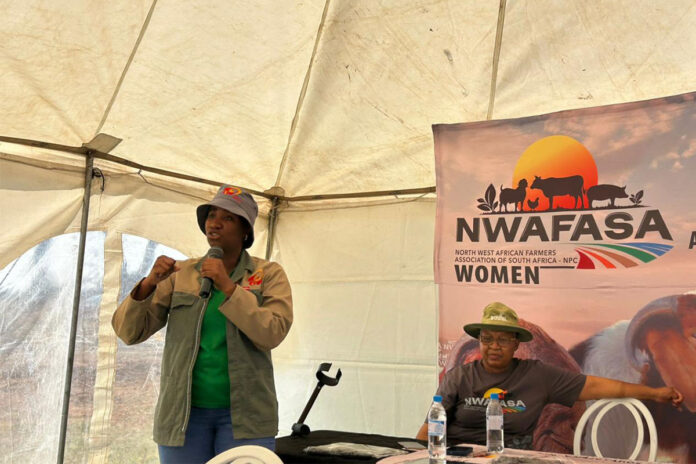
Speaking to Farmer’s Weekly, NWAFASA Women’s Desk Chairperson Nkoti Seloane said the event aimed to celebrate the role of female farmers in the agriculture sector and bring key stakeholders together to help find solutions to some of the challenges women farmers face.
In her presentation titled ‘The Farmer Behind the Farm’, private social worker Kgomotso Bessie identified the high levels of stress that farmers of all genders face as one of the major challenges confronting them.
“I think sometimes we forget about the farmer and only focus on the farm,” she said, highlighting the importance of personal well-being.
Bessie used a tractor to illustrate the different aspects of well-being that can help support farmers. She used tractor fuel to represent physical energy and health; the engine to represent mental wellness, thinking, and motivation; oil to represent emotional well-being and stress levels; the tyres to represent the strength of support systems and relationships; and the steering to reflect a farmer’s sense of control over their life.
“Are all the parts of your tractor working well?” she asked, prompting the farmers to reflect on their well-being.
The event also drew on the experiences and expertise of two women in agriculture: Kedidimetse Radebe, who has been farming since 2013 and hosted the event on her farm; and Lemogang Moote, an agricultural economist and lecturer at Taung Agricultural College.

Radebe, who grows barley, butternut, and watermelons, spoke about the trial and error in her farming journey, encouraging women farmers to support and uplift one another.
“When you see another woman down, pull her up,” she added.
Moote, meanwhile, celebrated farmers’ resilience in the face of challenges.
“If a farmer encounters a problem, they will not close the farm and do something else. Instead, they will come back to it again,” she said.
Moote linked stress management to proper planning, highlighting the importance of farmers keeping accurate business records to help them anticipate and respond to challenges before they become stressful situations.
“We know that agriculture is a risky environment, but you can manage the risks through proper planning, such as taking up insurance or diversifying your crops,” she explained.
Beyond resilience and planning, the day’s programme also focused on the institutional support available to women farmers, with North West Department of Agriculture and Rural Development extension officer Kgomotso Lotshe highlighting opportunities available through programmes such as the Crop Massification Programme and the Goat Massification Programme.
She added that while the department would support farmers as they grew their farming operations, these programmes required farmers to have already started farming, even on a small scale.
Finally, Lindokuhle Mbonambi, information officer at the Small Enterprise Development and Finance Agency (SEDFA), said the organisation provides developmental support to women-owned businesses, including through the Women Enterprise Coaching Programme, which combines personal and professional coaching with business-skills development.
He said that while SEDFA does not specifically fund agricultural businesses, farmers can still access the organisation’s Township and Rural Entrepreneurship Programme, which supports small, medium, and micro enterprises at varying levels of development.
“[SEDFA has a range of] development support that farmers can access, such as business training, business formalisation, and linkages with the market,” he said.