
Tractor sales rose by 4% year-on-year in April 2026 to 548 units, while combine harvester sales increased by 13% to 52 units, according to the South African Agricultural Machinery Association’s latest statistics.
Year-to-date tractor sales are now 2,7% higher than the corresponding period last year, reaching 2 352 units, while combine harvester sales are up about 9% to 117 units.
Speaking to Farmer’s Weekly at Nampo 2026, Rankin said the stronger April figures followed a slight slowdown in March, after a prolonged period of strong demand driven by favourable harvests over the past few seasons.
“The industry has enjoyed about 14 months of relatively strong tractor sales, largely supported by good crop yields and improved farmer confidence following better production seasons,” he explained.
Looking ahead, Rankin said the outlook is less certain as rising fuel prices and input costs begin to put pressure on margins.
Sales are expected to remain relatively positive in the short term, partly due to machinery orders placed before the recent sharp increase in diesel prices and the resulting knock-on effects on production inputs such as fertiliser, herbicides, and pesticides.
“The summer crop prospects are still promising, although harvesting in some areas has been delayed by late rains,” he said.
“At the same time, market sentiment has shifted towards greater caution and uncertainty due to lower commodity prices, prospects of El Niño towards the end of the year, and sharply higher fuel costs, which are placing additional pressure on input costs.”
According to Rankin, farmers are likely to scrutinise production expenses more closely ahead of the upcoming summer crop season, which could result in some delaying investment in new capital equipment.
“Many farmers have invested in new machinery over the past two to three years, so it is likely they will prioritise maintaining and optimising what they already have rather than committing to new capital spending in the short term,” he said.
Industry forecasts currently suggest that total tractor sales for the 2026 calendar year could be similar to, or slightly lower than, the 7 668 tractors and 207 combine harvesters recorded in 2025.
Nevertheless, tractor sales in 2025 were 19% higher than the 6 463 units sold in 2024, while combine harvester sales were 3% higher than the 201 units recorded in 2024.
Market trends
Rankin said one of the clearer trends evident at Nampo 2026 is a gradual shift towards more formalised, franchise-style dealer networks in the agricultural machinery industry. Rather than loosely affiliated dealerships representing a range of brands, manufacturers are increasingly tightening their dealer structures, with outlets operating under stronger brand alignment and more consistent service and support standards.
At the same time, he noted growing competition among dealers to secure representation of the brands most in demand among farmers. With machinery becoming more advanced and farmers placing greater emphasis on reliability, service support, and parts availability, the strength of a brand – and its dealer network – is playing an increasingly important role in purchasing decisions.
“Many manufacturers no longer see themselves as machinery suppliers but rather as technology developers investing almost as much, if not more, in software and systems as in mechanical engineering,” he explained.
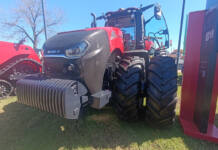
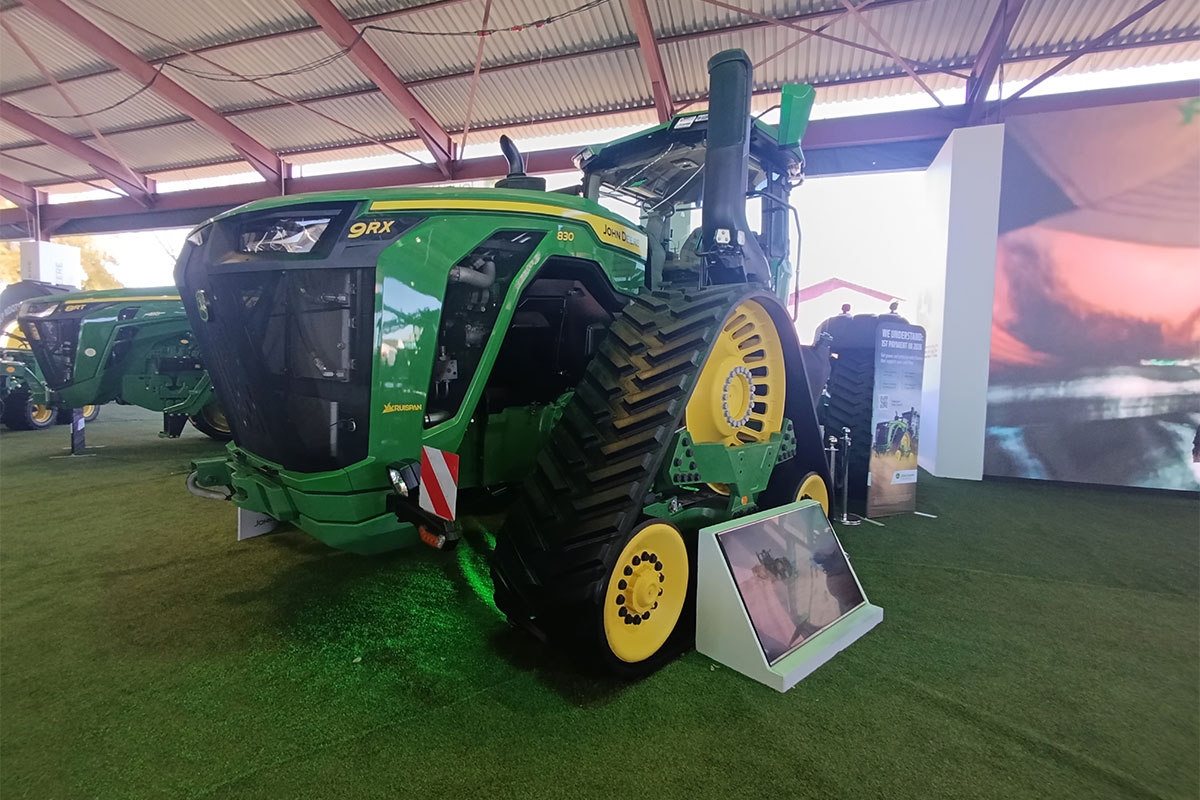
Rankin said another clear trend in the market is the continued move towards larger, high-capacity machinery, with manufacturers continuing to showcase increasingly powerful flagship tractors such as the Case IH Steiger series, New Holland T9 series, and John Deere 9RX series.
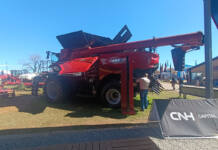
A similar trend is evident in combine harvesters, where the focus has shifted steadily towards higher-capacity machines designed to improve harvesting efficiency and keep pace with increasingly tight harvesting windows.
However, Rankin cautioned that these machines remain niche products, aimed primarily at large-scale commercial operations, and are out of reach for many producers.
Rather than focusing on headline-grabbing flagship models, he said a more useful indicator of market direction is the average power of tractors being sold. This, he explained, provides a clearer picture of what is actually happening on farms, where gradual shifts in horsepower demand often reflect changing production systems, farm consolidation, and the need to complete more work in shorter operational windows.
According to the March 2025 AGFACTS Newsbrief, the total tractive power of South Africa’s tractor fleet has increased significantly over the past decade, rising by 32,2% from 6,48 million kW in 2014 to 8,72 million kW in 2024. This is almost double the level recorded in 2004.
The growth has not only been in size but also in quality. The total tractive power of tractors younger than 10 years now stands at 5,33 million kW, up 13,3% on a decade ago and 85,5% higher than 20 years earlier.
While the proportion of younger tractors has remained relatively stable over time, the average power of the fleet has increased steadily, rising from 76kW two decades ago to 83,3kW in 2024.
Sustaining the current size and performance of the fleet will require consistent annual sales in the region of 5 000 to 6 000 tractors, particularly if the upward trend in engine power continues.
Market behaviour
Regarding broader market behaviour, Rankin said South African farmers continue to invest in agricultural machinery because they recognise the need to remain globally competitive, particularly against countries where producers benefit from higher levels of state support and subsidies.
However, he added that not all producers are in a position to adopt the latest precision technologies immediately, as adoption ultimately depends on whether the technology delivers a clear return on investment under specific farming conditions.
“The technology needs to justify the cost and make sense for your farming system,” he said.
While manufacturers are increasingly exploring alternative power sources, including electric and methane-based tractors, Rankin said these remain niche applications in South Africa for now.
New Holland, for example, has introduced its methane-powered T6 tractor globally, but local uptake is likely to remain limited mainly to dairy operations with sufficient access to on-farm waste for fuel.