Latest articles

Agri-wheels focus: The Amarok Single Cab – luxurious workhorse
VW impressed the motoring world with its first-ever one-ton bakkie, the Amarok Double Cab. Now the Single Cab smaller version has roared onto the South African market, offering the farmer a winning combination of comfort and durability. Lloyd Phillips was in the driving seat
Agri-wheels focus: The Steed 5 does GWM proud
Great Wall Motors top-of-the-range Steed 5 pickup is sure to impress with its value-for-money, hardiness and comfort. Lloyd Phillips put the vehicle through its paces

Can a ley crop be profitable?
Planting a pasture ley crop is good for your soil – but is it good or bad for your bank balance? Robyn Joubert finds out.
Ninth generation of CR Twin Rotor combines
New Holland's latest CR combine harvesters improve harvesting efficiency for large-scale operations, offering flexibility for all crops from grain through to maize and rice.
Catching foot-and-mouth disease early will mean fewer cattle culled
A new study indicates that if FMD-affected cattle are promptly identified and removed from the herd, there may be no need for pre-emptive culling in the immediate area of an infected farm.
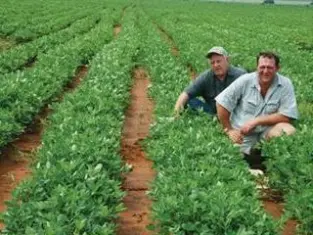
Beating wild lucerne in groundnuts
A new herbicide is proving more than a match for weeds in groundnuts.
Stopping salmonella
A new test for salmonella in poultry and eggs will produce faster and more accurate results.
SA veldfires contribute little to global warming
The effects of veldfires on the atmosphere and climate aren't straightforward - and a recent study of South Africa's veldfires yields some surprising results, writes.
Quantifying what nature gives for free
The World Bank has launched a new programme that aims to put a value on a country's ecosystems in the same way GDP is measured.
Are disease-resistant sheep less fertile?
Researchers have discovered an odd relationship between disease-resistance and fertility in Soay sheep. Roelof Bezuidenhout reports.
Getting the most out of your glyphosate product
Glyphosate-based broad-spectrum systemic herbicides are invaluable in most farming enterprises. But follow simple guidelines to avoid sub-optimal and economically wasteful results. Lloyd Phillips reports.
New environmentally friendly ‘styrofoam’
An ultra-light biodegradable styrofoam substitute may put an end to plastic pollution and overburdened landfills, writes Alan Harman.
Healthy monola set to be a winner
With consumers growing ever more health-conscious and the food industry under pressure to get rid of "bad" cooking oils, this new speciality canola couldn't have been launched at a better time. Demand is only likely to increase, and so will farmers' bottom line. Kobus van Tonder reports.
Conservation implements at KZN No-Till Conference
Distributors and their dealers demonstrated machines from the ever-increasing range of conservation agriculture implements at the KZN No-Till Club's 2010 annual conference near Bergville. Peter Hittersay reports on some new products.
New colour solution for table grapes
Achieving good colouration in table grapes is an important marketing tool, but very warm temperatures in some of South Africa's table-grape-growing regions hamper this. Research presented at the International Table Grape Symposium suggested a new growth regulator can encourage stronger berry colour in table grapes. Denene Erasmus reports.
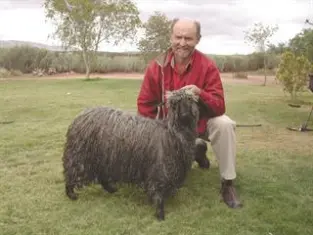
Is this the first blackgora?
While mohair purists advocate only pure white fibres, Roelof Bezuidenhout discovers a rare black specimen of fine quality.
Controlling bovine viral diarrhoea
Effectively controlling Bovine
viral diarrhoea virus (BVDV) in cattle herds takes an integrated farm biosecurity system. This includes keeping farm fences in good condition and limiting the movement of unauthorised people and cattle on and off the farm. But a pillar of any system should be a comprehensive vaccination programme.
British police get serious about farm thefts
An unusual sight at recent agricultural events in the UK was a John Deere 6630 tractor decked out in police livery, complete with the obligatory blue light.
Evergreen agriculture is the future of farming
Scientists have called for radical transformation of the agricultural sector to cope with climate change and food security, writes Alan Harman.
Sun spots behind droughts?
Arguments about CLIMATE change have been dominated by the role greenhouse gas emissions play, but the old sunspot theory is regaining lost ground. Will Alexander, a retired professor from the Department of Civil and Biosystems Engineering, University of Pretoria, insists there's a link between solar activity, climate and drought.