
Obert Chinhamo
Chinhamo’s semen donation initiative stems from his concern about inbreeding, a major challenge in Zimbabwe’s livestock industry, where over 90% of cattle are owned by communal farmers who inadvertently perpetuate poor genetics by breeding cows with inferior bulls.
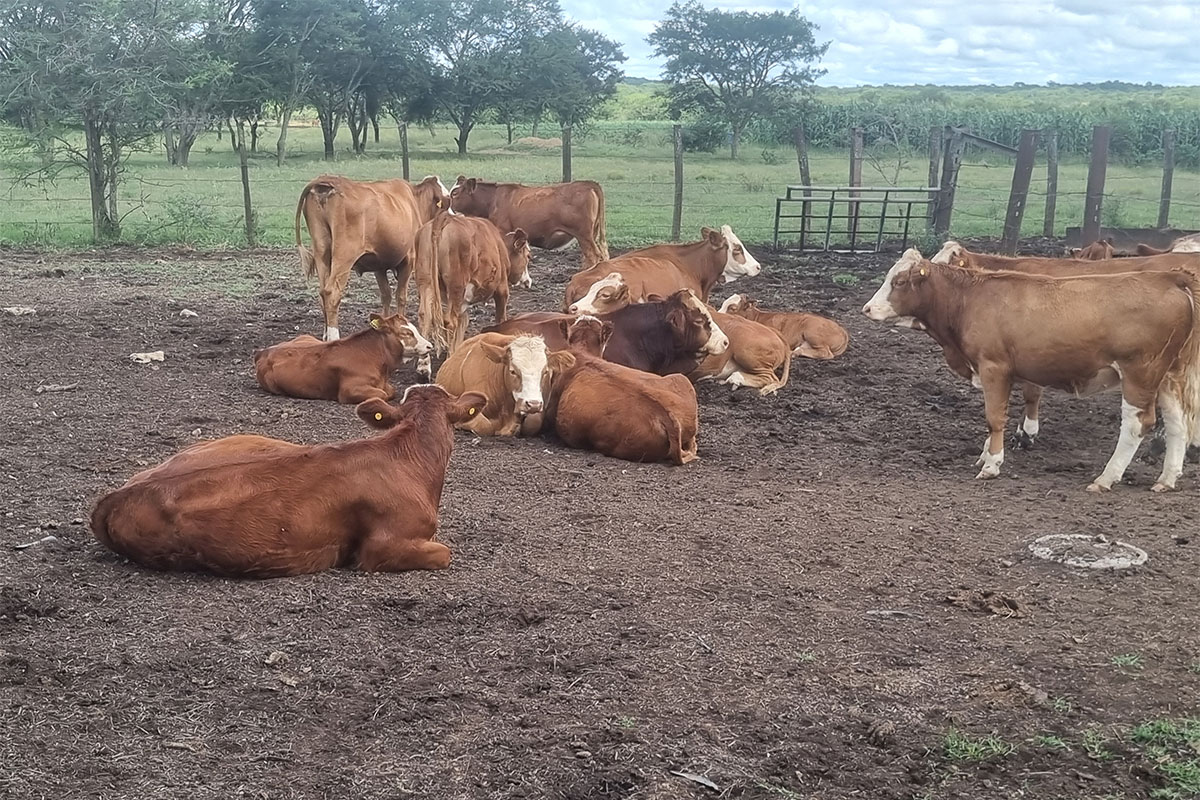
Chinhamo, who runs a stud called Biano Simmentalers in Esigodini near Bulawayo, says crossbreeding with Simmentalers means the offspring inherit 50% Simmentaler genetics, boosting communal farmers’ herd fertility and adding value to the industry.
READ The Simmentaler advantage in Southern Africa
The breeder invites the Matopos Research Station to his farm, where experts collect the semen for distribution to farmers.
Chinhamo runs a herd of approximately 300 Simmentalers, including calves, bulls, bull calves, heifers and cows, a number limited by the size of his farm.
With over two decades of experience breeding Simmentalers, he currently chairs the Simmentaler-Simbra Society of Zimbabwe, an organisation representing breeders of both Simmentalers and Simbras, a Simmentaler-Brahman hybrid.
Simmentaler semen boost communal farms herds
“We produce semen that we are putting on the market. For the communal set-up, we are donating semen. We are working with Matopo Research Station. They come here and draw semen, and the semen is meant to be donated to communal farmers so we get them to improve their herds,” says Chinhamo.
“We don’t donate semen to commercial farmers. They come and buy it as they have the capacity to do it.”
Simmentalers are a dual-purpose breed, excelling in both milk and beef production, Chinhamo says. He notes that farmers often buy Simmentaler bulls to improve milk flow in their herds, and the resulting progeny typically exhibit better milk production than their mothers.

Crossbreeding with Simmentalers also yields good steers, improved weaning weights, and enhanced milk production in heifers.
Chinhamo says he previously ran his stud with other breeds, focusing on feedlot production, and realised that intensive farming is more suited to converting feed into meat when resources are limited.
“My experience with the feedlot taught me that when I fed Simmentaler or Simmentaler-crossed animals, we did very, very well. You will find when you feed 15kg of feed to any Simmentaler or Simmentaler-type animal, it’s going to be efficiently converted into beef and you’ll probably get a 2kg/day conversion, which you can’t get with most of the other breeds,” he says.
Fetching good prices
Chinhamo says his stud weans calves at 280kg to 320kg when they are six months old.
“Our 2024 heifers were all born from September to November 2024, and that group of heifers is already gone to the bull and are cycling and taking the bull. So, what else would you want? They weigh over 340kg, all of them,” he says.
He has had a steady stream of repeat clients buying bulls, a sure sign that his stud is doing a good job.
The average bull price across breeds in Zimbabwe is US$4 500 (about R72 000), and heifers will sell between US$2 000 (R32 000) and US$2500 (R40 000). If they are certified pregnant, they will sell for up to US$4 000 (R64 000), depending on genetics.
Semen from across the globe builds Zim studs
Chinhamo says he continually strives to improve genetics, making his cattle competitive with those in South Africa, Namibia, and Botswana. To achieve this, he has imported semen from top breeders worldwide, notably Germany.
“We’ve got a lot of semen and live bulls that we imported from Simlee Simmentalers in South Africa. We’ve also imported from Lussim Simmentalers in Botswana and Litchtenstein Simmentalers in Namibia, to mention a few. The reason we bring these in is so that we keep getting new genetics. We’re also looking to keep running our herds and avoid inbreeding,” he adds.
The challenge of falling numbers
Chinhamo says the Simmentaler-Simbra Society of Zimbabwe has only five members, and there are fewer than 1 000 registered Simmentalers in Zimbabwe. Some other breeders did register, but have generally not been submitting returns or paying levies, leading to them being deregistered.
Chinhamo urges young farmers to join the society, saying breeding has a guaranteed market – his stud sells 40 bulls annually. The 2023 bulls are gone, and buyers are already eyeing 2024 stock, highlighting strong demand. He is confident that the demand for Simmentaler bulls will treble in the next 10 years.
READ How a Simmentaler stud thrives on mountainous veld
He adds that Simmentaler breeders face similar challenges to other livestock breeders in Zimbabwe. One of them is the lack of financial facilities from banks, which means one must have ready cash for all operations requirements like vaccines.
He says there are also a lot of cattle diseases in Zimbabwe, including foot-and-mouth disease and January disease. This restricts cattle movement and resultantly trade, which hits farmers’ pockets.
On his farm, Chinhamo prioritises fertility and nutrition, especially in winter, which is the toughest time of the year as many farmers struggle to keep their cattle in good condition during this period.
He also bales hay as an operation on its own.
“Silage is one of the big things that we do here. We have about 15ha of maize every year that we cut into silage. So as we stand today, we’ve got enough silage to last us this year before we even harvest what you see in the fields. All the maize that you see here, all the sorghum that you see, all the lablab beans and so on, it’s for our livestock.”
Record-keeping
Chinhamo says most local farmers use reproductive technologies that include temporary weaning or estrumate for oestrus synchronisation. Even when cows have calves, there is a need to rebreed within at least 60 days to 120 days so that one can get a calf every year.
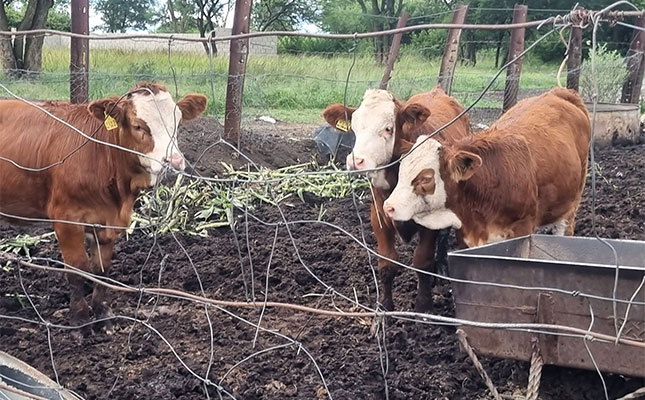
He says a farmer cannot run a pedigree herd without data collection. So when a calf is born, and when it is weaned, normally at 200 days, it is weighed. Both the calf and its mother are weighed to compare their weight at weaning. There is also weighing at 400 days, which is the inspection age.
“And then you also measure the scrotum on the bulls. The bigger the scrotum, the more fertile the bull is. That’s the mathematics there. You also record the mature cow or mature animal weight, which is at 600 days,” adds Chinhamo.
“You also want to check things like fertility and intercalving periods, and in some sophisticated operations in Zimbabwe, scan for ribeye fat and other traits. In today’s breeding, we are more looking at days to calving than at the intercalving period. The reason being is that days to calving is showing you the period from when the bull is in and when the bull is out.
“The intercalving period can be determined by many factors, including, but not limited to droughts, and nutritional issues that relate to drought anyway. But if you measure days to calving, it’s the period you’re putting in the bull, taking out the bull, and your cow getting pregnant, and how long it’s taking to bring up the calf. I think this is one of those important traits or features that farmers are looking at now, more than intercalving periods.”
Chinhamo, in his 60s, is grooming his children for succession. One of his sons runs his Simmentaler herd, the other one the Simbra herd, while his daughter handles the administration.
Tsungirai Tembo owner of Blessed Simmentaler Stud
Tsungirai Tembo of Blessed Simmentaler Stud started her breeding project in February 2022 in Lupane, Matabeleland North, after buying her first batch of cattle comprising six in-calf Simmentaler females and a bull from Chinhamo’s Biano Simmentalers.
Tembo says the key performance indicators she focuses on in her Simmentaler operations are fertility, udder conformation, milk yield or production, the growth rate, and feed conversion ratio.
“My herd had grown to 30 cattle, but recently I sold two bulls, leaving the herd with a total of 28 cattle. My sales recorded an average amount of US$5 000 (R80 000) and the bulls were weighing about 850kg when I sold them,” she says.
“The breed’s key strength is fertility. At one time I recorded a calving interval of 11 months. The Simmentaler also has an excellent carcass quality with good marbling and tenderness.”
She says Simmentalers are good for producing milk and one can record 3 900ℓ to 4 090ℓ of milk per lactation.
Managing genetics for long-term performance
Tembo uses the following tools or strategies on her farm as a way of managing genetic diversity:
- DNA testing to reveal genetic make-up, identify unique traits and detect genetic disorders;
- EBVs (estimated breeding values): estimating an animal’s genetic potential to predict its genetic potential for specific traits, which helps to select top performers;
- Pedigree tracking: tracking ancestry helps to manage inbreeding and preserve desirable traits.
Tembo says a challenge faced in the cattle industry in Zimbabwe is illegal trafficking of cattle or livestock, which spreads diseases. Another challenge is climate change, which is causing rising temperatures. Changing weather patterns bring prolonged droughts and further strain cattle production, she adds.
“Farmers should try to harvest semen, so that whenever the animals are attacked and are no longer there, the semen will be there and artificial insemination can be done,” she says.
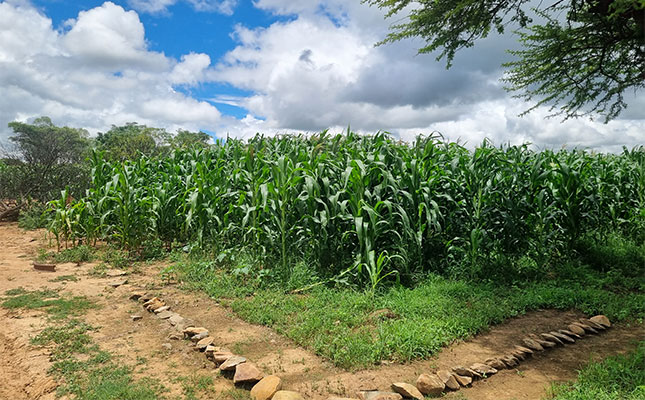
She uses bana grass and maize stover to make silage.
“This Simmentaler has helped improve productivity and profitability on my farm by reducing the time to market because of its fast growth rate, increased milk output, and having more offspring because of its higher conception rate/fertility,” she says.
She says the most significant investment she has made so far is buying a chaff cutter to cut straw and stover. The implement can cut up to 7t per hour.
“Over the next five to 10 years in Zimbabwe the Simmentaler breed is to going evolve significantly, driven by the advancement in genetics and breeding technologies. Zimbabwean breeders are already collaborating with American breeders to create the Simangus, combining Simmentaler and Angus traits for enhanced productivity and profitability. Because of its docility and sustainability, the Simmentaler is an attractive choice for environmentally conscious cattle farmers in Zimbabwe,” she adds.
Kelvin Mundeta integrates Simmentalers into commercial enterprise
Kelvin Mundeta, a cattle farmer in Kwekwe, Midlands, told Farmer’s Weekly that he’s not a Simmentaler stud breeder, but recently purchased a few Simmentalers from Chinhamo to integrate into his commercial herd.
As a registered Boran breeder with a commercial herd, he’s keen on exploring beef genetics.
Mundeta says he’s crossbreeding to produce top-performing animals for pen fattening, with a focus on beef production.
“I run a pen-fattening programme with 100 animals per round. My target is to breed my own animals and then put them through the pen fat. Over the years, I’ve seen that animals from the Simmentaler or Simbra bloodline have performed much better than other animals, hence my bias towards getting pedigreed Simmentalers,” says Mundeta.
“I started breeding with a Simmentaler bull last year, and in one season I got 65 calves from 60 females. Those numbers are quite impressive and the growth rates from those cows are wonderful, which is what I’m looking for.”
Crossbreeding for performance and adaptability
Mundeta says he’s experimenting with crossbreeding his Boran stud with the Simmentaler, using the bull on a few females to assess the progeny. He’s testing which breed combination yields better performance, growth rate, feed conversion, and beef quality.
He has a herd of about 250 to 300 now and breeds with about 200 females at any given point.
Mundeta uses chicken litter, not silage, during the dry period for supplementing feed. His herd grazes freely in summer, with a phosphorus supplement. The area gets decent rainfall, providing grazing for four to six months a year, leaving the grass dry for the rest of the year.
He says he’s also crossbreeding to create disease-resistant animals that thrive in his environment. Simmentaler’s main drawback is their susceptibility to tick-borne diseases, making them ‘softer’ than breeds like the Brahman or Boran.
“But once you’ve implemented biosecurity, dipping and vaccination, I think the Simmentaler is a really good breed. It just needs to adapt to local conditions in Zimbabwe, and its crosses have been performing exceptionally well for us.”