Caxton Magazines

Caxton Magazines publishes 12 of the country's most loved magazines: BONA, Country Life, Essentials, Farmer’s Weekly, Food & Home Entertaining, Garden and Home, Living and Loving, people, rooi rose, Vrouekeur, woman&home and Your Family.

Government engaging Vietnamese on rhino poaching
The Department of Environmental Affairs (DEA) said it is engaging with different national governments to find solutions to rhino poaching, which has already seen 150 rhinos killed illegally since the beginning of the year.
Red meat producers struggle as drought continues
Sporadic rain over the summer rainfall region of South Africa resulted in pockets of drought in virtually every district in the area.
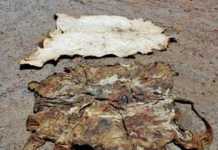
Skins: don’t throw good money away!
Make extra profit by salting skins and selling them as soon as possible, writes Roelof Bezuidenhout.

Building with wood
Jonno designs a wooden ranch house for a farm family.
Game industry wants legal rhino horn trade
The decline in rhino numbers is a direct result of the Convention on International Trade in Endangered Species’ (Cites) ban on rhino horn trade, according to Dr Herman Els, manager of Hunting and Conservation at the SA Hunters and Game Conservation Association (SAHGCA).
Map to protect birds from wind energy installations welcomed
An Avian Wind Farm Sensitivity Map has been welcomed by South Africa’s Wind Energy Association.
Solidarity now also demands priority crime rating for farm attacks
Trade union, Solidarity, has puts its support behind efforts to have farm attacks and farm murders declared a priuorty crime.
Forestry sector unhappy with new minimum wages
The South African forestry sector wants labour productivity to be commensurate with new minimum wages.

Genetics fit for the environment
Professor Frikkie Neser, of the University of the Free State’s department of animal, wildlife and grassland sciences, says that breeders should aim for livestock suited to particular production environments. Lloyd Phillips reports.
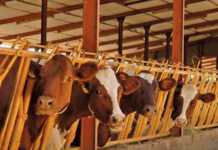
Is there a future for DAIRY FARMERS?
Dairy farmers, hard-hit by high input prices can expect better conditions in 2012 and beyond. Koos Coetzee explains.

Certified SA Angus Beef – branding top quality
Angus Beef (Pty) Ltd, a subsidiary of the Angus Society of SA, is determined to add value to nationally produced Angus beef products through its Certified SA Angus Beef initiative. Chairman Hendrik Jacobs explains to Lloyd Phillips what it’s all about.
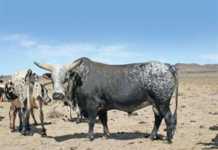
Success with mixed farming in the Karoo
Andy and Sheryl Duthie pay careful attention to every aspect of their mixed farming operation in Northern Cape. They also involve their three children in the enterprise, running profitable mini-businesses in goats and poultry. Heather Dugmore visited the family.
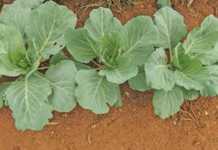
Removing the hazards from transplanting
We’ve covered the requirements for the most suitable seedlings in the past few articles. It doesn’t stop there, though, as all this good work can be undone during transplanting – and shortly thereafter.
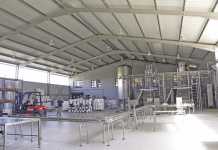
Farmers venture into UHT milk
In the heart of the Southern Drakensburg’s dairy production area, Creighton Dairies, a milk transporter, has taken a bold step into processing by setting up a multi-million rand UHT plant. Robyn Joubert reports.
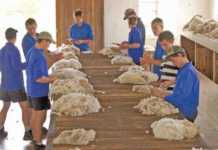
Marlow Agricultural High School bears fruit
One of the country’s leading agricultural schools Marlow, near Cradock in Eastern Cape, was founded in 1931 – with nine students – to support the traditional wool and mohair industries of the Karoo. The school offers a unique education on a 3 300ha commercial farm on the banks of the Great Fish River. Mike Burgess reports.
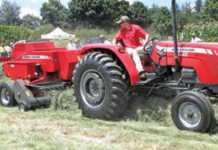
FMS shows off new tractors
Pietermaritzburg-based Massey Ferguson dealer, FMS, recently held a field demo at Cedara. Joe Spencer reports.
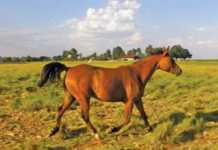
Catching your horse
A horse that refuses to be caught so you can ride it is no fun. But there are ways of breaking this bad habit, writes Kim Dyson.
Breeding quality
There’s no secret formula when it comes to selecting winners, but there are some guidelines worth following, writes Thomas Smit.
To add local capacity
A worrying trend is taking hold in South Africa – the importation of processed agricultural products.
Beating the cost-price squeeze
Input prices increase faster than product prices, but farmers can do much to limit the effect of the cost-price squeeze on their businesses.