

Lindi Botha

Lindi Botha is an agricultural journalist and communications specialist based in Nelspruit, South Africa. She has spent over a decade reporting on food production and has a special interest in research, new innovations and technology that aid farmers in increasing their margins, while reducing their environmental footprint. She has garnered numerous awards during her career, including The International Federation of Agricultural Journalists (IFAJ) Star Prize in 2019, the IFAJ-Alltech International Award for Leadership in Agricultural Journalism in 2020, and several South African awards for her writing.
Macadamia and avocado theft costs industry millions
The popularity and profitability of avocados and macadamias have resulted in a double-edged sword, with theft of the produce becoming increasingly rampant.
Attention to detail ensures high-quality sweet peppers
While launching a new farming venture as a first-time farmer may seem daunting, Hannes Wolvaardt is proof that it can be done. He shared his tips on successful sweet pepper production in Limpopo with Lindi Botha.
Labour-intensive coffee farm prospers in Hazyview climate
With the call to increase job opportunities in agriculture, many farmers have been left scratching their heads over the economic implications. But the Schroeders of Mpumalanga have found a winning recipe in coffee production: its high labour component and profitability levels make the crop viable. Lindi Botha visited the mother-and-son team on their farm near Hazyview.
New sweeter Dragon Fruit cultivars
Dragon fruit’s peculiar appearance and exotic name are enough to make anyone take a second look. But beyond novelty appeal, the fruit holds considerable promise for South African producers. Lindi Botha visited Howard Blight at his nursery near Tzaneen to learn about this remarkable crop.

Rabbit farmers left in dire straits after Coniglio liquidation
Government and farmers are rallying to save the rabbit farming industry after one of its biggest role players, Coniglio Rabbit Meat Farms, was liquidated in October.
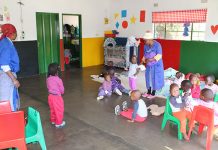
Limpopo nut farm – a shining example of worker empowerment
Springfield Farm has invested in learnerships for its workers, has an open-door policy for agriculture students, and offers mentorships to emerging farmers.
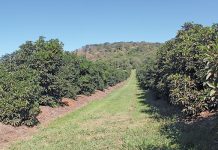
Dwarf avocado trees: low-maintenance, high-yielding orchards
As fruit farmers are pushed to produce more with less, so the trend towards dwarf trees has gained momentum. Dwarf avocado trees offer the benefits of a compact orchard and savings in labour and production costs. Lindi Botha spoke to farm manager Simon Dunshea in Mpumalanga.
Gene editing: a precise approach to crop and animal breeding
Recent breakthroughs in gene editing technology mean that advancements in the industry can be brought to the farm faster, cheaper and more accurately than before. The result is plants and livestock that are naturally more resistant to disease, crops that are higher-yielding, and ultimately, more sustainable, profitable farms.
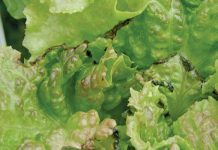
Solving calcium deficiency for better-quality crops
Calcium is a challenging and intricate element to manage in a crop, but if its levels are not balanced, the quality and shelf life of produce are compromised. Lindi Botha spoke to Lindi Grobler, the owner of Agri-Alchemi, about solving calcium deficiency in tunnel crops.
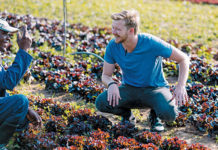
Joburg chef partners with local farmers
Jack Coetzee, chef of Johannesburg-based Urbanologi restaurant and a believer in sustainable living, sources all his ingredients from within a 150km-radius of the restaurant. To achieve this, he has worked hard at building close working relationships with local farmers.
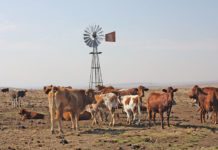
Farming smarter can reduce methane emissions from livestock
The argument against beef production is gaining momentum, with the industry being accused, often inaccurately, of significantly increasing greenhouse gas emissions. However, climate-smart farming and improving productivity can reduce emissions.
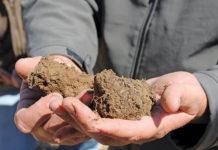
Fertilisation: basic principles that every farmer should know
Achieving optimal yields is greatly dependent on providing crops with the right nutrition at the right time. Understanding the role of fertilisers and ensuring the correct application can make the difference between profit and loss.
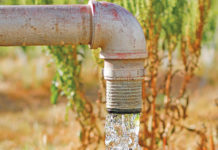
Water quality and quantity reach crisis levels
The billions of litres of raw sewage flowing into the country’s rivers daily has reached crisis levels, and pose a threat to the country’s agricultural exports, according to a water specialist.
Macadamias take Hazyview vegetable farmer to the next level
Through perseverance and applying strict business principles, Elias Pangane proved that farming could produce a viable income for him. The Hazyview vegetable and macadamia farmer spoke to Lindi Botha about the success that comes from combining passion with grit.
Water management: rainwater harvesting and better storage
The message is clear: in terms of both quantity and quality, water is a declining resource, and dedicated management is required to make the most out of every drop. Dr Heinz Meissner and Hylton Cruse outlined the advantages of efficient water storage to Lindi Botha.
Craft beer niche market could see barley production rise
The craft beer industry in South Africa has doubled in size over the past five years and there are now more than 220 brands on retail shelves.
Tissue-cultured bananas: uniform and high-yielding
Establishing a healthy orchard starts with choosing the correct plant material. In South Africa’s only laboratory of its type, banana plants are cultivated from tissue culture to produce clones that offer farmers vigorous growth and high yield.
Vital tips for stepping up security on your farm
Despite being continually under the spotlight, rural crime in South Africa continues to plague farmers. Some respond by leaving the sector; others struggle on after having lost property or even loved ones. However, studies show that while the justice system receives much of the blame, farmers should be doing more to secure themselves.
Accessing Africa’s food markets: Insights from three experts
Agriculture employs 70% of the workforce in Africa and constitutes 30% of total GDP. Yet the continent relies heavily on imports and food aid. Lindi Botha spoke to three leaders |
in the African agriculture sector to explain this anomaly.
How to manage brucellosis on your farm – tips from top vets
A widespread problem in sub-Saharan Africa, bovine brucellosis can cripple a cattle or dairy farming operation. As no cure is available, all infected animals are required by law to be slaughtered. This makes prevention and control of the disease a crucial aspect of a cattle operation.
- ADVERTISEMENT -
- ADVERTISEMENT -
MUST READS


- ADVERTISEMENT -



