
Magda du Toit

Magda du Toit is a freelance communication consultant and journalist. She has worked in the agriculture sector for more than 35 years. She obtained a BA in Communication (Hons), and also completed a Post-Graduate Diploma in Marketing Management. Throughout her career she has received recognition and various awards for individual and team contributions. She was also the chairperson of the northern branch of Agricultural Writers SA and still serves on both its executive bodies. Magda is also the South African representative at the International Federation of Agricultural Journalists, where she chairs one of the committees.
Latest articles

Huge efforts to reclaim degraded pastureland in Brazil
Brazil has placed emphasis on efficient management of pastureland in order to improve livestock health. This is complemented by the adoption of improved production systems.
Brazilian agriculture is shifting global perceptions
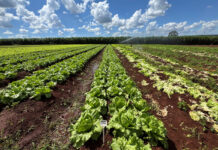
Brazil is playing a vital role in the global agriculture space. Implementing modern agriculture practices while protecting the environment are at the heart of the sector.

Farmers have to stay competitive in a dynamic global market
Prof Nick Binedell, a renowned leadership and strategy speaker, founding dean of the Gordon Institute of Business Science, and an authority on business education in Africa’s global economy, spoke to Magda Du Toit.
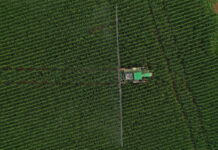
Timing of fungicide applications is crucial
Farmers often say fungicides don’t work well enough, but their effectiveness is determined by several factors. Farmer’s Weekly spoke to industry experts about the best practices for developing effective fungicide application strategies.
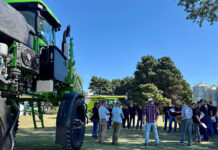
Argentinian farmer advises on investing in regenerative practices and technology
The Camerons from Lobería in Argentina not only farm crops but have also reinvested in their land through regenerative production practices. They have a strong commitment to diversification and innovation, a testament to the transformation that is taking place in agriculture in Argentina.
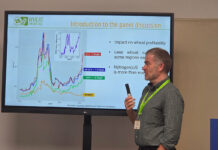
Nitrogen-use efficiency in wheat: not a one-size-fits-all solution
Roean Wessels, Syngenta’s head of research and development for field crop seeds in sub-Saharan Africa, attended a pre-conference workshop on nitrogen-use efficiency at the 4th International Wheat Congress in Bologna, Italy, and he shared key takeaways with Farmer’s Weekly.

Inside Argentina’s top-performing Angus herd
In south-western Buenos Aires, the Lafontaine family produces Angus cattle with low birth weights but which show extraordinary growth and reach exceptional weaning weights.

AFMA affirms strict feed code to ensure feed and food safety
The Animal Feed Manufacturers Association (AFMA) hosted its annual media and industry information day in Pretoria this week, where it outlined the role of the formal feed industry in protecting both animal and human health.

Agbiz congress focuses on how collaboration can change the sector
The Agbiz Congress 2026, held in Gqeberha, Eastern Cape, from 3 to 5 June, brought together leaders and stakeholders from across the agricultural value chain under the theme ‘Embracing Collaboration’

South Africa’s biofuel gap puts focus on sorghum potential
During a roundtable discussion hosted by the Localisation Support Fund on 27 May in Sandton, Johannesburg, discussions centred on South Africa’s growing dependence on imported fuel and the commercial potential of sorghum bioethanol.

That’s a wrap for Nampo 2026
Nampo Harvest Day once again proved why it remains the highlight of the agricultural calendar. The four days flew by in a blur of innovation, conversation and discovery. This year, the Farmer’s Weekly team spread out across Nampo Park in Bothaville in search of everything new, different, interesting and useful to report on.

Trade wars, tariffs and opportunities discussed at Nampo 2026
The last Nation in Conversation panellist discussion held during Nampo 2026 on Friday morning looked at the realities, challenges, and opportunities for farmers against the background of the global trade and economic environment, and how these dynamics are reshaping South Africa’s export opportunities.

Competing demands place strain on South Africa’s water system
Water is one of agriculture’s most vital resources, and in a water-scarce country like South Africa, the sector finds itself competing with urban demand, industry, and environmental priorities.

Nampo panel calls for stronger, strategic agricultural messaging
Over the past few years, agriculture has been able to amplify its voice. But in a landscape shaped by competing and fragmented narratives, political pressure, and public scrutiny, the real challenge is whether the sector is converting its influence into meaningful outcomes.

Biofuels: farmers can meet demand, but action is needed now
At a time when oil prices are high and grain prices are low, South African farmers are looking for alternatives. With the cost of living also rising, biofuels are emerging as a practical option that could help address some of these issues.

Empowering developing farmers to transition into commercial farming
Despite strong commitment, transformation in the grain industry has been slow. There are several reasons for this, one of which is that agriculture is capital-intensive, making it difficult for new entrants and small-scale farmers to compete.

Skilled workforce key to future-proofing agriculture
Anyone walking through exhibition stands at NAMPO quickly sees that agriculture is a sector build on innovation and technology. Across the value chain, innovation is changing how crops are grown, marketed, and processed, underscoring the need for training and skills development that match the demands of today and the future.

How grain and oilseed farmers are adapting under pressure
Oilseed and grain farmers across South Africa are under pressure to remain profitable amid volatile markets, climate variability, and rising input costs. Farmer’s Weekly spoke to producers at Nampo 2026 about opportunities for growth and how they’re staying afloat.

‘Our farmers are resilient, and will survive the difficult times’
During this morning’s Nation in Conversation discussion at Nampo 2026, the focus fell on the economic realities farmers have to deal with while farming.

From genetics to storage: crop production lessons from Nampo 2026
The theme of this year’s Nampo Harvest Day, ‘Resilience through Innovation’, aims to encourage the entire agriculture sector to not only reflect on the challenges farmers currently face but also to find proactive, data-driven solutions focused on profitability and sustainability.