
For decades, developing a new crop variety relied largely on patience and insights gained through observations by the human eye. Breeders would make crosses between plants, grow them out over several seasons, and select those that looked the most promising in the field.
While that approach remains the foundation of crop breeding, today’s breeders have an expanding toolbox that allows them to understand plants on a cellular level and make more informed decisions much earlier in the breeding process.
From sophisticated plant scanners that monitor crops throughout their lives to precision gene-editing techniques capable of introducing highly targeted improvements, breeding is becoming faster, smarter, and increasingly able to address the complex challenges facing modern agriculture.
For South African farmers grappling with climate variability, rising input costs, and increasing pressure to produce more with fewer resources, these advances could ultimately translate into crops that are better equipped to withstand these challenges.
What’s more, the advent of advanced technology means that plant breeders are in a better position to breed locally adapted varieties, rather than import cultivars from abroad.
Dr Miekie Human, science and policy manager at SANSOR, says plant breeding has undergone several waves of innovation over the years.
“Initially, breeders could only focus on what they could see with the naked eye and make crosses and selections accordingly, which took years. Today we have many more tools to evaluate the genetics behind those traits, allowing us to make better selections and advance breeding programmes much faster.”
Human explains that modern breeding is no longer focused on solving a single problem.
“Farmers don’t only face one challenge at a time, so they need crops that, for example, produce high yields, tolerate drought and heat, resist diseases and insects, use fewer inputs, and remain well adapted to their production environments. So, the focus has shifted towards stacking as many beneficial traits as possible into a single variety,” she says.
Climate change has further complicated the task. Human says that heat stress has long been an important breeding target, but today crops also need to be able to cope with increasingly erratic weather.
“It’s no longer simply about drought tolerance. We need varieties that can withstand a season’s rainfall falling within a single week. The variability makes breeding much more complex and necessitates a wider range of trials to test different scenarios and make the right genetic selections.”
Seeing what the eye cannot
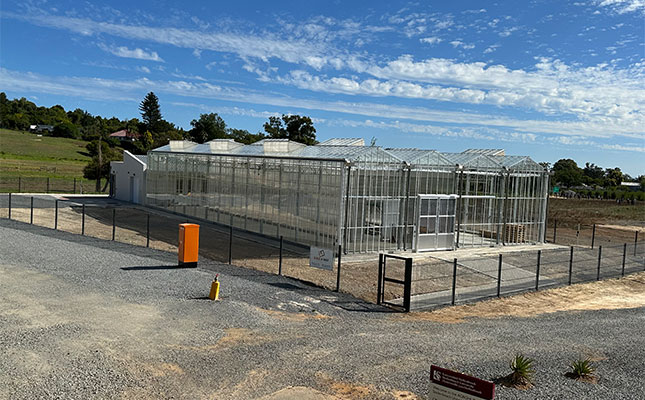
One of the clearest examples of this new generation of breeding tools is Stellenbosch University’s Plant Phenotyping Platform, which is expected to open soon.
The facility uses multiple multispectral scanners to monitor plants continuously throughout their growth, collecting detailed information without damaging them. Researchers can measure characteristics such as plant height, biomass, and health while the crop continues growing, providing a far more complete understanding of how plants respond to different growing conditions, every hour of the day.
According to Cecile Bester, a researcher and lecturer in Stellenbosch University’s Department of Genetics, plant phenotyping bridges the gap between genetics and plant performance.
“Plant phenotyping is about monitoring the plant as it grows and linking its growth path to specific genetics. The only way to understand what the genetics are doing is to measure how the plant develops throughout its life,” says Bester.
Traditionally, many of these measurements required researchers to uproot plants, weigh them, or examine them under microscopes. With this technology, researchers can continuously monitor the plant using sensors while it keeps growing. Instead of taking a single measurement at the end of the season, information is obtained throughout the crop’s entire life cycle.
The sensors can also detect subtle signs of stress long before they become visible to researchers. Bester says one example involved exposing plants to increasing salinity levels.
“Although we could eventually see the stress with the naked eye, the sensors detected the response much earlier, and far more accurately. This meant we could make better selections than we would’ve if we had only relied on what the eye could see.”
Better decisions, earlier
While technologies such as plant phenotyping do not eliminate the need for conventional breeding, they allow breeders to make better decisions much sooner. Instead of growing thousands of breeding lines through an entire season before deciding which should be retained, researchers can identify promising candidates while they are still seedlings.
“In wheat research, for example, we are already investigating whether disease-resistant lines can be identified when they are only three weeks old. By eliminating weaker candidates early, breeding programmes become more efficient while directing resources towards the most promising material,” says Bester.

The platform also incorporates DroughtSpotter technology which allows researchers to manipulate water availability with exceptional precision. Individual plants are grown on specialised scales that continuously monitor water use, allowing researchers to recreate a wide range of weather scenarios.
“We can simulate drought, heavy rainfall or fluctuating water availability and then measure how efficiently different plants use water and respond to those stresses,” Bester explains.
This enables breeders to identify elite lines that not only produce high yields but also maintain their performance under increasingly unpredictable weather conditions.
Beyond crop breeding, the facility could also help researchers better understand irrigation scheduling, and determine the optimal timing for crop protection products.
Building South Africa’s breeding capacity
The Plant Phenotyping Platform is intended to become far more than a university research facility. Funded by the Department of Science, Technology and Innovation, it will operate as a shared resource where universities, public researchers, and private breeding companies can access equipment that would otherwise be prohibitively expensive.
A second phenotyping facility is currently being established at the University of Pretoria to support crops grown in South Africa’s summer rainfall region. Together with existing infrastructure, including the Agricultural Research Council’s (ARC) phenotyping facility in Potchefstroom, the aim is to build a national network that promotes collaboration, resource sharing, and knowledge exchange.
For smaller breeding companies, this could significantly improve access to advanced technologies without requiring major capital investment. Bester also believes the facilities will play an important role in developing South Africa’s future plant breeders.
“The next big development in agriculture is data. We need graduates who understand how to work with large datasets and apply that information to practical breeding. This facility gives them firsthand experience.”
She says many multinational breeding companies have similar facilities abroad but not in South Africa. “Having local infrastructure allows companies to evaluate breeding material under South African conditions while strengthening local breeding programmes and building expertise that allows us to compete internationally.”
A glimpse of tomorrow’s crops
Human notes that advances using gene-editing technology are increasing, bringing not only on-farm benefits but also those that make food more appealing to consumers.
Rather than introducing genes from unrelated organisms, as is the case with genetically modified organisms (GMOs), gene-editing technologies, such as CRISPR, make precise changes to a plant’s own DNA, allowing breeders to target desirable traits far more accurately than before.
One of the strongest themes emerging globally is improved resilience. Researchers from Stellenbosch University and the ARC recently produced Africa’s first gene-edited (GEd) grapevine by switching off a gene that makes vines more susceptible to downy mildew. Besides significantly improving disease resistance, the edited vines also demonstrated an unexpected ability to conserve water more effectively.
Scientists at the University of California, Davis, in the US, have meanwhile developed GEd wheat that stimulates beneficial soil bacteria to fix nitrogen more efficiently, potentially reducing fertiliser requirements while increasing yields under low-nitrogen conditions.
Other innovations focus on reducing food waste. Earlier this year, UK biotechnology company Tropic received approval to commercialise a non-browning GEd banana in Japan and Brazil. By disabling the gene responsible for browning, the fruit remains visually appealing for longer after being cut or bruised, reducing spoilage throughout the supply chain.
The company has also developed an extended shelf-life banana that remains green for an additional 12 days, opening new export opportunities while reducing transport losses. It also plans to launch a Panama disease (TR4)-resistant variety in 2027.
Human also points to the work being done by several researchers to develop wheat containing less gluten, potentially expanding food choices for people with coeliac disease and other forms of gluten intolerance.
Bringing innovation to South African farmers
While many of these breakthroughs remain under development or are only beginning to reach international markets, Human believes recent regulatory developments could eventually improve access for South African agriculture.
In June, the European Union approved a new regulatory framework for crops developed using new genomic techniques (NGTs), like gene editing, creating a two-tier system.
Plants containing genetic changes that could also have occurred naturally or through conventional breeding, like those that occur through gene editing, will now be regulated similarly to conventionally bred crops. More complex modifications will continue to undergo full GMO assessment.
Human believes the decision is likely to influence regulatory discussions elsewhere, including South Africa.
South Africa currently regulates all GEd crops under its GMO legislation, which substantially lengthens the approval process before new varieties reach farmers. Industry stakeholders are engaging with government to review these regulations and align them more closely with international developments. If that happens, the pathway from laboratory to field could become considerably shorter.
Combined with advances such as plant phenotyping, gene editing and increasingly sophisticated data analysis, breeders are gaining powerful new tools to accelerate the development of crops capable of meeting agriculture’s growing challenges.
For farmers, the most visible result may simply be better seed. Behind every new variety, however, lies a rapidly evolving world of technology that is fundamentally changing how tomorrow’s crops are bred.