Latest articles
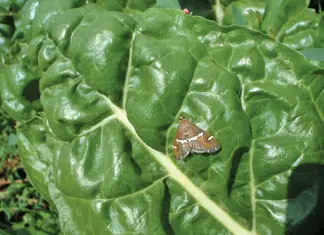
Other Swiss chard pests
In addition to those already discussed, there are other pests likely to be a problem with Swiss chard from time to time. Let’s look at three of the most common ones.

Competition benefits all
Anybody who has spent time on a busy fresh produce market floor will agree that it is a madhouse of noise and frenetic activity – especially at the daily trading peak, usually from 5am to 8am.
Leaf miner: still a threat to Swiss chard
The leaf miner was once a major headache for producers, having a wide range of hosts and a particular fondness for Swiss chard.
What Colour! What variety!
Over the years, I’ve made it a habit to observe as much as possible about the fresh produce sector, be it while walking the market floor, shopping at my local supermarket, or visiting a farm where the products are grown and packed.

The farming philosophy of a top maize farmer
American farmer David Hula holds the current world record for maize grain yield. On a recent lecture tour of South Africa’s principal grain farming areas, he shared some of the methods he uses to maximise his yield.

Supreme yield in soya
American farmer Kip Cullers holds the world record for soya bean yield. On a recent lecture tour of South Africa’s grain farming areas, he spoke about maximising yield.
Consistency of supply
I rate consistency as one of the ‘Big Five’ in fresh produce marketing, along with supply, demand, quality and communication.
Keep nutrition up and eelworms down
Swiss chard is easy to grow and exceptionally productive, but it does take a lot of nutrients out of the ground.
So, what’s a fair price?
Getting paid a fair price for a product is surely uppermost in all farmers’ minds. Having said that, what is a fair price?
Planting swiss chard
With Swiss chard, the cork-like ‘capsule’ that you plant is actually the fruit, which contains up to four seeds.
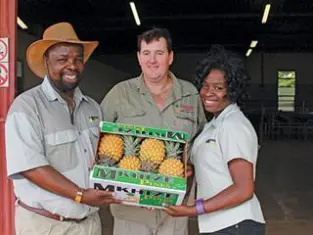
A partnership built on pineapples & a promise
Hluhluwe’s first black, queen pineapple grower has enormous support from his mentor and staff – but a lack of financial continuity from government could upend their best efforts.
Packaging: get it right!
Finding ways to minimise the high cost of packaging is an ongoing challenge.

Hands-on apple success in the Greyton district
Greyton is not known as an apple-growing area. Yet here, the farm Ouplaas boasts profitable apple orchards, thanks to organic compost and hands-on management. Nonetheless, heavy summer rains required smart management to save the 2014 crop.

Cultivating pseudo-grains in South Africa
The NuGrainSA Consortium introduced pseudo-grains to South Africa in 2013. Plant breeder at ARC-Roodeplaat, Willem Jansen van Rensburg, says that quinoa and grain amaranth are the most promising for local cultivation.

What is spinach?
The term ‘spinach’ refers to different species in different countries. In South Africa, there are two common species that we call ‘spinach’ – Swiss chard (Beta vulgaris) and baby spinach (Spinacia oleracea).
A culture of care
This is not the first time in this column that I’ve addressed the crucial need for care.

Regulating nitrogen in vegetable crops
Farmers have long been advised to use standard fertiliser mixtures for crops as a matter of course.

Making organic fruit farming work
Organic farming is risky and difficult, but Jannie Nieuwoudt of Jamaka Organic Farm in the Cederberg believes the risk is justified by the rewards.

Wish list for election time
Dreams of money flowing in from government to rejuvenate our markets have partly been realised over the past year.
Wonder products
In Weimar Germany back in the 1920s, Dr Max Gerson developed what he claimed was a cure for cancer based on the consumption of fresh fruit and vegetables.