

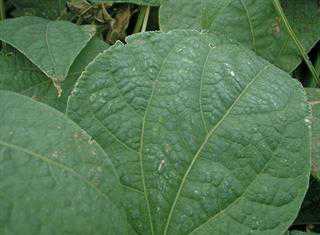
Growing in hot and dry conditions – Part 1
Here are some guidelines for growing vegetables under drought conditions.

Learn from history
Fresh produce markets have an interesting history. Go back more than 150 years and you’ll find a person called the market master who worked for the local municipality and also sold farmers’ produce by auction.
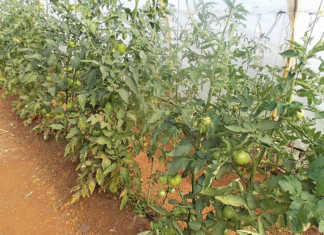
There’s more to crop rotation than meets the eye
Just about every farmer would agree that crop rotation is a good thing – and the more diverse the crops in the rotation, the better.
The Codes of Best Practice (CoBP) for National Fresh Produce Markets
The ‘Codes of Best Practice (CoBP) for National Fresh Produce Markets’ prepared by the Project Rebirth Steering Committee (chaired by the department of agriculture) will bring our fresh produce markets in line with international standards.
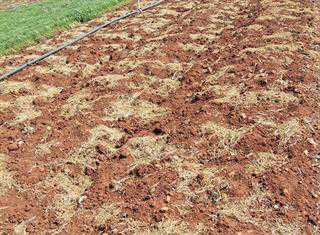
A practical use for no-till farming
No-till is highly practical for small-scale vegetable farmers and organic farmers, while conventional commercial vegetable growers will find some aspects of the practice useful.
Where size counts
I suppose that being in the fresh produce business makes it inevitable that I classify markets according to their size – not unlike potatoes or certain fruit.
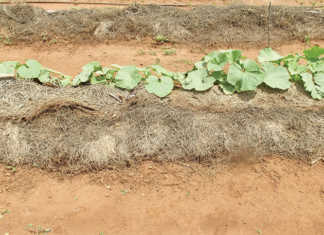
Mulch ado about no-till
No-till farmers have always known that leaving a layer of crop residue on the soil surface increases the humus content.
Food safety struggle
To achieve a HACCP (Hazard Analysis of Critical Control Points) accreditation is costly.
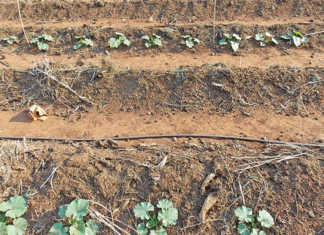
‘Payment exchange’ – a good idea, in part
I heard a new proposal recently from a distinguished ‘market man’ whose opinion I rate highly.
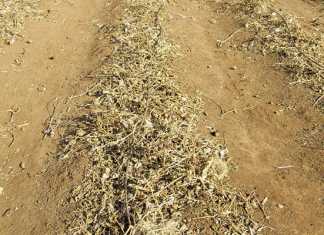
No-till vegetables: how to grow them
No-till vegetable production is not practical for everyone and is more suited to the small-scale organic farmer.
Well-deserved award for Project Rebirth
Last week, I wrote about the 70th birthday celebrations of the Institute of Market Agents of South Africa (Imasa) and predicted that it would be ‘an affair to remember’.
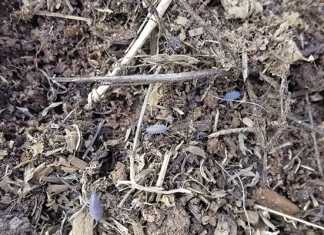
Imasa turns 70
I recently was in Bloemfontein with the Institute of Market Agents of South Africa (Imasa) to celebrate its 70th birthday.
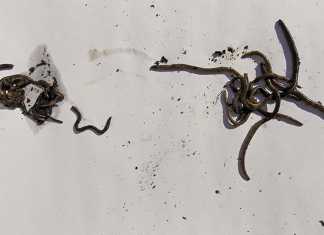
The role of earthworms in boosting soil quality
Of all soil organisms, earthworms can be by far the largest component by weight. Their benefits are generally insufficiently appreciated by farmers.
Why can’t the markets do the same?
Last week, I wrote about the impressive new markets being established in Namibia.
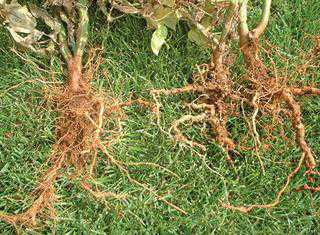
Nematodes: not all bad
It may surprise many farmers that not all nematodes (eelworms) are harmful to crops.
Namibia plans ahead
As I write this, I’m midway through a two-week training programme at the Ongwediva Fresh Produce Business Hub (OFPBH) in the north of Namibia, en route to Angola.
The benefits of mycorrhiza
The name ‘mycorrhiza’ (a combination of two Greek words meaning ‘fungus’ and ‘roots’) is unlikely to ring a bell with most farmers as its use has been promoted only recently.
Market prices – up, down & up again
As I write, the markets are awash with produce. Prices have tumbled in many cases. Our mild winter has resulted in extended production periods for some crops, which has meant an oversupply.
- ADVERTISEMENT -
- ADVERTISEMENT -
MUST READS

- ADVERTISEMENT -



