Latest articles
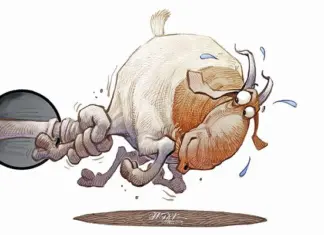
Study reveals the motives behind stock theft
Cecili Doorewaard-Janse van Vuuren, a lecturer in Unisa’s Department of Criminology and Security Science, explains the results of her research into the motivating factors behind livestock theft in South Africa.

Family farmers: our green-thumbed heroes!
True sustainable development will not be achieved by corporate-wealth-accumulation agendas, but by visionary family farmers, says Prof James Blignaut, an ecological and environmental resource economist.
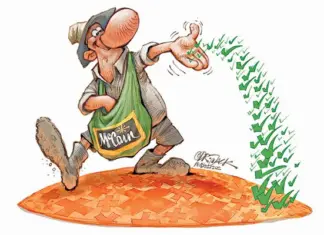
New solutions needed to mitigate a food crisis
It is time for farmers to adopt regenerative agriculture practices in order to ensure the future of food production, says Mark du Plessis, director of agriculture at frozen food company McCain South Africa.
Four issues that must be resolved now
As we enter the second month of the new year, and South Africa continues to be hit with stages four, five and six of load-shedding, I am reminded that 2024 is now only 11 months away, and there are many things that government must act on to ensure that 2023, 2024 and the years to come are successful ones for the agriculture sector.

The private sector’s key role in land reform
Peter Setou, chief executive of the Vumelana Advisory Fund, argues that all stakeholders in the land reform programme should demonstrate their commitment to the strategy in order to drive its success.

Who is to blame for the increase in crime in SA?
In Parliament recently, DA leader John Steenhuisen asked how bad South Africa’s crime statistics needed to be before President Cyril Ramaphosa replaced Bheki Cele as minister of police.

Cotton production: global and local trends
The Food and Agriculture Organization of the United Nations’ outlook for cotton production (2022 – 2031) looks at the opportunities and challenges facing the world’s cotton producers.

The true cost of agricultural crime in SA
The South African agriculture sector is heavily burdened with crime. Using the Free State as a case study, Annelie Coleman spoke to industry stakeholders about the true cost of crime to the local farming community, and the threat it poses to the long-term sustainability of food production in the country.

Yes, SA has challenges, but we can fix them! – Dr Imtiaz Sooliman
Dr Imtiaz Sooliman, founder of Gift of the Givers, does not believe that South Africa is collapsing, despite its current political, economic and infrastructural problems. One reason for hope, he argues, lies in the compassion and patience of South Africans. He has seen it first-hand for 30 years.

Why a zebra’s stripes may confuse horseflies
There are many hypotheses on why horseflies may be put off by a zebra’s stripes. In a recent study, researchers concluded that this may be a result of the temperature on darker stripes, rather than the stripes themselves.

A brief overview of the agricultural landscape in 2023
In the 6 & 13 January 2023 issue of Farmer's Weekly, we provide our readers with an outline of the agricultural landscape for the New Year, as well as analysts’ predictions in terms of upcoming local production seasons and commodity prices.

Smallholders’ role in protecting our forests
According to a new report, smallholders and indigenous peoples can be effective forest managers, as they occupy nearly half of the world’s forest and farm landscapes and are often invested in these areas.
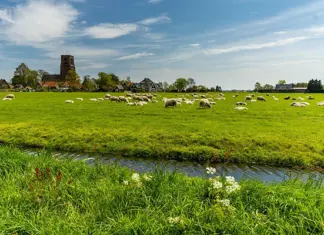
Farmers hold together the fabric of society
I have made no secret of the fact that I find the world’s treatment of farmers deplorable. This treatment of the people who produce our food and the fibre for our clothing, as well as employ vast swathes of the world’s population, is particularly egregious when it comes to governments.

Sponsored
What does the future hold for agricolleges?
Education is vital to the transformation of South Africa’s agriculture industry, as well as the country’s economic growth. However, many agricultural colleges are in disarray. Magda du Toit reports on this crucial issue.

A vaccine bank could reduce disease panic
Dr Baty Dungu believes South Africa should take lessons from countries that have been using stockpiles for years to ensure adequate vaccine supplies before outbreaks occur.

Food production: the intuitive farmer is the farmer of the future
Justin Platt, founder and managing director of agricultural technical services companies Zylem and RegenZ, says that farmers don’t need more knowledge, but rather better ‘knowing’.

COP27: a lot of hot air, with little action
The UN’s Conference of the Parties (COP27) ran from 6 to 18 November and was held in Sharm el-Sheikh, Egypt. On the agenda, as always, was climate change.

Financial solutions that can bolster food security in Africa
Given the complexities facing the agriculture sector, it seems that the road ahead will be impossible to navigate without both the financial support and expertise of banking institutions and financiers, writes Nedbank’s Zhann Meyer.
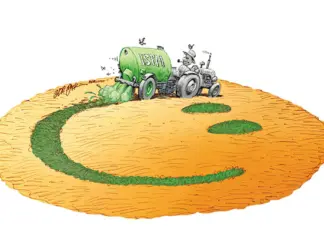
Fertiliser alternatives can improve crop yields
Chemical fertilisers are a major contributor to poor soil and loss of biodiversity. In this article, the Food and Agriculture Organization of the United Nations looks at environmentally friendly alternatives.

The importance of global trade
With countries adopting more protectionist policies due to rising fears of a global food crisis, this report discusses the importance and need for world trade in agricultural commodities.