AgriSA has committed to a more results-driven approach to addressing South Africa’s agricultural challenges.
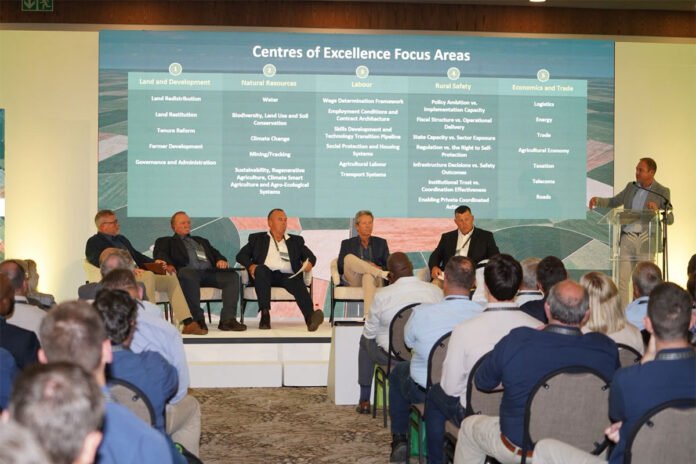
At its annual congress, held at the Irene Country Hotel in Pretoria, Gauteng, on 14 October, the organisation formally endorsed five mandates covering land and development, natural resources, labour, rural safety, and economics and trade.
Under the theme ‘The Path is Clear’, AgriSA President Willem de Chavonnes Vrugt said stronger cooperation between government, commodity organisations, private businesses, and farmers would be essential to translating policy priorities into practical improvements.
“You can farm individually, but you cannot build agriculture individually,” he said.
De Chavonnes Vrugt argued that the challenge was no longer simply determining what government should do, but rather identifying which institutions were best positioned to perform specific functions and ensuring their efforts were coordinated.
The mandates were developed through consultations with AgriSA members and its Centres of Excellence (CoEs) between May and July, adopted by the organisation’s board on 30 July, and endorsed at the congress. They now provide a framework for the organisation’s engagement with government and industry partners.
Land reform must create viable farms
Land reform and agricultural development featured prominently at the congress, with AgriSA calling for a shift from measuring transformation primarily through land transfers towards establishing commercially sustainable farming enterprises.
Eben du Plessis, vice-chairperson of AgriSA’s Land and Development CoE, said South Africa had approximately 122,3 million hectares of land, but only 15,9 million hectares, or roughly 13%, had high or moderate arable potential. Fewer than two million hectares were classified as high-potential arable land.
AgriSA proposed establishing a special-purpose vehicle to accelerate the release of approximately 2,5 million hectares of state-owned land and coordinate farmer support. It also called for the expansion of Land Bank’s Blended Finance Scheme, credible beneficiary selection, secure property rights, and stronger post-settlement support.
Du Plessis highlighted the contribution of commodity organisations, citing R2,8 billion over five years, and called for their farmer-support efforts to be better aligned and expanded.
Water losses threaten agricultural production
Laubscher Coetsee, chairperson of AgriSA’s Natural Resources CoE, said agriculture accounted for approximately 60% of South Africa’s water use and estimated that about 30% of water conveyed through irrigation systems was lost before reaching productive use.
The organisation warned that more frequent droughts, higher temperatures, and deteriorating water infrastructure could put additional pressure on production. It called for better-managed catchment agencies, investment in infrastructure, a predictable water-licensing system, and improved access to climate-adaptation finance.
Other priorities included protecting productive agricultural land and addressing soil erosion, invasive species, and illegal mining.
Call for agricultural labour and skills reform
Johan Wege, chairperson of AgriSA’s Labour CoE, highlighted agriculture’s contribution to rural employment. He said approximately 945 000 people were directly employed in the sector in the second quarter of 2026, equivalent to roughly one in every 18 employed South Africans.
AgriSA proposed linking annual national minimum wage increases to the consumer price index, introducing a dedicated agricultural work visa and accelerating reform of the country’s 11 agricultural colleges.
Wege also highlighted the approximately R660 million flowing to the Agricultural Sector Education and Training Authority every year through skills development levies. AgriSA called for closer alignment between skills programmes and farm-level needs, as well as workable approaches to farmworker housing, healthcare, and transport.
Ports, roads, and trade barriers undermine competitiveness
Jannie Strydom, chairperson of AgriSA’s Economics and Trade CoE, contrasted the sector’s export performance with the infrastructure constraints facing producers.
He said South Africa’s agricultural exports reached a record US$15,1 billion (around R270 billion) in 2025, while more than 55% of production was exported. AgriSA estimated that port inefficiencies cost approximately R4,2 billion during the 2025/26 season.
Strydom also highlighted the condition of South Africa’s 750 000km road network. According to AgriSA, 79% of the roads are gravel, while an estimated 40% to 60% of the network is in poor to very poor condition.
The organisation called for accelerated freight rail reform, reduced congestion at the Durban and Cape Town ports, and a framework for prioritising rural roads.
Other priorities included market diversification into Asia, the Middle East and Africa, stronger biosecurity, fewer tariff and non-tariff barriers, expanded rural broadband, and greater certainty around electricity pricing, diesel rebates, and taxation.
From policy to measurable results
AgriSA CEO Johann Kotzé said the organisation’s responsibility extended beyond identifying policy priorities to bringing evidence to decision-makers, building partnerships, and remaining involved until tangible outcomes were achieved.
He identified farm profitability, investment, employment growth, access to new export markets, and improved rural safety as measures against which progress should be assessed.
While the congress set out AgriSA’s priorities and intended outcomes, it did not provide detailed implementation deadlines, clearly assigned responsibilities, or funding commitments for every proposed intervention. Questions therefore remain about how progress will be monitored, who will be accountable for delivery, and when farmers can expect practical improvements.
De Chavonnes Vrugt warned that fragmented efforts between institutions could undermine progress, even where individual organisations possessed the necessary expertise and resources.