
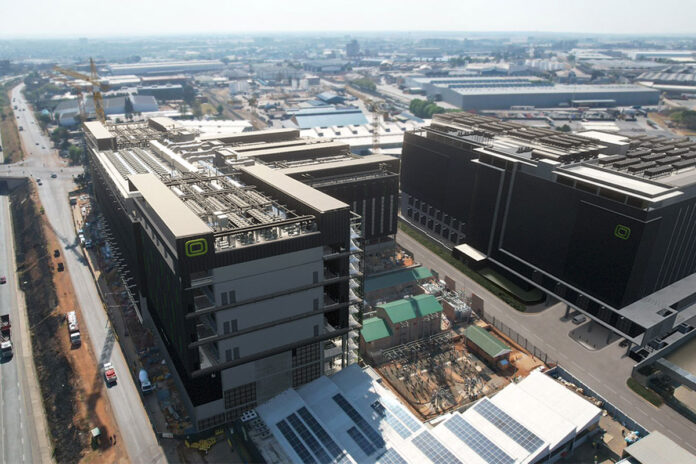
Globally, regions with reliable energy supplies are competing aggressively for artificial intelligence (AI) data-centre investment. The lesson for Africa is clear: energy security is increasingly becoming an economic-development lever. AI infrastructure is beginning to influence investment decisions rather than merely following broader economic growth.
South Africa remains one of the continent’s strongest candidates for AI infrastructure investment. New data centres can generate demand across electricity generation, construction, telecommunications, security, and professional services. However, countries that fail to address their power constraints may miss the next major wave of digital investment.
Should South Africa pursue large AI data centres?
Dr Francois du Plessis, an AI implementation expert, believes South Africa should be cautious about actively pursuing large AI data centres.
“My view is that South Africa should not chase this,” he says. “The reasoning rests on three points. The first is that hosting a large data centre places a heavy load on water and electricity, both of which South Africa is already short of. The second is that the country does not need to host a data centre to gain the full benefits of AI. The computing infrastructure can be situated elsewhere in the world, yet the response can still reach the user within seconds.
“The third is that the cost of hosting these facilities could fall heavily on agriculture. The decision is therefore not only an economic one but also an environmental one, because farming communities depend directly on natural resources. South Africa should not compete to host large AI data centres. It should use AI extensively, rely on established international data centres where appropriate, and concentrate national efforts on developing AI-augmented industries. This would be a safer and more productive way to introduce the technology into agriculture and the wider economy.”
Du Plessis’s view reflects a broader debate about whether the economic benefits of data-centre investment outweigh the pressure that these facilities may place on local infrastructure and natural resources.
Water and heat
Two resources largely determine whether a country can comfortably host a large data centre: electricity and water. Another consideration is the heat generated by the facility.
Data-centre servers operate continuously and produce substantial quantities of heat, which must be removed without interruption. Some cooling technologies use evaporative systems, in which water is lost to the atmosphere, while newer facilities increasingly use closed-loop cooling, air-cooled chillers, and direct liquid-cooling systems that substantially reduce routine water consumption.
The scale of a large data centre can be difficult to appreciate. Depending on its size and cooling technology, a single facility may require an electricity supply comparable to that of a small town. Facilities that rely heavily on evaporative cooling may also consume substantial volumes of water.
The release of heat into the surrounding environment must also be considered, particularly where several facilities are concentrated in one area. Du Plessis cautions that waste heat and the potential development of localised heat islands could affect surrounding communities and agricultural activities. The severity of this effect would depend on the size and concentration of the facilities, local climatic conditions, and the method used to reject heat.
South Africa is already classified as a water-scarce country, and many of its major water systems are heavily allocated.
Du Plessis points particularly to the Vaal and Orange rivers. Both systems support major urban, industrial, and agricultural activities, including substantial areas of irrigated farming. Any large additional water allocation would therefore need to be assessed against existing demands and downstream users.
Internationally, concern has grown in some regions where large data centres have placed additional pressure on limited municipal or groundwater supplies. Similar concerns in South Africa would be most relevant where facilities depend on continual water replenishment for evaporative cooling.
However, not all data centres use the same cooling technology. Teraco, South Africa’s largest data centre developer, for example, states that its closed-loop systems do not depend on the continual replenishment of water for cooling. The company reported that its overall water-usage effectiveness declined from 0,10ℓ per IT kilowatt-hour in 2023 to 0,04ℓ in 2024.
This distinction is important. A modern closed-loop facility may use far less water than an older evaporatively cooled facility, although water may still be required for sanitation, cleaning, maintenance, landscaping, and other operational activities.
Pressure on the electricity grid
Electricity presents a similarly significant constraint.
Large hyperscale data centres require substantial and continuous power supplies. Unlike many industrial users, they must operate around the clock and require highly reliable electricity to prevent interruptions to cloud services, financial systems, digital platforms, and AI applications.
South Africa has experienced prolonged constraints in electricity generation and transmission. Although the national supply position has improved at times, the grid remains under pressure in several areas, particularly where transmission and distribution infrastructure has not kept pace with new demand.
Adding a large continuous load could therefore compete with the electricity required by households, farms, and existing industries unless the necessary generation and grid capacity are developed alongside the project.
There are no major public electricity-infrastructure upgrades dedicated exclusively to every new data centre. Instead, developers are generally required to comply with applicable electricity, water, environmental, and construction regulations. They may also have to finance or construct some of the infrastructure needed to connect their facilities.
Vantage Data Centres’ Johannesburg II facility, for example, has been designed with multiple power feeds, a 35-megavolt-ampere on-site substation, and N+1 redundancy. Such arrangements improve the reliability of the data centre itself. They do not, however, automatically resolve wider constraints in the national or municipal electricity network.
Microsoft expands its South African infrastructure
Microsoft has announced plans to invest R5,4 billion by the end of 2027 to expand its cloud and AI infrastructure in South Africa. The investment is intended to meet growing regional demand for Microsoft Azure and other related digital services.
The investment follows approximately R20,4 billion committed by the company over the preceding four years to establish and expand enterprise-grade data-centre infrastructure in Johannesburg and Cape Town.
Teraco’s JB7 hyperscale facility
Teraco is developing a new hyperscale data centre at its Isando campus in Ekurhuleni, east of Johannesburg.
Known as JB7, the facility will provide 40MW of critical power capacity. It will further expand Teraco’s position as one of Africa’s leading data centre and interconnection providers. JB7 forms part of Teraco’s broader South African data-centre platform. Once the development is incorporated, the company’s stated critical power capacity will amount to approximately 228MW.
Johannesburg remains the centre of South African data-centre development despite its electricity and water constraints. This is mainly because of its proximity to the country’s largest concentration of banks, telecommunications companies, cloud-service providers, corporate customers, and Internet-interconnection infrastructure.
For these businesses, locating computing infrastructure close to major users can reduce latency and make it easier to connect directly with networks, cloud providers, and other digital platforms.
Cape Town’s strategic role
Cape Town has, nevertheless, experienced substantial data-centre growth.
Its importance is not primarily based on access to seawater for cooling. Instead, the city has strategic value because several major submarine telecommunications cables connect through or near the Western Cape.
These include the ACE, Equiano, SAT-3, SAFE, WACS, and 2Africa cable systems. The connections make Cape Town an important international data gateway and provide an alternative location to Johannesburg for geographic redundancy and disaster recovery.
Teraco’s CT1 facility currently provides approximately 2 500m² of data-hall space and 3MW of critical IT capacity. The planned expansion will add about 1 000m² of data halls and a further 2MW of critical IT capacity. Construction is expected to be completed in early 2027. CT1 functions as a carrier-dense interconnection hub and is strategically positioned near international and domestic telecommunications networks at the southern end of the African continent.
The South African Artificial Intelligence Association and the Western Cape Government have launched the Western Cape AI Cluster. The initiative aims to research, support, and expand AI opportunities in the province.
Dr Nick Bradshaw, chairperson of the association, highlighted sovereign AI and the planned development of an AI factory in Cape Town as important themes for the cluster.
“Sovereign AI and the soon-to-be-launched AI Factory in Cape Town are major themes that the Western Cape AI Cluster will engage with,” he said during the organisation’s launch.
He added that further expansion in AI support infrastructure must be aligned with the capacity of the country’s electricity grid, water systems, and municipal infrastructure.