
Latest articles
Satellites assist with water use
Scientists are going to space to help farmers monitor drought and irrigate their crops.

CLA supplementation for healthier pork
Research by two doctoral students the University of the Free State has shown that supplementing pig feed with conjugated linoleic acid (CLA) could add considerable value to the pork industry. Annelie Coleman spoke to Cobus Ferreira and Carina Bothma.

21st century predator control
Predation can cause huge stock losses, yet farmers are under pressure to avoid methods such as gin traps and poison. A Karoo farmer’s invention might satisfy both farmers and environmentalists.
Using antibiotics wisely
Farmers must use antibiotics more prudently to prolong their efficacy. Dr Maryke Henton, an Idexx Laboratories specialist veterinarian and Global Antibiotic Resistance Partnership member, tells Robyn Joubert why.
Stocking rates and Karoo veld
Trials by Free State University’s Department of Animal, Wildlife and Grassland Sciences question the ecological sustainability of high stocking rates on Karoo veld. Roelof Bezuidenhout reports.

Revolutionary new maize on the way?
The promise of drought tolerant maize may be just a few years from becoming a reality.

Snake bites! First aid tips for livestock
They might be an occupational hazard for farmers, but little thought is given to snake bites in livestock.

Targeting gerbils
Following a report in Farmer’s Weekly of 27 January on gerbil damage to grain in Free State, North West and Mpumalanga, Annelie Coleman interviewed Dr Gerhard Verdoorn on the best way to get rid of these rodents. His advice? Get to them before they get to the crops.

Nguni project opens opportunities for rural communal farmers
A farmer development project involving collaboration between universities, the department of agriculture and the Industrial Development Corporation (IDC) is starting to prove successful for...

Mealybug hopes pinned on parasitic wasp
An Israeli company has cracked the code for mass-rearing a predatory wasp which could help control the destructive mealybug. Trials are underway in Eastern Cape in conjunction with Citrus Research International. Robyn Joubert reports.
Termites increase soil fertility
Hazyview farmer Isak Fick lost the battle against termites - only to find that his mango and macadamia nut orchard boomed. Termites create superior compost right where the tree needs it most, boosting yields and soil fertility. Lindi van Rooyen reports.
New facility to expand bio-control of codling moths
A new production facility to rear and release sterile codling moths is geared to produce more than 2 million moths a week and currently supplies at least 3% of the local pome fruit industry. It's a new era in bio-control, writes Denene Erasmus.
Breed for efficiency, not size
Dr Roger Hunsley, former animal science professor at Purdue University in the US, told cattlemen how they can breed for feed efficiency without producing over-sized animals that burn through expensive feed. Annelie Coleman reports.
Merinos that don’t ‘slim for summer’
Summer weight loss in sheep can be a major problem for sheep farmers in hot climates. Alan Harman looks at new research.
A cross-border collaboration
A collaboration between a research geneticist from the US Department of Agriculture and South African animal scientists could take the benefits of the Nguni cattle breed global. Robyn Joubert reports.
Why biosecurity systems are a must-have
New livestock can bring disease as well as new genetics into your herd. That's why a good biosecurity system is vital, Pfizer's Dr Chris van Dijk explains to Annelie Coleman.

Can a ley crop be profitable?
Planting a pasture ley crop is good for your soil – but is it good or bad for your bank balance? Robyn Joubert finds out.
Catching foot-and-mouth disease early will mean fewer cattle culled
A new study indicates that if FMD-affected cattle are promptly identified and removed from the herd, there may be no need for pre-emptive culling in the immediate area of an infected farm.
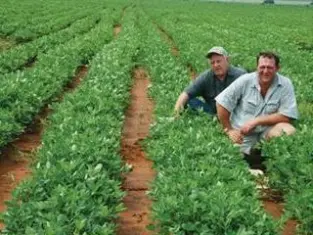
Beating wild lucerne in groundnuts
A new herbicide is proving more than a match for weeds in groundnuts.
Stopping salmonella
A new test for salmonella in poultry and eggs will produce faster and more accurate results.