
Latest articles

Food for school
The US agriculture department now also feeds impoverished school children during the holidays. Roelof Bezuidenhout discusses what South Africa is doing for its 14 million hungry citizens.
Mound predictions
Researchers have found that termite mound size and distribution, linked to vegetation and landscape patterns, can predict ecological shifts, writes Alan Harman.
Magic mistletoe
Harvesting mistletoe is one of the most cost-effective drought survival measures available to stock farmers, writes Roelof Bezuidenhout.
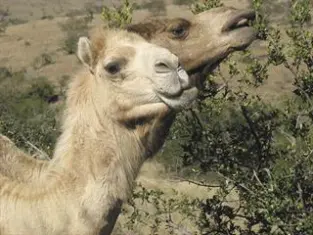
Can camels solve the sweet thorn problem?
A new trial found that camels could help control and possibly eradicate sweet thorn encroachment, which may be a far better solution than Boer Goat browsing or fire control.
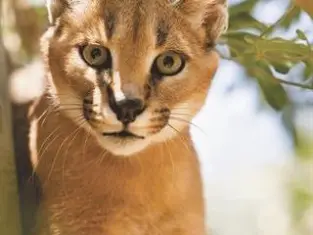
Practical research looks at better caracal control
Current research into caracal control, conducted on nature reserves or game reserves, isn't always the best measure of effectiveness on a farm. A new study, conducted under practical farming conditions, aims to find the best solutions for small-stock farmers.
Satellite can help improve veld production estimates
Satellite images could soon be used in South Africa to quantify veld production, estimate livestock carrying capacity and help farmers plan fodder flow, reports Roelof Bezuidenhout.
Predator management – a lesson from the US
When it comes to predator management, South African agricultural and environmental authorities look more like the farmer's foe than friend in comparison with the US's wildlife service.

Decline in parks’ large mammal numbers
Numbers of large mammals are dropping in national parks all over Africa - except in the continent's southern countries, where good management shows what can be achieved.

Bringing the war to the bitter bush
Bitter bush veld is a sign of overgrazing and veld degradation. Eradicating this invader will allow palatable, perennial grasses to flourish again, writes Roelof Bezuidenhout.
Cape parrot population Stalked by killer virus
In the Amatola Mountains in the Eastern Cape, Cape parrots are as iconic as the giant yellowwood trees they feed on and nest in. But as Mike Burgess reports, initial fears of a deadly viral disease that had apparently infected Cape parrot populations in the area in 2008 and 2009, is now being confirmed by parrot expert Dr Steve Boyes, who believes the disease can wipe out South Africa’s only endemic parrot.

Improvement in broilers
Physiological improvements in broilers haven’t changed negative consumer perception of the poultry industry. Dr Marc de Beer says the industry has to set the record straight.

Effective management key to parasite control
Parasites’ growing resistance to anthelmintic remedies is a serious problem for smallstock farming. Field expert Dr Dave Midgley explains that the problem should be tackled through an integrated management system rather than by blanket dosing.
Red meat biodiversity plan
SANBI is starting pilot projects to develop biodiversity in the red meat industry, writes Roelof Bezuidenhout.

Getting over the winter slump on planted pasture
The selection of an appropriate base crop is vital for livestock farming on planted pasture. It forms a solid foundation for an ongoing fodder flow to ensure optimal production and profitability. The base crop will also determine additional pasture species that can be planted for the periods when its growth slows down. Jan Coetzer of Pannar explains the importance of appropriate base crops and how to use planted pasture in dairy, beef and sheep farming.
A cutting edge agricultural information system for KwaZulu-Natal
The KZN Department of Agriculture, Environmental Affairs and Rural Development’s Bioresource Programme lays a firm foundation for improved farm decision making, reports Lloyd Phillips.
A green revolution launched at ZZ2
One of South Africa's largest farming operations, ZZ2, needed dramatic production changes to stay sustainable. They formulated natuurboerdery, which gave them all the benefits of organic farming without a major fall in production. Glenneis Erasmus reports on how this approach is starting to pay off.
Measuring how much water a plant needs
Rather than measuring the water content in the soil, Watermark soil water-potential sensors help farmers determine how much water the crop needs, says SASRI researcher Ashiel Jumman. Glenneis Erasmus reports.
Nitrogen fertilisation: when to count on soil organic matter
Last week, soil scientist Neil Miles discussed the role animals play in the nitrogen fertilisation of pasture. This week, he tells farmers how to get the most out of soil organic matter.
The ups and downs of vertical hydroponics
Hydroponic production only really came into existence in the 1930s, making a name for itself during the Second World War when it was used in the Pacific Islands to grow food for soldiers.
Making the rain, and making it better
'Minute molecules go right to where they're needed, giving impressive results.'