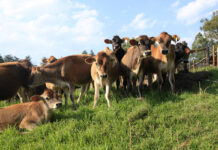

The Ankole cattle sector in South Africa is developing into a clearly defined niche within the livestock industry, shaped by a combination of genetic value, environmental adaptability, and a market structure that differs fundamentally from conventional beef production systems.
While still relatively small in scale, the breed has attracted increasing attention from both established producers and new entrants, supported by consistent auction performance and a value proposition that extends beyond traditional production metrics.
Limited population supports market value
The Ankole breed remains in an early stage of development in South Africa, with approximately 62 registered breeders and fewer than 2 000 registered animals recorded nationally.
This relatively small population continues to underpin price levels, particularly for animals with proven genetic merit and desirable phenotypic traits. In contrast to more established breeds with large commercial herds, the Ankole market remains tightly constrained on the supply side, which has supported strong competition for high-quality animals.
“Stud breeding of Ankole in South Africa is in its infancy,” says Anton de Swardt, breeder and president of the Ankole Society of South Africa.
As with other emerging stud industries, limited supply combined with growing demand has created favourable conditions for value growth, particularly in the upper segment of the market where pedigree and visual characteristics play a central role.
Auction data reflects a growing market
Auction performance over the past three years provides a clear indication of how the sector is evolving. Data from Veewinkel Auction House shows a steady increase in total turnover, rising from R12,16 million in 2023 to R14,28 million in 2024, and reaching R16,38 million in 2025.
Although the number of animals sold has varied between years, the overall upward trend in turnover reflects increasing participation and sustained demand across multiple buyer segments.
Average prices have shown some variation, declining in 2024 before recovering strongly in 2025 to R303 333. This type of movement is typical of a developing market, where an expanding pool of buyers and a broader range of animals can influence mid-range pricing, while top-end values remain comparatively stable.
The data also points to a market that is becoming more structured, with clearer differentiation between premium genetics and mid-tier animals.
Genetics drive value, not volume
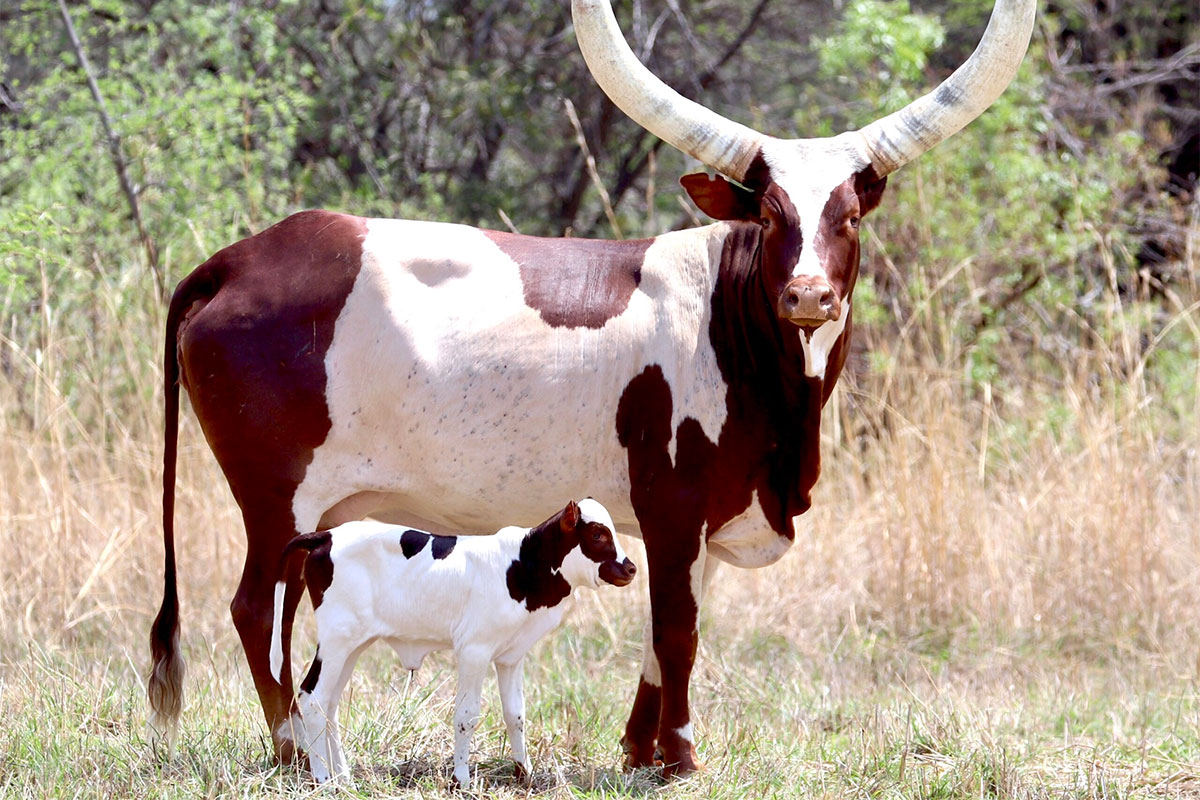
A defining characteristic of the Ankole sector is that value is determined primarily by genetics rather than production output. Traits such as horn size and shape, coat colour, pedigree, and overall conformation are central to price formation, particularly within the stud market.
According to Veewinkel’s auction data for 2025, this is reflected in prices across categories. Bulls averaged around R199 444, with a top price of R725 000, while cows averaged R292 500 and cows with calves exceeded R400 000 on average. Pregnant cows and recipients also achieved strong values, averaging approximately R381 000 and R375 000 respectively, while semen reached prices of up to R90 000 per straw.
These figures illustrate the extent to which genetic material forms the core of the value chain. Embryos, semen, and recipient animals are not secondary products, but rather central components of the business model, allowing breeders to accelerate genetic progress and expand herd quality more efficiently.
“Genetics is almost everything,” says De Swardt. This emphasis on genetics also means that long-term value is closely linked to breeding strategy, record-keeping, and the ability to identify and develop superior bloodlines.
Adaptation underpins production efficiency
In addition to their value as genetic assets, Ankoles are well suited to the environmental conditions typical of many South African production regions, particularly in bushveld areas where climatic extremes and disease challenges are common.
The breed is adapted to high temperatures, variable rainfall, and the presence of tick-borne diseases such as heartwater and redwater. Their ability to perform on natural grazing, with limited supplementation, makes them particularly suitable for extensive production systems.
This adaptability reduces reliance on external inputs such as feed and veterinary treatments, contributing to lower production costs and making the breed an attractive option for producers operating in marginal areas.
“They can thrive in harsh veld conditions with minimal intervention,” says De Swardt. From a management perspective, this translates into a system where resilience and efficiency are prioritised, rather than maximum output per animal.
Diversification strengthens profitability
One of the more distinctive features of the Ankole sector is its integration into diversified farming systems. Unlike conventional cattle enterprises that rely primarily on meat production, Ankoles are often incorporated into operations that include wildlife breeding, tourism, and hunting.
This approach allows producers to generate income from multiple sources, reducing reliance on a single revenue stream and improving overall financial resilience.
At Lumarie near Bela-Bela, Ankoles form part of a broader wildlife-based enterprise, where the breed contributes both as a genetic resource and as a visual attraction within a tourism offering.
“It creates additional revenue opportunities beyond traditional cattle production,” says Jacques Malan, Ankole breeder and owner of Lumarie.
In such systems, animals that are not retained for breeding can still contribute to income through alternative channels, ensuring that value is extracted across the entire herd.
Expanding demand and a changing buyer profile
The Ankole market is supported by a diverse and expanding buyer base, reflecting growing awareness of the breed’s economic potential.
Buyers include established stud breeders seeking to strengthen genetic lines, commercial farmers looking to diversify operations, and game farmers integrating cattle into wildlife-based systems. There is also a noticeable increase in new entrants, including investors and emerging farmers attracted by the breed’s niche positioning.
Regional demand is also playing a role, with buyers from neighbouring countries such as Zambia, Zimbabwe, and Mozambique participating in South African auctions.
This broadening buyer base has contributed to increased competition for high-quality animals, particularly within the upper price segments, where supply remains limited.
Balance between growth and maturity
Although the sector continues to expand, there are signs that it is gradually transitioning towards a more mature phase. The variation in average prices over recent years suggests a market that is adjusting to increased supply and a wider range of participants.
The dip in average prices in 2024, followed by recovery in 2025, reflects this adjustment process, where broader participation can influence pricing dynamics without undermining demand for top-quality genetics.
“As numbers increase, prices are likely to adjust,” says De Swardt, noting that premium animals tend to retain their value over time.
This pattern is consistent with trends observed in other livestock sectors, where elite genetics continue to command strong prices even as markets become more established.
Position within the broader cattle industry
At the upper end of the market, Ankole prices compare favourably with those achieved by established stud breeds such as Boran and Bonsmara. However, the breed occupies a distinct position within the livestock sector, with its economic model centred on genetic value rather than production efficiency alone.
“This is not a conventional beef production system. The value is in the genetics,” says Malan. As a result, Ankoles are not directly comparable to commercial beef systems focused on throughput and carcass yield. Instead, they align more closely with high-value stud breeding operations, where quality and uniqueness are primary drivers of profitability.
Growth with gradual normalisation
Looking ahead, the outlook for the Ankole sector remains positive, supported by continued demand for high-value genetics and the ongoing expansion of diversified farming systems.
Key factors expected to influence the market include growth in breeder numbers, expansion of the national herd, and sustained demand from both local and regional buyers.
While prices may moderate as supply increases, premiums for elite animals are expected to remain a defining feature of the market.
“This is a young industry in South Africa. The systems are in place, and the opportunities are still there,” says Malan.
Next auction
The next opportunity for buyers and breeders to engage with the market will be the 6th Annual Ankole National Auction, taking place on 20 June 2026 at Phala Phala Wildlife, Diepdrift.
The auction will commence at 11am, and enquiries can be directed to MJ Ernst on 082 075 3541.
Positioning for long-term value
The Ankole sector is establishing itself as a specialised, high-value component of South Africa’s livestock industry, offering a distinct alternative to conventional cattle production.
Its economic model, built on genetics, adaptability, and diversified income streams, continues to attract interest from a wide range of producers.
Going forward, the sector’s sustainability will depend on maintaining genetic quality, managing growth in animal numbers, and ensuring that demand continues to support its distinctive value proposition.