
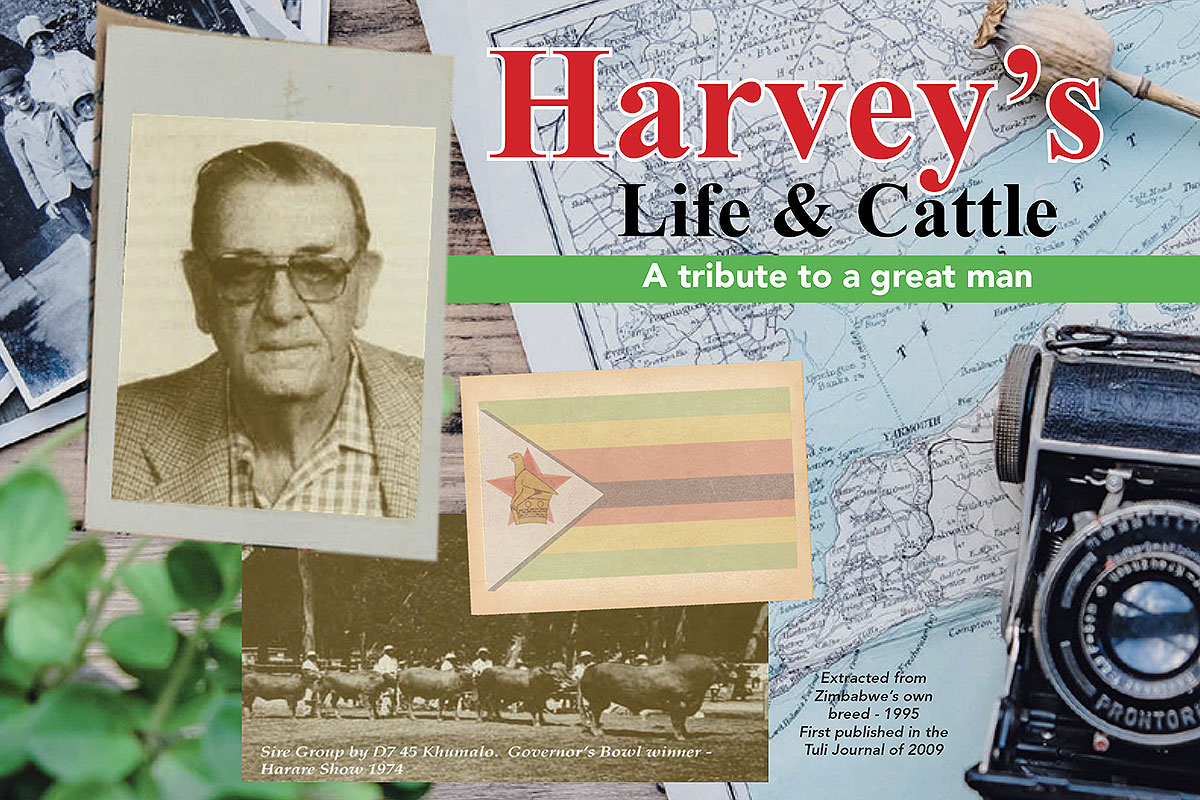
As a young man, employed in the then Ministry of Internal Affairs as a land development officer, Harvey took notice of the different types of indigenous cattle presented for dipping in indigenous areas. With the help of his legendary eye and memory for cattle, he noticed a particularly outstanding type that he believed, with careful selection and good husbandry, could be improved and put back into indigenous areas and used to upgrade the quality of the livestock there.
Stock improvement programme
At the time Harvey’s idea of improving and multiplying superior indigenous cattle began to take shape, a stock improvement programme was already in place, run by the department where he worked. The programme focused on supplying bulls of various imported European breeds, purchased from commercial farmers, to indigenous herdsmen. Harvey, however, questioned its benefits.
In his opinion, the bulls being supplied were not at all suitable for the extremely harsh environment into which they were being introduced. Also, as the bulls were shared among several farmers, with no single person responsible for them, they were often neglected. Unable to limit growth under drought and other stressful conditions, the Taurus breeds effectively grew themselves to death.
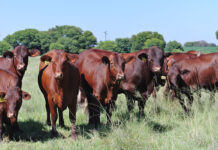
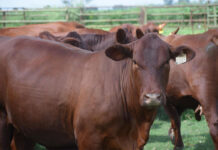
As a viable alternative to the existing stock improvement programme, an improved indigenous breed seemed the obvious choice to Harvey. With this in mind, he began noting particularly good herds and bloodlines among the indigenous cattle he encountered, while forming ideas about which traits were most important in the difficult environment of Southern Rhodesia (now Zimbabwe). The beefy, golden-yellow cattle that he believed would perform well if selected, properly bred, and well managed are the foundation of the Tuli breed today.
Being in a relatively junior position in the ministry, it took four years for Harvey to get his idea through to those responsible for allocating the existing stock improvement budget. Once his proposal was accepted and funding made available for the purchase of cattle, the next step was to secure land. In 1945, the project was allocated a piece of Crown land near Gwanda, and the dream began to take shape: the project was finally under way.
Getting started
Harvey could now buy the cattle he needed for the project. First, he identified suitable animals, then spoke to the owner and encouraged him to take them to open cattle sales, where he would purchase them.
The sales were organised by the indigenous department, with the then Cold Storage Commission always present as the residual buyer. Over the months that followed, Harvey bought cattle for this ‘Mother’ herd.
Heat resistance, a good constitution, and fertility were among the traits Harvey looked for in the original parent cattle. He considered not only the constitution of the cow but also that of the calf, as well as various conformation traits, particularly legs, feet, and udders. Through careful selection for fertility initially, and later by culling any cow that did not calve every year, Harvey achieved a 96% calf crop each year for 10 years once his herd was established.
Background
Harvey was born in 1916 on a farm near Bloemfontein in the then Orange Free State in South Africa, where his lifelong interest in cattle began. Although he grew up on a dairy farm, the long hours and hardships associated with dairy farming at the time put him off it for life. While milking cows by hand, loading milk cans onto a cart, and driving the milk into Bloemfontein, the young Harvey had plenty of time to decide there must be an easier way to make a living.
In 1938, 22-year-old Harvey visited Rhodesia on a three-month holiday. During that time, he was offered employment in the then Irrigation Department to work in the Lower Gwelo area. He decided to take the job and, having notified the immigration department that he would be staying, never left the country again. He brought his young fiancée, Beryl, up from South Africa, and they were married soon afterwards.
Harvey’s first job involved overseeing conservation work in the indigenous areas around Gwelo, supervising the construction of small dams, and working to build up underground water reserves. For the first three years, the newlyweds lived in tents, moving wherever the work required, pegging contours, supervising gangs, and initiating contour ridging.
Harvey’s ability to find water earned him the indigenous name ‘Nyati Ngurta’, which means the buffalo that goes ahead
During this time, the couple had two sons and a daughter, but the family’s needs must have been modest, as Harvey claims he saved £100 in his first year despite earning only £19 a month. In 1942, he was transferred to Salisbury (now Harare) for conservation work, and for the first time, the growing family moved into a house.
After a year in Salisbury, Harvey had grown tired of city life and asked to be transferred to Gwanda to concentrate on the work that really interested him: his study of indigenous cattle. A house was built at Tuli, and in 1949 the family moved there. The couple had a third son, and the family was complete.
Life on the station
Around 1950, it was decided to develop the Tuli Breeding Station as a centre to serve the wider Lowveld area. Harvey was able to devote all his time to the work there after being promoted to officer in charge of the Department of Native Agriculture at Gwanda. Until then, he had run the Tuli cattle as a sideline to his work as a land development officer.
Harvey and his cattle remained under the jurisdiction of the Native Affairs Department after his section split from the Irrigation Department. For a short time, they were transferred to the Department of Research and Specialist Services, but the bureaucracy, close supervision, and competitiveness of a technical department did not suit Harvey’s temperament.
He took three days off to visit his superiors in the capital and request a transfer back to the Department of Native Affairs, which, much to his satisfaction, was soon granted. Here, he was left more or less to his own devices, with a minimum of supervision and interference, and could concentrate on the task of improving his herd of Tuli cattle.
There were occasional visits from head office, both those whom Harvey found too interfering were soon sent packing, while the general interest shown was friendly and supportive from people who understood and appreciated the work being done.
As word spread about developments at Tuli, visitors became more frequent. Field days were held regularly and were always well attended, and many interested cattlemen, both locally and from abroad, called in to see the latest developments and how the Tulis were going from strength to strength.
The very strict selection for type and beef characteristics was coupled with what amounted to virtually hand-breeding each of the 300 cows and heifers to the sire Harvey thought most suitable, and progress was rapid
As the late Ian de la Rue, a well-known and highly respected Zimbabwean cattleman, once wrote: “Remarkably, within one decade of the development of the Tuli, they were winning block tests at our major agricultural shows against all comers. Good genetic material… yes! But rather a sad thought that after 300 years of intensive breeding practices with Bos taurus, Sanga was able to catch them up in 10!”
After a few years at the station, Harvey started entering a few of his cattle in the Bulawayo Show, including three steers in the block test competition. The Tulis won this competition nine years in a row. In 1976, Harvey attended the Salisbury Show, where he again won the block test. During his years at Gwanda, he used the national show circuit to compare his developing cattle with other breeds in the country, spending about two months each year moving from show to show and often winning carcass competitions and block tests.
Though the cattle were intended for communal farmers, Harvey was delighted when commercial farmers began to show an interest. However, when they wanted to call the breed Harvey’s Cattle, the ever-modest Harvey said it should rather be named after the Tuli River, as not only was this the area in which the herd had been established, but also because the cattle were the colour of the dust of that river.
One of the cattlemen who enthusiastically supported the developing breed was Broncho Greaves, who became the first president of the Tuli Society. He was an Afrikaner breeder who had heard about the work taking place at the Tuli Breeding Station and, one day while passing through, decided to pay the station a visit. He was so taken with the cattle that he decided there and then to purchase two bulls, which were subsequently sent to his farm at Nyamandlovu.
Two years later, Harvey was invited to visit the ranch and was shown 50 calves, progeny of the Tuli bulls out of the 50 best Afrikaner cows. All were yellow, and 90% were polled. This dramatic result, which had completely transformed the Afrikaner line he had worked for so many years to perfect, was enough to convince Broncho that the Tuli was the breed for him.
In 1978, Harvey left Gwanda and the Tuli Breeding Station. He retired after 40 years with the Native Affairs Department but was retained for a further two years in an advisory capacity by the Tribal Lands Development Corporation, which by that time had taken over the running of the station. Not long after the Harveys’ departure from Gwanda, unrest in that part of the country forced the movement of the Tuli herd from the Tuli station to the Matopos Research Station near Bulawayo, where the original herd remains today.
After two years in the Bulawayo area, the family moved to the Lalapanzi area, where Harvey initially leased a 1 214 ha farm, which he later bought. The pension he received on retirement was used to purchase two of the best bulls from Matopo Research Station. He later bought another two and acquired female stock from commercial breeders, soon building up his own herd. Harvey continued to advise his youngest son, Bryan, who later ran the farm and, at the time, the largest Tuli herd in the country, and who also became chairperson of the Tuli Society.