
Increasing reproductive efficiency is the ultimate goal of any livestock enterprise. For sheep producers, particularly those working with Dorper sheep, twinning represents both an opportunity and a challenge. While higher lambing percentages can significantly increase productivity and profitability, they also demand careful management adjustments to ensure ewe health, lamb survival, and sustainable flock performance.
Lambing rates and survival
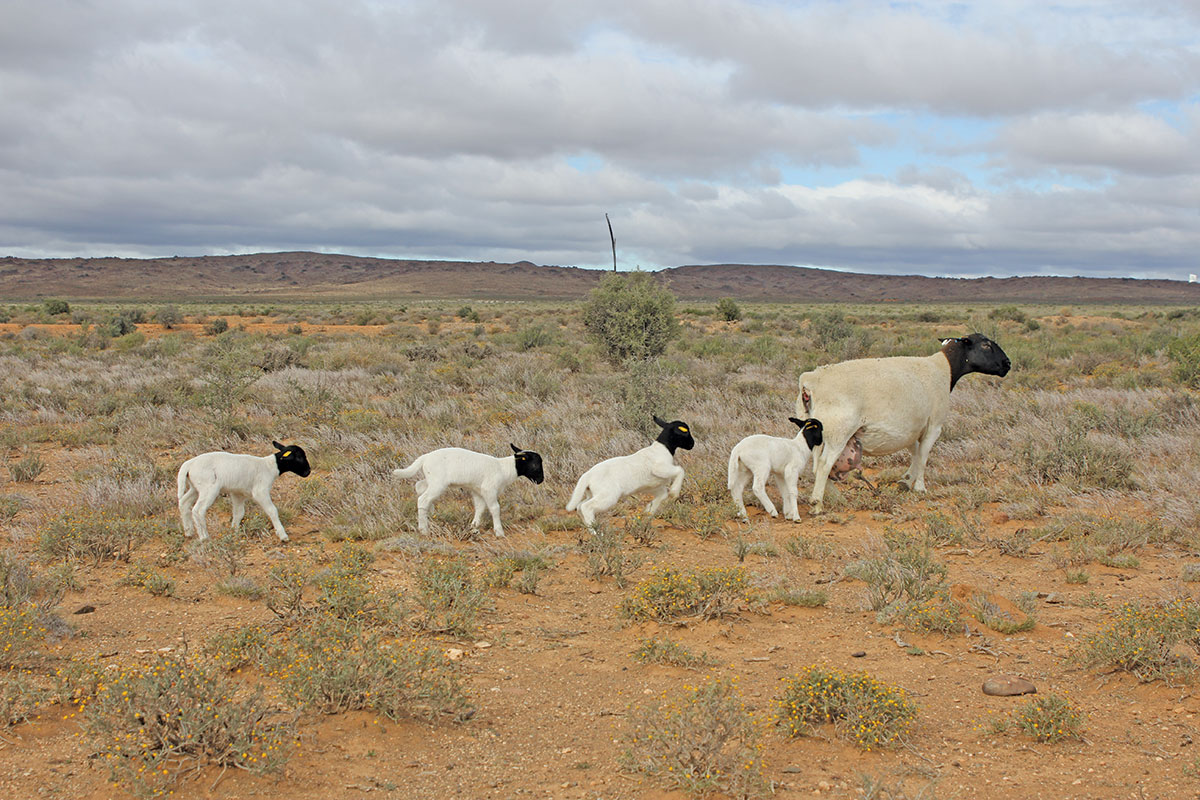
Modern lambing rates sought by producers are around 130%, but under ideal circumstances, they can reach up to 160%. While these figures are attractive, twin-bearing ewes are more prone to higher mortality at lambing, particularly when conditions are poor or the ewes are older. Twin lambs generally have poorer survival and lower birthweights compared to singletons.
Improving the condition of the ewe prior to lambing has a large impact on twin survival, with increases of up to 20% per condition score. This highlights the importance of proactive management, ensuring that ewes are in optimal condition before lambing begins.
Selective feeding of twin-bearing ewes compared to single-bearing ewes may not increase total feed requirements for the flock, but it can result in significant increases in production.
By targeting nutrition of those ewes carrying twins, farmers can improve lamb survival and growth rates without dramatically increasing overall costs. Pushing for twinning is only advised during the spring lambing season to ensure that there is enough feed to maintain ewe condition in extensive farming systems. Lambing should coincide with maximum availability of feed and fodder, as this is crucial for both productivity and profitability.
Attempting to increase twinning rates outside of periods of feed abundance can lead to poor ewe condition, higher lamb mortality, and reduced overall flock performance.
Hormonal influence
According to Rikus van der Merwe, president of the Dorper Breeders’ Society of South Africa (Dorper SA), the Dorper breed does not inherently have fertility issues and has good fertility overall as a breed. However, fertility does not have a strong hereditary factor, making management critical.
Ewes must be evaluated regularly, and fertility should be monitored to ensure that underperforming ewes are removed from production. This approach ensures that flock productivity remains high, and resources are not wasted on animals with poor reproductive performance.
The best fertility rates in ewes are seen between the ages of 1,5 years and 4,5 years. After this age, fertility decreases remarkably. This emphasises the importance of flock management, ensuring that breeding ewes are within their optimal reproductive age range to maximise twinning potential.
One of the important tools for controlling animal reproduction is the synchronisation of oestrous and ovulation protocols. These methods allow farmers to better plan lambing seasons and manage resources.
The increased use of artificial insemination has also contributed to higher twinning frequencies. The use of hormones to increase the chances of successful insemination also increases the likelihood of twinning.
To ensure that ewes maintain their condition, preparation before insemination is key. This is particularly important during growth stages when ewes put on weight in the spring. Proper preparation ensures that twins can be carried to term and reduces the risk of a condition crash after lambing.
Supplements during Gestation
Increased nutrition around mating, known as ‘flushing’, is a well-established method of increasing twinning rates. It has been shown that short-term (acute) supplementation can increase fertility if targeted at days nine to 14 of the oestrous cycle in foundational work done by Stewart and Oldham (1986).
However, synchronisation methods such as progesterone devices, ram isolation, and flushing increase chemical and labour costs, which may not suit extensive production systems common in South Africa.
The importance of energy drenches of polypropylene glycol during the last two months of gestation is an important tool that can be used to increase survival rates of lambs. Newer research has also shown increased survival at birth, maternal progesterone concentration, and birthweight when energy drenches were further supplemented with L-arginine amino acids (Zeiton, 2017).
This highlights the importance of targeted supplementation during pregnancy to improve outcomes for twin lambs. After lambing, it is advised that ewes receive increased protein feed with the addition of multivitamins. This supports recovery, milk production, and the growth of twin lambs.
Because twin lambs tend to have lower birthweights than singletons, best practice is to provide creep feed to promote faster weight gain and growth. Creep feeding allows lambs to access high-quality nutrition early, supporting survival and improving weaning weights. Improved management practices, such as creep feeding, directly contribute to better twinning outcomes.
Practical guidelines
Guidelines as recommended by the Australian Lifetime Wool project emphasise the importance of managing ewes carrying twins with careful attention to their condition and nutrition to maximise production and lamb survival.
Condition scoring is a practical method used to assess the body fat reserves of ewes, which is an important indicator of their nutritional status and overall health. The scoring system typically ranges from one to five, where one indicates an extremely thin ewe with little fat cover, and five indicates an excessively fat ewe.
Ewes with low condition scores can be supplemented to improve their body reserves, while those with high scores can have their feed intake managed to prevent excessive fatness, which can also negatively affect reproduction and lambing outcomes.
Twinning ewes should have a condition score of at least 2,7, with a preferred target of 3,2 by lambing time. Ewes with a condition score below two should be removed from the main flock and managed separately to ensure they receive appropriate care.
Maintaining ewe condition
It is essential to provide adequate feed intake and maintain good condition prior to lambing to prevent pregnancy toxemia (ketosis). Pasture availability should meet the nutritional targets for twin-bearing ewes, and good shelter must be provided, as the survival of twin lambs is significantly affected by adverse weather conditions.
If green pasture is not available during late pregnancy, maintaining ewe condition through supplementation throughout gestation is critical.
At the time of pregnancy scanning, which typically occurs around day 90, ewes with a condition score below 2,7 require approximately 1 000 feed units of good-quality green feed to support adequate weight gain before lambing.
Ewes with a condition score above 2,7 require about 900 feed units to achieve a small gain by lambing. For ewes scoring below 2,5, supplementary feeding is necessary to at least maintain their condition score of 2,5 by lambing.
By lambing time, it is important to separate twin- bearing ewes from single-bearing ewes. Twin ewes should be allocated the most sheltered paddocks and provided with more than 1 800 feed units. Energy intake should be maintained at approximately 25 megajoules per head per day during peak lactation.
Achieving a condition score of 3,2 at lambing in twin-bearing ewes is optimal for production outcomes. Twinning in Dorper sheep offers significant opportunities for increased productivity.
However, it requires careful management adjustments to ensure ewe health, lamb survival, and overall flock performance. Dorper sheep, with their strong breed standards and adaptability, are well-suited to these strategies, making them a valuable asset in the pursuit of higher reproductive efficiency and sustainable livestock farming.
Twins can be carried to term and reduces the risk of a condition crash after lambing.
Supplements during gestation
Increased nutrition around mating, known as ‘flushing’, is a well-established method of increasing twinning rates. It has been shown that short-term (acute) supplementation can increase fertility if targeted at days nine to 14 of the oestrous cycle in foundational work done by Stewart and Oldham (1986).
However, synchronisation methods such as progesterone devices, ram isolation, and flushing increase chemical and labour costs, which may not suit extensive production systems common in South Africa.
The importance of energy drenches of polypropylene glycol during the last two months of gestation is an important tool that can be used to increase survival rates of lambs. Newer research has also shown increased survival at birth, maternal progesterone concentration, and birthweight when energy drenches were further supplemented with L-arginine amino acids (Zeiton, 2017).
This highlights the importance of targeted supplementation during pregnancy to improve outcomes for twin lambs. After lambing, it is advised that ewes receive increased protein feed with the addition of multivitamins. This supports recovery, milk production, and the growth of twin lambs.
Because twin lambs tend to have lower birthweights than singletons, best practice is to provide creep feed to promote faster weight gain and growth. Creep feeding allows lambs to access high-quality nutrition early, supporting survival and improving weaning weights. Improved management practices, such as creep feeding, directly contribute to better twinning outcomes.
Practical guidelines
Guidelines as recommended by the Australian Lifetime Wool project emphasise the importance of managing ewes carrying twins with careful attention to their condition and nutrition to maximise production and lamb survival.
Condition scoring is a practical method used to assess the body fat reserves of ewes, which is an important indicator of their nutritional status and overall health. The scoring system typically ranges from one to five, where one indicates an extremely thin ewe with little fat cover, and five indicates an excessively fat ewe.
Ewes with low condition scores can be supplemented to improve their body reserves, while those with high scores can have their feed intake managed to prevent excessive fatness, which can also negatively affect reproduction and lambing outcomes.
Twinning ewes should have a condition score of at least 2,7, with a preferred target of 3,2 by lambing time. Ewes with a condition score below two should be removed from the main flock and managed separately to ensure they receive appropriate care.
Maintaining ewe condition
It is essential to provide adequate feed intake and maintain good condition prior to lambing to prevent pregnancy toxemia (ketosis). Pasture availability should meet the nutritional targets for twin-bearing ewes, and good shelter must be provided, as the survival of twin lambs is significantly affected by adverse weather conditions.
If green pasture is not available during late pregnancy, maintaining ewe condition through supplementation throughout gestation is critical.
At the time of pregnancy scanning, which typically occurs around day 90, ewes with a condition score below 2,7 require approximately 1 000 feed units of good-quality green feed to support adequate weight gain before lambing.
Ewes with a condition score above 2,7 require about 900 feed units to achieve a small gain by lambing. For ewes scoring below 2,5, supplementary feeding is necessary to at least maintain their condition score of 2,5 by lambing.
By lambing time, it is important to separate twin- bearing ewes from single-bearing ewes. Twin ewes should be allocated the most sheltered paddocks and provided with more than 1 800 feed units. Energy intake should be maintained at approximately 25 megajoules per head per day during peak lactation.
Achieving a condition score of 3,2 at lambing in twin-bearing ewes is optimal for production outcomes. Twinning in Dorper sheep offers significant opportunities for increased productivity. However, it requires careful management adjustments to ensure ewe health, lamb survival, and overall flock performance.
Dorper sheep, with their strong breed standards and adaptability, are well-suited to these strategies, making them a valuable asset in the pursuit of higher reproductive efficiency and sustainable livestock farming.