
Latest articles
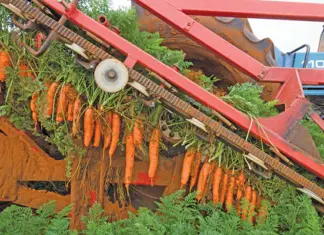
Family farm harvests 50t of carrots a day all year round
Bloemfontein farmer Johannes Griesel started producing carrots on 0,5ha. Today, he grows thousands of tons of this staple crop, harvesting it on every working day of the year.

Bean pests & soil diseases
One pest that every bean farmer knows is the African bollworm. This tends to appear sporadically, rather than building up its population gradually.
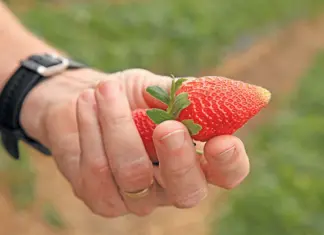
The importance of timing to strawberry production
Professional Horticultural Consulting, a nursery-turned-strawberry producer, has become one of South Africa’s leading strawberry exporters, thanks in part to its expertise at analysing plant and soil nutritional requirements. Dr Gavin Linsley-Noakes spoke to Glenneis Kriel about the business.

Polysulphate an ideal fertiliser for potatoes and other crops
Polysulphate is a new, multi-nutrient fertiliser that has been introduced to South Africa by ICL.

Protecting South Africa’s trees from the shot hole borer
The polyphagous shot hole borer threatens over 150 South African tree species. If left unchecked, it could cause huge damage to citrus and avocado orchards, amongst others. Prof Wijnand Swart and Dr Gert Marais, who are striving to find a solution to the problem, spoke to Sabrina Dean.

Make the most of the free market
Fresh produce growers often try to plan production to capitalise on high prices.

Growing garlic: soil types
Garlic (Allium sativum) can be grown in a wide range of soil types. What is more important is good fertility, as this crop has a modest root system.

Identifying and controlling sweet potato viruses
Sweet potatoes are an important commercial crop and contribute significantly to food security in many poorer South African households. Dr Julia Mulabisana and Dr Sunette Laurie of the Agricultural Research Council’s Vegetable and Ornamental Plants division explain how farmers can recognise and control the most serious viruses that affect this crop.

The intricacies of crop rotation
The purpose of crop rotation is to prevent the build-up of a pest or disease to which a crop is susceptible. But there is more to rotation than merely switching.

How to improve the oil yield of a sunflower crop
Dr Safiah Ma’Ali, a senior researcher at the Agricultural Research Council’s Grain Crops Institute, outlines a recent South Africa study demonstrating that farmers can significantly improve sunflower oil content and yield by adjusting planting dates.

Cashing in on the expanding plant extracts market
Planting alternative crops for the extracts or essential oil market can be profitable, but it’s no easy road to riches. Pietersarel de Bruyn of Herbs Aplenty spoke to Glenneis Kriel about the opportunities and difficulties of this rapidly growing agricultural niche.

Sugar cane farmer’s five steps to bring his soil back to life
The negative effects of more than 170 years of monocropping with sugar cane in South Africa are starting to appear. KwaZulu-Natal sugar cane farmer Deon Schröder explains what these are, why they should be changed, and how he is going about this on his farm.

How to start a vegetable farm
Starting a small vegetable farm on, say, 2ha, is generally easier than livestock farming. But the cost, and success, of the enterprise depends on the type of crop, the market and economies of scale.

The importance of planning
Planning goes hand in hand with record-keeping. You need to have the figures from past production in order to plan ahead effectively.

Large-scale composting turns waste into healthy soil
Over the years, composting guru Redge Jelliman has produced thousands of tons of compost as organic fertiliser for his crop farming enterprise in the Free State. Now semi-retired from farming, and a soil health consultant, he shared his experiences with Lloyd Phillips.

Growing garlic: Part 1
Garlic is a member of the onion (Allium) genus. Garlic is good for you, but is generally used more for the flavour it imparts to food than for health reasons. It has been grown for 5 000 years.

Vegetable farmer’s battle against the forces of nature
Eric Mauwane of Oneo Farms in Gauteng says that a crucial lesson he has learnt about sweet pepper production is the need to understand market demand and manage production practices accordingly. Siyanda Sishuba visited him to find out more about his operation.
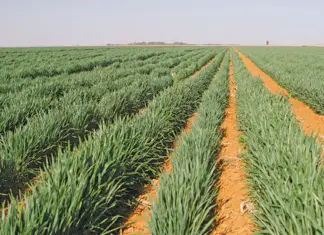
Late rainfall sees Free State farmers returning to wheat
When the rains came too late to plant maize at the end of 2018, Bultfontein farmers Anton and Heinrich Botha joined other producers in the region in planting dryland winter wheat instead. Sabrina Dean visited this father-and-son team to find out why they are so enthusiastic about the renewed interest in wheat.

How to control eelworm
Many vegetable crops are susceptible to root knot eelworm (Meloidogyne spp, also known as nematodes or roundworm), and beans are no exception.

Latest research: Macadamias need less water than you think!
With a looming water crisis and an expanding macadamia industry, the obvious question arises: where will the water for the new orchards come from? A recent groundbreaking study shows that farmers have been grossly over-irrigating and that dryland macadamias in high-rainfall areas actually provide better yields. Lindi Botha spoke to Theunis and Armand Smit, specialists in irrigation and optimal water usage.