
Latest articles
The crucial nitrogen-humus link
Humus contains approximately 10% nitrogen, and thus acts as a storage facility in the soil for this element.

Top female farmer makes neglected orchards bloom again
Marilyn Siegels was recently named the Western Cape’s best female commercial farmer after just two years in the industry. Along with her father, Edward van Niekerk, and sister, Yolande van Niekerk, she is rejuvenating a land restitution fruit farm.

Compañía de Variedades Vegetales Protegidas launches new campaign
The Compañía de Variedades Vegetales Protegidas A.I.E. (CVVP) launched a new logo and slogan: ‘Join us. Grow with us’.

Investing in lucerne pays off for western Free State farmer
Lucerne under irrigation provides Free State farmer Boeboe Louw with an ideal alternative to grain. Annelie Coleman visited him on his farm in the Wesselsbron district to find out how he manages production to gain the most from this valuable export crop.

Butternuts: know your market and maintain quality
Butternuts are a reasonably easy crop to grow, with few in soluble problems. The real challenge is to match the cultivar with the market. Mpumalanga-based producer Francois Steyn spoke to Lindi Botha about how he solved this problem.

Value adding and ecotourism boost small blackberry farm
The owner of a small farm has to find innovative ways to remain financially viable. Natalie Turck of Wildebraam Berry Estate spoke to Glenneis Kriel about how she and her husband accomplish this.

Ensuring that seed is disease-free
Planting seed infected by a bacterial disease could lead to complete crop failure. Rather pay more for the seed, if necessary, to ensure that it is clean. Consider the extra cost as a form of insurance.

Insects: know your friends from your foes
Hannelene Badenhorst, a PhD candidate in entomology at the University of the Free State, explains the value of differentiating beneficial insects and other arthropods from harmful ones before resorting to blanket chemical control.

Using nitrogen as an accelerator
Of all the elements, nitrogen has the most profound effect on a crop, and this is why you need to use it wisely.

Earthworms to the rescue on degraded sugar cane land
With sugar cane being a perennial crop that is ploughed out and replanted only after a number of years, the soil in which it grows can suffer as a result of monocropping. KwaZulu-Natal sugar cane farmer Chloe Clegg has engaged earthworms to improve the health, productivity and sustainability of the soil on her family farm. Lloyd Phillips visited her operation near Harding.
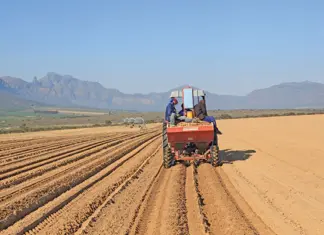
The long, hard road to profiting from potatoes
In 1998, at the age of 45, Frans Vlok left his job as head of Kynoch fertiliser services in the Western Cape to pursue his lifelong dream of farming full-time. He was joined in the business eight years later by his daughter, Monique Vlok, who told Glenneis Kriel of their struggle to succeed.

Planting and harvesting green beans
Visual appeal plays a major role in the breeding of beans. Darker green, slender, straight beans have become more popular of late.

Save money on chemicals
Farmers often ask for pest control programmes for their crops. They see them as a form of insurance. Is this justified? In a word, no!
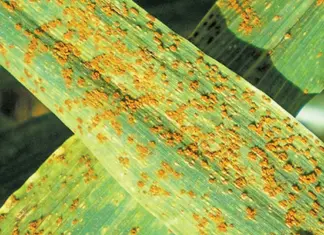
Wheat producers, treat fungicides with caution!
South African wheat producers should guard against over-application of fungicide, according to Dr Tarekegn Terefe, senior researcher at ARC-Small Grain, Bethlehem. The unnecessary use of fungicides can harm the environment and result in the emergence of fungicide-resistant strains. Farmers should also rotate between fungicides from different chemical groups, he writes.

Try the new Polysulphate fertiliser
Polysulphate® is a new, multi-nutrient fertiliser that has been introduced to South Africa by ICL Fertilizers.

Attention to detail ensures high-quality sweet peppers
While launching a new farming venture as a first-time farmer may seem daunting, Hannes Wolvaardt is proof that it can be done. He shared his tips on successful sweet pepper production in Limpopo with Lindi Botha.

Ammonia-based fertiliser explained
Nitrogen fertiliser comes in two formulations: ammonia-based and nitrate-based. To make the correct choice, you need to understand the difference.

Labour-intensive coffee farm prospers in Hazyview climate
With the call to increase job opportunities in agriculture, many farmers have been left scratching their heads over the economic implications. But the Schroeders of Mpumalanga have found a winning recipe in coffee production: its high labour component and profitability levels make the crop viable. Lindi Botha visited the mother-and-son team on their farm near Hazyview.

New sweeter Dragon Fruit cultivars
Dragon fruit’s peculiar appearance and exotic name are enough to make anyone take a second look. But beyond novelty appeal, the fruit holds considerable promise for South African producers. Lindi Botha visited Howard Blight at his nursery near Tzaneen to learn about this remarkable crop.
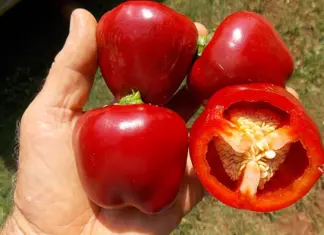
Pest management in peppers
Sweet peppers need adequate levels of potassium and nitrogen. Before planting, you should therefore have a soil analysis done and apply potassium accordingly.