

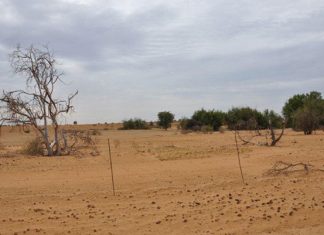
Drought now a R1,3 billion disaster
The local agriculture sector has emerged over the past two decades as a major asset in what has become an otherwise ailing economy.
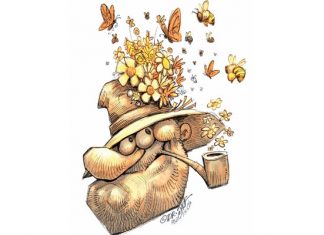
To feed the world, we have to protect the pollinators
Pollinators are responsible for the production of many crops grown for human consumption, but their numbers are declining. To ensure food security, world leaders and agriculture authorities must act now to save these crucial species, says the Food and Health Organization of the United Nations.
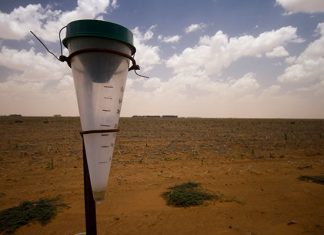
Poor governance worsens drought
I’m not a fan of apportioning blame where it isn’t well deserved. However, while the weather is (thankfully) not controlled by government, and we thus can’t blame it for the lack of rain, we can blame the extent of the impact the drought has had on South Africans on the almost complete breakdown of proper governance at municipal level.
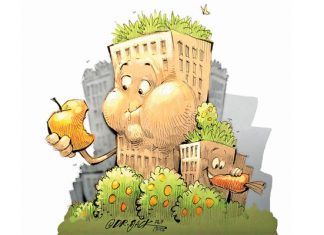
How urban agriculture can contribute to food security
Urban agriculture has a major role to play in providing healthy, affordable and accessible food to poor urban households in South Africa, according to Prof Juaneé Cilliers, chair of the Urban and Regional Planning Unit for Environmental Sciences and Management at North-West University.
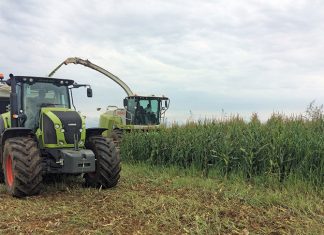
A turning point for tractor use in Africa
The latest tractor sales figures released by the South African Agricultural Machinery Association showed that year-to-date tractor sales were significantly down from last year, with the number of tractors sold up to the end of September having declined 22% to 3 919 from 5 034 sold in 2018.
What to do about farming job losses
All things considered, the farming sector in South Africa has not performed too poorly in terms of job losses since the turn of the century. According to Statistics South Africa, employment stood at just under one million in 2001, before declining to about 660 000 in 2012.
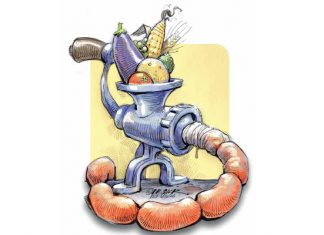
Fake meat: coming to a supermarket near you
Driven by shrinking arable land, a shift to the consumption of non-meat proteins, and several other factors, ersatz meat products are set to disrupt the lucrative global meat industry. According to management consultants AT Kearney, it is not a matter of if, but when, these products will appear on shelves.
Blame ANC for big farmers’ success
There were two highlights at the Transvaal Agricultural Union of South Africa’s (TAU SA) recent annual congress in Pretoria.

Soil erosion: a big problem with few solutions
Long-term food security is set to suffer if the scourge of soil erosion is not brought under control. Dan Pennock, a professor in soil science at the University of Saskatchewan in Canada, discusses the extent of the problem and the importance of good soil management.
SA’s biggest land reform mistake
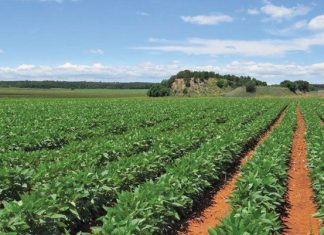
Perhaps the single biggest mistake South Africa has made with land reform since 1994 has been to entrust a government department with not only the transfer of land, but also the responsibility to provide support to land reform beneficiaries.
Africa’s quiet, but fierce, agri revolution
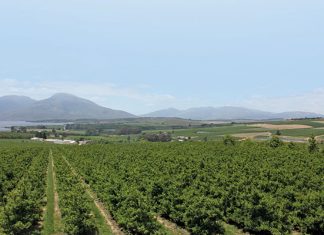
The well-known saying that change happens slowly at first, and then all at once, is probably a misquote from Ernest Hemingway’s 1926 novel, The Sun Also Rises, which reads: “How did you go bankrupt?” Bill asked. “Two ways,” Mike said. “Gradually and then suddenly.”
Towards climate-smart livestock farming
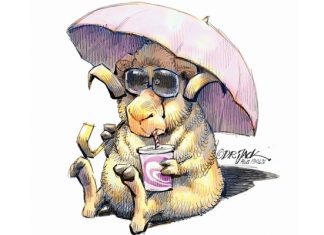
Natural selection is pivotal in adapting livestock farming to climate change in Africa and beyond, says Prof Charles T Kadzere of the Eastern Cape Department of Rural Development and Agrarian reform’s Dohne Agricultural Development Institute.
Mboweni’s economic plan says all the right things
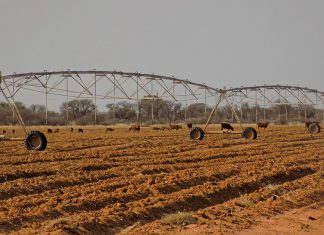
Independent power producers, an independent water regulator, formalisation of the taxi industry, and hints about a state-subsidised agricultural insurance scheme are just some of the suggestions put forward by National Treasury in a new economic plan for South Africa.
Stealing wool off the sheep’s back
Last year, Coldiretti, Italy’s largest agriculture industry association, released a statement announcing that in 2017, Italian organised crime generated a turnover of €21,8 billion (about R370 billion) from agriculture.
How technology is creating better jobs in agriculture
Increased use of technology and automation in agriculture carries with it the risk that certain farm jobs will become redundant. However, according to a new report published by the World Bank, ‘The Changing Nature of Work’, the use of certain digital technologies could make a meaningful contribution to improving employment opportunities in agriculture, especially in developing economies.
Climate change: let farmers lead the way
As details about South Africa’s economic mess becomes clearer, and government fails to respond with any clear plan to navigate the country out of debt, many conversations inevitably turn to a discussion about options for leaving South Africa, or, at the very least, sending money away to a safe harbour.
Grain hedging: lessons from the farmers who get it right
Since South African agriculture converted from control boards to the free market system in the 1990s, farmers have had to learn how to contend with extreme volatility on commodity markets. According to Silotrat’s Werner Rossouw, hedging is a valuable tool that maize farmers can use to reduce the risk of fluctuating prices. However, in order to benefit from the system, they must learn the rules of the game.
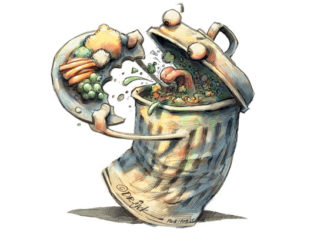
Big food waste while people go hungry
South Africa’s food poverty line, also known as the extreme poverty line, which refers to the amount of money that an individual will need to afford the minimum required daily energy intake, has increased from R547 (figures adjusted for inflation) in 2018 to R561 this year.
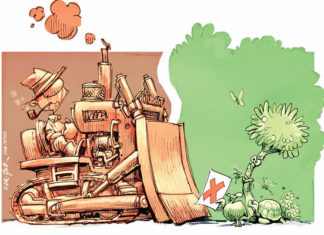
Consider the environment when expanding your farm
Obtaining environmental authorisation with the help of technical consultants prior to expanding farming operations on virgin soil will help farmers avoid prosecution that could lead to hefty fines or even jail time, writes James Brand, a natural resources and environment senior associate at law firm ENSafrica.
Getting South Africa ‘unstuck’ on land
Feeling stuck in life is awful. It is demoralising, makes you unproductive, leaves you feeling gloomy about the future, and the longer you remain stuck the more difficult it becomes to escape.
- ADVERTISEMENT -
- ADVERTISEMENT -
MUST READS

- ADVERTISEMENT -



