
Latest articles
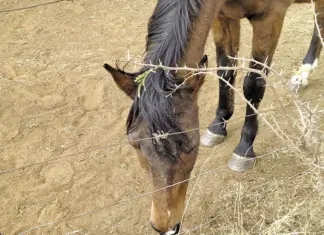
Is oat hay a suitable alternative for horses?
Oat hay can be cultivated throughout South Africa, but is it suitable forage for horses?

The birds flock in for the big race
The 20th SA Million Dollar Pigeon Race, due to be held early next year, is once again attracting top-rate entrants from around the world, says Thomas Smit.

Cattle farmers learn how to farm game
According to Riaan Crous, cattle simply cannot beat the income/ha earned from game.

Answers to your aquaculture questions
Certain questions come up repeatedly from people eager to become involved in warm-water aquaculture in Southern Africa. This seems the right platform to raise and answer a few of these.

Dropping the ‘dominance theory’
It is now considered old-fashioned and misguided, not to mention cruel, to use ‘dominance theory’ methods to train a horse, cautions Dr Mac.

Owning the value chain – Boran stud’s success story
Sandton-based accountant brothers, Simeon and Jarren Hurwitz, who also own a farming business near Davel, have established South Africa’s largest Boran stud. They also own their commercial beef business’s entire value chain.

Mouldy maize stover: it could prove a killer
Equine leukoencephalomalacia is a deadly disease sometimes found in mouldy maize stover, cautions Dr Mac.
Careful stud selection boosts commercial beef production
Johan and JM Steyn from Bothaville’s Vansia Red Angus stud, which commemorates its 40th anniversary this year, is on a mission to provide hardy, veld-adapted genetics. This strategy aims to ensure profitable and sustainable beef production in South Africa for years to come.

Managing water temperature in winter
The high altitude in parts of Southern Africa can play havoc with temperature control on the sub-continent’s tilapia farms. There are, however, measures that can be implemented to counter this.

Just how high is your horse?
An exact measurement is needed to certify competition horses, says Dr Mac.

An award-winning Merino sheep enterprise
Van Pletzen is a well-known and highly respected name in the SA Merino wool sheep industry. Gavin Isted visited the farm Sterkfontein near Jamestown to find out why.
Livestock Disease Trends Report – June
Winter is setting in and in many areas the nutritional value of grazing is poor. Animals are losing condition and immune levels are dropping.

Adding value sets Sarahsrivier’s dairy business apart
Milk production on Sarahsrivier Boerdery near Ashton in the Western Cape has undergone many changes since its cheese factory was established in 1994. To achieve organic certification, it moved away from a conventional pasture system and opted for Jersey cows.


Solar energy for aquaculture
Currently, relying on Eskom electricity for either business or pleasure, is a dangerous path to tread. Fish-rearing systems are no exception.
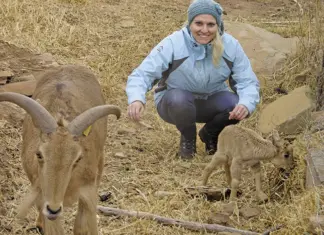
Barbary sheep: farming potential?
The much-maligned and hunted Barbary sheep may have a niche commercial value when farmed sustainably in a well-managed confined production environment. Shane Brody investigates.

50 years of Simmentaler: From Europe to Africa
The Southern African Simmentaler/Simbra Breeders’ Society was registered on 28 February 1964. To celebrate last year’s 50th anniversary, the society has published a comprehensive commemorative history of the breed in both South Africa and Namibia.

Heritability of temperament in horses
Is temperament mainly genetic or due to the environment? Before answering this question,
we should be clear about what is meant by ‘temperament’, says Dr Mac.

Winter feeding methods: a tale of two farms
There is more to feeding in winter than simply keeping cattle alive until summer. Mistakes in winter cattle feeding may take more than one season to rectify, and costs a farmer time, money and production. Gerhard Uys assesses how two farmers tackle the challenge differently.
Beneke Lofts
The multiple award-winning father-and-sons team at Beneke Lofts discusses their partnership
and champion racing pigeon lines with Thomas Smit.