

Caxton Magazines


Nene ‘over-optimistic’ about economic growth prospects – Stroebel
Presenting the 2015 budget in Parliament on 25 February, finance minister Nhlanhla Nene said that South Africa’s GDP growth forecast for 2015 has been reduced from 2,5% to 2%, but according to economists even a 2% growth rate might not be feasible.
DAFF will have to ‘pull up socks’ to meet Nene’s demands – Zokwana
Agriculture was singled out as one of the nine “strategic priorities” to be pursued this year when it comes to ensuring economic growth and job creation, according to finance minister Nhlanhla Nene in his 2015 budget speech.
Nene spells out greater role for Land Bank in agri transformation
Finance minister Nhlanhla Nene has great expectations for agriculture. In the 2015 budget speech delivered in Parliament today (25 February), the farming sector was one of nine he singled out as “strategic priorities” in a bid by government to speed up economic growth and employment creation.
De Jager to chair UN discussion
Dr Theo de Jager, head of the Pan African Farmers’ Organisation (Pafo), will be chairing a roundtable discussion at the UN’s Purchase for Progress (P4P) project’s annual meeting being held in Rome today (25 February).
Save water through plant nutrition
The need to save water is so urgent that it is no longer enough to fix leaks and prevent over-irrigation. Haifa SA agronomist Gerrit Burger says that saving water today involves manipulating its chemistry.
New malting barley varieties for the southern Cape
The South African Barley Breeding Institute promotes sustainable barley production. Francois Smit, barley breeder and plant pathologist at the institute, reports on two new varieties.
Efficient, solar-assisted macadamia processing
No macadamia processor in the world employs this method. In fact, as far as is known, no other processor of any kind uses stored solar energy on this scale, says Dorran Bungay of Agri-safari.
ASUF seeks urgent meeting with Zokwana
The Agri-Sector Unity Forum (ASUF) wants an urgent meeting to discuss “burning issues” with minister of agriculture Senzeni Zokwana.

Drought devastates crops in Free State
The current drought in the central and western parts of the summer grain production region in SA has had a devastating impact on crops in the Free State.
Preventing blackleg in cabbage
Blackleg is a fungal disease that can be highly destructive. Fortunately, although there are no resistant varieties, it can be managed or prevented if you know how it spreads.
Strong work ethic and passion for farming pays off
Maize and sunflower producer from Senekal, John Dipale, ascribes his success to hard work and passion for agriculture. At 64, John works even harder than the young men on his farm, he tells Annelie Coleman.

A lucky escape for a VAT dodger
The taxpayer who didn’t pay his taxes yet got away with a reduced penalty.

Better days ahead for SA agriculture
In spite of serious problems facing the SA economy, agriculture can look forward to a good year in 2015.
Agri minister calls on farmers to engage with government
During a recent interview with Farmer’s Weekly, agriculture minister Senzeni Zokwana called on farmers to approach their unions and engage with government about the proposed 12 000 ha land ceiling.
Brucellosis underdiagnosed in South Africa – expert
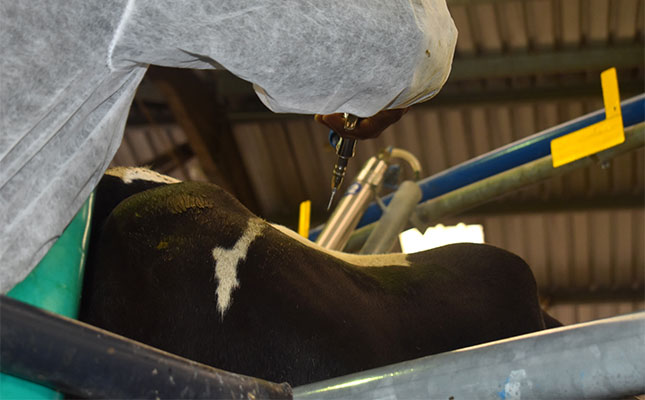
Contagious abortion (CA), or brucellosis, caused by the bacteria Brucella abortus, is widespread in South Africa, infecting more than 10% of the dairy herd, according to Dr Jan du Preez of the MPO’s Dairy Technology Institute.
Mitigating risk to become a whole lot trickier
Scientists have been warning us that climate change will alter rainfall patterns. They say that dryland summer crops in central South Africa will be affected most by an increase in temperature and lower rainfall.

Mussels in beer
Raw mussels, straight off the rocks, were a staple of the strandlopers, indigenous South Africans from long ago. For those of us far from the strand, the nation’s supermarkets provide cleaned and shelled frozen mussels, just waiting for this recipe to convert them into a diner’s delight.
Agri minister responds to Farmer’s Weekly readers’ questions
During an interview with Farmer’s Weekly, agriculture minister Senzeni Zokwana responded to questions posted by our readers on the publication’s Facebook page.

Initiatives to alleviate poverty in rural areas
Extreme poverty is still rampant in South Africa’s rural communities, with traditional agricultural practices often unable to solve this problem. Biodiversity manager Greg Martindale explains to Lloyd Phillips how environmental and wildlife conservation can be a better alternative.
Fresh produce sector – looking forward
We’re into 2015. Time to haul out my crystal ball, give it a good shine and peer deep inside to see what lies in store for the year ahead.
- ADVERTISEMENT -
- ADVERTISEMENT -
MUST READS

- ADVERTISEMENT -



