
Latest articles
The financial implications of a family agribusiness transition
Handing a family agribusiness over to the next generation involves financial as well as personal decisions. And personal decisions with financial implications are the most difficult of all!

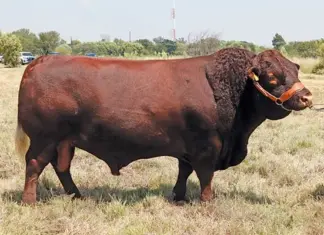
Brafords: the best of two breeds
The Braford was developed with improved efficiency and meat quality in mind. Today, the breed thrives on the veld and in feedlots. It is also renowned for its early maturity.
How to make the most of farmers’ days
You’re never too experienced to learn. Roelof Bezuidenhout explains why farmers’ days and other get-togethers are such a valuable resource.

Farming tips for winter
Many communal farmer households run cattle and have fruit trees to provide fresh produce for the family or as a business initiative. In winter, you need to pay special attention to both animals and plants, says Shane Brody.
Education is the key to succession preparedness
For many families, succession planning seems too treacherous a journey to undertake, so they simply opt not to set off on it. As a result, they forgo a critical opportunity to shape their future for the better.

Exploring the traits of the Angus
While the Aberdeen-Angus may have its roots in Scotland, it is thriving in South Africa due to its meat quality and maternal abilities, amongst other traits, according to the Angus Society of South Africa.

Seven secrets of success for small farmers
Farming is like running any other business: you need to be realistic and practical in how you go about it. Roelof Bezuidenhout lists some crucial pointers to help you out.
Protect your animals against foot-and-mouth disease
Communal farming groups need to institute quarantine and other biosecurity protocols, especially when it comes to new livestock entering their areas, says Shane Brody.

The benefits of conservation agriculture
Erosion and climate change have created a food insecurity time bomb for Africa. Palesa Motaung, a soil scientist working for Asset Research, and Themakholo Mathebula, a field officer with the Mahlatini Development Foundation, explained at a recent research symposium how conservation agriculture is helping smallholder farmers face these daunting challenges.

A basic checklist to keep sheep healthy and productive
The price of replacement livestock has increased dramatically in recent years, so it’s important to obtain the highest-possible lamb weaning rate. Shane Brody explains how to achieve this.

The proper fencing to keep sheep and goats safe
Sheep and goats present a unique challenge to many farmers. Like the rest of your animals, they need to be kept safe and penned in on your property, but their small size and mischievous nature make them difficult to keep in one place, says Dain Rakestraw, director of marketing and client services at Red Brand.

How clever kraaling can restore bare patches
A veld management strategy, based on an old animal husbandry practice, can benefit both communal farmers and holistic resource managers.

Using DNA sampling to deter stock thieves
South Africa’s livestock farmers need every bit of help they can get to counter stock theft, which has reached unprecedented heights. One weapon in the fight is genetic profiling. Susan Marais explores how this technology, which establishes livestock lineage, can help protect a farmer’s assets and bring thieves to book.

Legacy: the importance of family unity
Leading any business is tough. Leading a family business can be considerably more difficult. Family business leaders have to deal with relationships and emotions that simply are not present in an ordinary business set-up. And this is in addition to the normal stresses of running a company. Under these circumstances, establishing or continuing a legacy for generations to come can seem like an impossible dream, says Trevor Dickinson.

Want easier, better farming? Add humus and earthworms
The commercial vermicasts sold to farmers and gardeners are an excellent fertiliser, but very expensive. Earthworms give us this for free exactly where it is needed. They also provide many other services to farmers, says vegetable expert Bill Kerr.

Choose the right hydroponics system for your operation
There are a number of farming systems available to producers that involve the growing of plants in water. Magda du Toit looks at the fundamentals of these methods, as well as their advantages and drawbacks.

Why humidity is crucial in climate control
By manipulating environmental conditions, and paying equal attention to temperature and humidity, greenhouse growers can improve the quality of their crops and maximise yields.

Growing your own livestock feed
With a little planning and a lot of care, you can cultivate your own grazing pastures that will feed your livestock for a number of years. In this way, you’ll cut your costs and boost your profits, says Shane Brody.

Compost problems, and how to fix them
A poorly managed compost pile will take a long time to decompose. Here are the signs of trouble to look out for.
Know your cattle: Angus
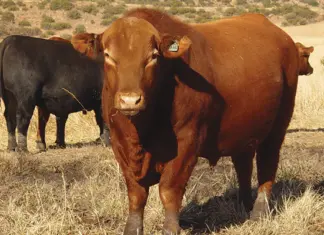
The Angus breed was first bred in Scotland in the 1700s. the high quality of its beef was important right from the start. the first importation of angus into South Africa was in 1895, when 10 cattle arrived on the farm of J Newburg in the Free State.