

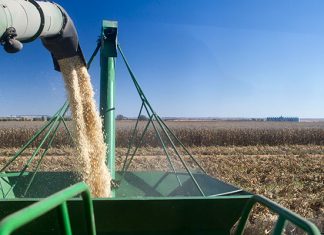
Food shortages unlikely during coronavirus outbreak
Fears about potential disruptions to global supply chains due to the novel coronavirus (COVID-19) outbreak have raised questions about whether South Africa could experience food shortages in the short to medium terms.
A world without farmers
For many of my generation, the coronavirus disease (COVID-19) pandemic, which is bringing everyday life to a grinding halt, will be one of the most enduring and disruptive experiences of our lifetime.

Legal evictions: landowners need to know their rights
Media reports and public debate often simplify and blur the sensitive issue of evictions. Typically, evictions are seen solely from the perspective of the landowner or from that of landless people, and there is a failure to distinguish between lawful and unlawful evictions. Annelize Crosby, policy head for land affairs at Agri SA, explains the various perspectives and the relevant laws.

The case for a national agri insurance plan
South African farmers are finding their businesses increasingly at risk due to the effects of climate change. Broad-based access to a state-supported agricultural insurance scheme would enhance food security in the country, writes Dr Sifiso Ntombela, a senior agricultural economist at the National Agricultural Marketing Council.
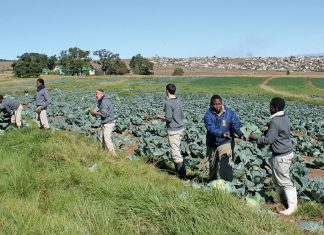
SA is holding the rest of Africa back
While still considered by many foreign investors as the ‘gateway into Africa’, South Africa’s dismal economic performance has been a drag on the rest of the continent, which, in 2019, was home to six of the world’s 10 fastest-growing economies, namely Rwanda, Ethiopia, Côte d’Ivoire, Ghana, Tanzania and Benin.
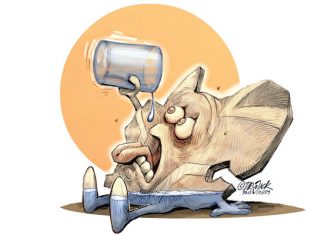
SA water crisis: Climate change not the only culprit
According to Mike Muller, a visiting adjunct professor at the University of the Witwatersrand’s Graduate School of Governance, low and unpredictable rainfall is not the only cause for South Africa’s water crisis. As a result, no single solution can address water challenges across the country.
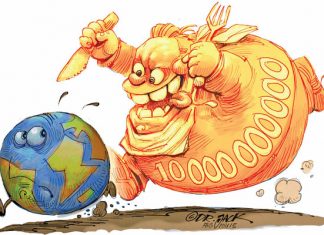
Challenges to feeding a growing population
Global agriculture has to increase its output dramatically to meet the needs of a rapidly growing human population. John Hassell, Koch Agronomic Services’ customer support manager for Europe, the Middle East and Africa, highlights the challenges and urgently required solutions for meeting this unprecedented demand.
The reality ahead of SONA 2020
Many South Africans will be watching President Cyril Ramaphosa deliver his State of the Nation Address (SONA) on 12 February, some hoping against hope and some with enthusiasm and renewed hope.
How much will you give to save SA?
For the last year or so, I have often thought about what occurred in South Korea in 1997 and 1998 when the country faced economic ruin due to the impact of the Asian economic crisis.
The real cost of progress
Over the past couple of decades, we have enjoyed plenty of benefits because of the progress made in farming. More people than ever before are now able to access sufficient food that can help them live longer and healthier lives.
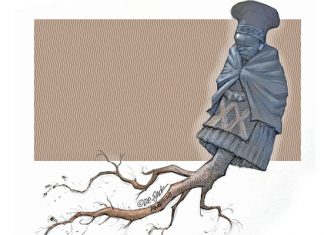
How traditional leaders undermine women’s land rights
In theory, South Africa has strong laws to protect the property ownership and inheritance rights of all women. However, a 2018 study conducted by Bongi Owusu for her master’s dissertation in social science at the University of KwaZulu-Natal found that these laws are often not implemented in rural Zulu-speaking communities. She explains how this prejudices widows in particular.
The writing’s on the (Twitter) wall
If you had hoped to start the year off on a positive note by doing something good for your health and well-being, giving up social media for January might have been a much better option than giving up drink. (This would also have been a much better option for the local wine industry, which reportedly suffered a 23% reduction in wine exports, as well as a decline in local sales.)
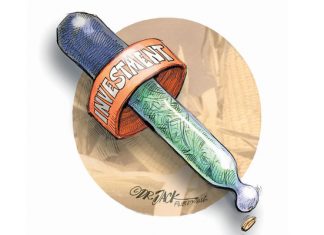
Low investment in research hampers agri growth
Dr Sifiso Ntombela, a trade economist at the National Agricultural Marketing Council, writes that as technological advances are being achieved at an ever-faster rate, countries that fail to invest sufficient resources in research and development risk falling behind and becoming uncompetitive.
Land reform: speak up now!
Two important pieces of draft legislation that will shape the way that land reform in South Africa will be implemented were published recently, and are currently open for public comment.
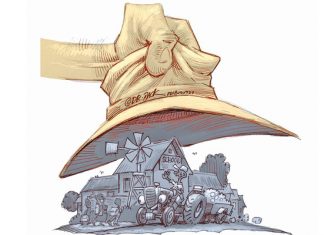
The ‘profit-for-purpose’ empowerment model
A new empowerment model championed by a Limpopo-based farming company, Schoonbee Landgoed, and Thebe Investment Corporation aims to establish long-term partnerships between white commercial farmers and black institutional investors while helping new-entrant farmers achieve financial viability, writes Gert Schoonbee.
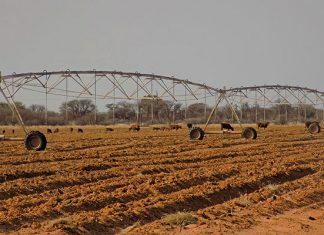
The secret to successful farming
We have come to the end of a year, as well as the end of a decade, that seems to have tested South African farmers unlike any other.
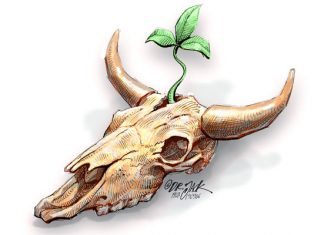
Agriculture a vital part of the solution to land degradation
The world’s drylands are becoming hotter and drier. Expanding commercial agriculture and investing in sustainable land management practices are two ways in which governmentscan mitigate this form of land degradation, according to the Intergovernmental Panel on Climate Change.
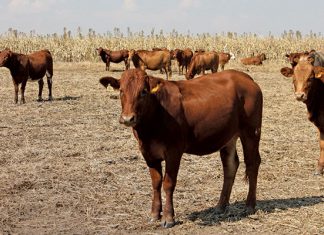
Time for government to do as it says
One of the things I find most frustrating about politics is that what politicians say and promise can differ almost completely from what they do and deliver, yet there are zero consequences.
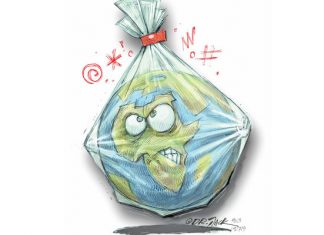
Plastic packaging should focus on recycling
There is ‘no silver bullet’ to address South Africa’s plastic conundrum, according to Lorren de Kock, project manager for the circular plastics economy at the Worldwide Fund for Nature – South Africa. However, the fruit industry can start addressing the issue by moving away from packaging that is aesthetically pleasing to recyclable and reusable packaging methods.

Agri commodity prices: what to expect over the next 10 years
The Agricultural Outlook 2019-2028, published by the Organisation for Economic Co-operation and Development and the UN’s Food and Agriculture Organization, provides a 10-year prospect for agricultural markets at the national, regional and global level. Prices for most agricultural commodities are expected to remain flat over the period as consumption of staple foods remains stagnant.
- ADVERTISEMENT -
- ADVERTISEMENT -
MUST READS

- ADVERTISEMENT -



