

A new old broom for agriculture
I was left with two overwhelming impressions after reading through Agriculture Minister Thoko Didiza’s Budget Vote speech for the Department of Agriculture, Land Reform and Rural Development that was delivered in Parliament recently.
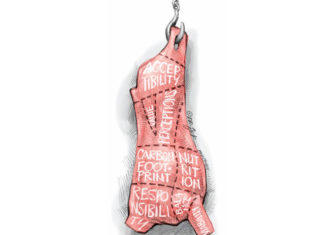
‘Green’ livestock production: the facts and the fictions
Global livestock production is increasingly under attack from certain societal groupings who claim that the sector is causing unnecessary environmental harm. Dr Jude Capper, of UK-based Livestock Sustainability Consultancy, explains how livestock farmers can change this perception.
Low prices: a plague for farmers
If I had to draw a single conclusion from the ‘Agricultural Outlook: 2019 to 2028’ published by the Organisation for Economic Co-operation and the Food and Agriculture Organization of the United Nations at the beginning of July, it would be that South African farmers will require much better assistance from government if they are to remain globally competitive.
How to turn Africa’s food fortunes around
Should African countries fail to increase food production and processing to become at least partly self-sufficient, it will be one of the greatest missed opportunities of the century.
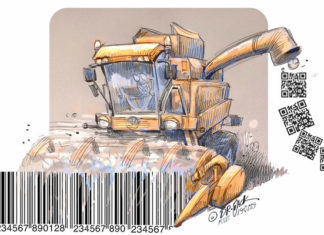
SA agri training needs drastic digital overhaul
Digital technologies and innovations have the potential to revolutionise the world’s food systems. This is why agricultural education and training, particularly in South Africa, needs to be revisited as a matter of urgency, writes Dr Kobus Laubscher, agricultural economist and fellow of the World Academy of Productivity Science.
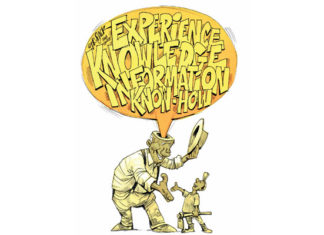
Commercial farmers’ vital role in rural development
Largely failed land reform initiatives are leading to increased tension and uncertainty in the agriculture sector as a whole. Veteran rural development expert Jimmy Lonsdale believes commercial farmers have a key role to play in turning this situation around.
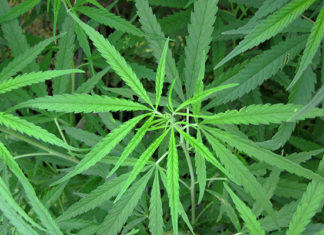
Cannabis industry is in need of legislation
Almost two years have passed since Farmer’s Weekly first published an article exploring the potential to establish a legal farming industry in South Africa for the production of medicinal cannabis.
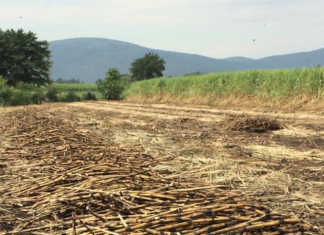
SA’s sugar industry is in a meltdown
It would not be fair to say that the dramatic unravelling of Tongaat Hulett these past weeks was caused solely by the larger crisis facing South Africa’s sugar industry.
On the verge of success: SA’s ‘municipal farmers’
A new class of emerging farmer working the land on municipal commonages have similarities to the ‘kulaks’, the highly productive, early 20th century entrepreneurial Russian farmers drawn from the peasantry. Researchers Doreen Atkinson and Mark Ingle explore this phenomenon and its implications for land reform.
Our sorry, calloused souls
Any person who has endured tragedy will know that bewildering feeling that settles in soon after the traumatic event when you realise that for other people, and the world around you, life simply moves on, and this only amplifies the tragedy for those who are touched by it.
A better agri trade deal for Africa
The Agribusiness Africa Conference will be hosted by Farmer’s Weekly for the third time this year in Johannesburg on 10 July.
Bees the victims of irresponsible pesticide use
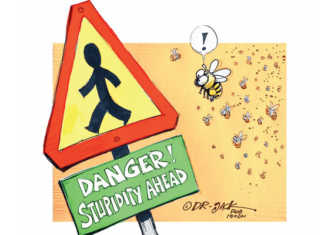
Honeybees are the world’s best-known pollinators of natural flora and a vast array of food and fibre crops. Yet they are frequently harmed by human activities, writes CropLife South Africa’s operations and stewardship manager, Dr Gerhard Verdoorn.

Integrated financing for smallholder farmers
Africa’s agricultural potential can only be realised if smallholders gain access to finance. But loans cannot be focused on just one aspect of the value chain at the expense of others. Antois van der Westhuizen, managing director of John Deere Financial, suggests ways to design integrated financing models for smallholders.
Who should you vote for in the general election on 8 May?
From halting agricultural imports to bringing agriculture back to schools and the gathering of a great many minds for a land CODESA, these proposals are all contained in the many promises made by political parties as to how they will ensure that agriculture thrives and land is shared fairly should they be voted into power.
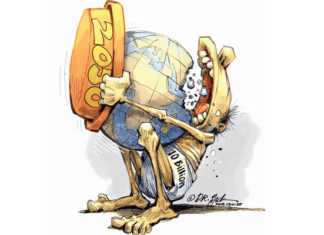
A sustainable approach to feeding the world by 2050
There is a large shortfall between the amount of food being produced in the world today and the quantity needed to feed an expected 10 billion people by 2050. A World Resources Institute report suggests it is possible to produce enough food sustainably to cater for the rapid increase in demand, but achieving this will require major changes to the way we grow and consume food.
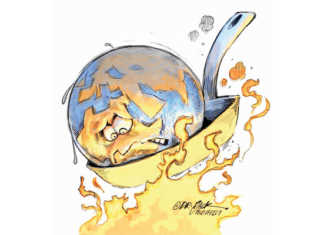
The difference half a degree of global warming can make
The ‘Global Warming of 1.5˚C’ report of the Intergovernmental Panel on Climate Change highlights several climate change impacts that could be avoided by limiting global warming to 1,5˚C, compared with 2˚C or more. For example, at 1,5˚C warming, the Arctic Ocean is likely to be free of sea ice in summer just once a century on average, whereas at 2°C global warming, the likelihood rises to once a decade.
Losing the food security fight
Despite significant improvements in agricultural production over the last two decades, food insecurity has been on the rise for the past three years.
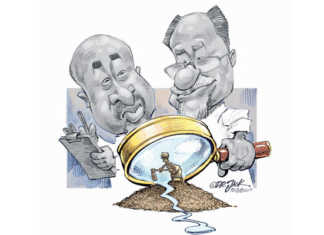
Why smallholders need to think like entrepreneurs
As irrigation schemes are found mostly in areas with high poverty levels, smallholder irrigation presents major opportunities for reducing rural poverty. However, smallholder irrigation is performing below expectations. A new study explores the reasons for this.

Agri training falling further behind
A widely held sentiment among farmers and agribusiness leaders is that South African agricultural colleges can no longer be trusted to produce appropriately trained, technically skilled professionals.

Study shows which policies succeed in developing agriculture
Research by the International Food Policy Research Institute and the International Institute for Sustainable Development analysed progress in agricultural development in 117 countries in Africa, Asia and Latin America to understand which policies have succeeded or failed. It then provided policy guidelines to help countries still at the subsidence farming stage to transform their agriculture sectors.
- ADVERTISEMENT -
- ADVERTISEMENT -
MUST READS

- ADVERTISEMENT -



