
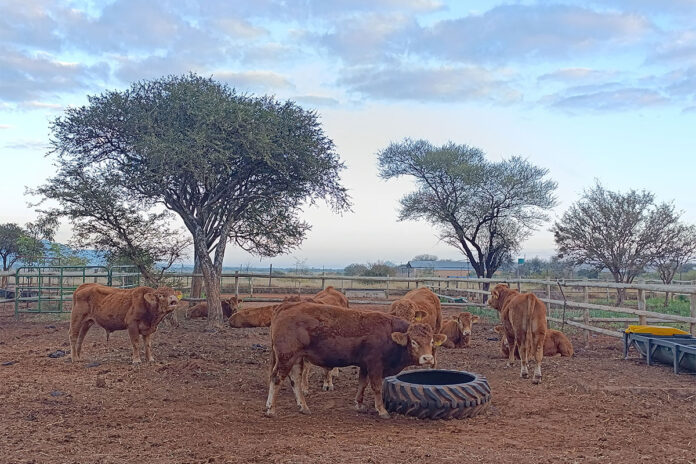
While Botswana farmers can resume cattle slaughtering, beef can currently only be marketed locally, leaving the domestic market unable to absorb the backlog accumulated after nearly six months of movement and slaughter restrictions.
Speaking to Farmer’s Weekly, RA Pretorius, chairperson of the Molopo Farmers’ Association (the association), said the domestic market only absorbs between 200 and 300 cattle a week, while producers are sitting with an estimated 60 000 slaughter-ready animals.
“If there are no further FMD outbreaks, Botswana will face a huge oversupply of beef that is likely to place significant downward pressure on cattle prices. The prices of competing proteins, such as pork and chicken, could also come under pressure because of this,” he explained.
Consequences of restrictions
The backlog is the result of producers being unable to market cattle because of the FMD slaughter and movement restrictions.
“We have had no form of income for about six months. We don’t know when the situation will be resolved, making it difficult to do any financial planning,” Pretorius said.
He added that many farmers who would normally market weaners had instead retained them and grown them out into oxen, tying up capital for much longer than usual while increasing grazing pressure.
“The situation has left limited grazing for the new crop of weaners that should already have been weaned. Although veld conditions are currently good following the recent rains, the prospect of an El Niño season is a major concern, because it is not ideal to carry such high stocking rates into a potentially dry year.”
He added that at some feedlots, cattle have already been on feed for around 270 days with no market outlet, while smaller farmers who rely on regular cattle sales can no longer afford to maintain boreholes or adequately support their families.
Government warned earlier
According to Pretorius, the association warned the government about many of these consequences in a letter to Minister of Lands and Agriculture Dr Edwin Dikoloti on 15 May.
It said prolonged movement restrictions had left many farming operations unable to trade, market, export, or move cattle in an economically sustainable manner, resulting in mounting debt, increasing feed costs, deteriorating grazing conditions, loss of breeding programmes, and growing pressure on farming businesses.
While recognising the importance of disease control, the association argued that producers should not be expected to shoulder the economic burden of prolonged restrictions without practical alternatives or financial support.
It proposed that the government establish an emergency compensation framework, publish a national FMD contingency and recovery plan, implement controlled movement protocols, consider voluntary vaccination programmes, expand access to export markets where scientifically supported veterinary protocols allow, and engage more closely with organised agriculture.
Pretorius said the association had not received a response from the ministry.
“The general sentiment among farmers is very negative, and with good reason. The feeling of helplessness, coupled with the fact that [Dikoloti] is not communicating directly with farmers’ associations or working with them, makes us even more concerned,” he added.
Industry plan warns of further losses
The association’s concerns are echoed in a National Crisis Offtake Plan prepared by Marshall Cattle Services, which argues that reopening slaughter alone is unlikely to resolve the marketing challenges producers face.
According to the document, feedlots are currently holding between 20 000 and 25 000 finished cattle that have already been fed beyond their normal finishing period, at a cost of about P1 200 (around R1 450) per animal per month.
It adds that a similar number, if not more, of veld-finished oxen are also waiting to enter the market, while in June, routine pregnancy testing released a considerable number of cull cows into the marketing pipeline.
The document argues that the loss of Botswana’s premium EU market is likely to reduce the Botswana Meat Commission’s benchmark price from P58/kg (R70/kg) to P41/kg (R50/kg).
Combined with limited slaughter capacity, this would flood the domestic market with slaughter-ready cattle, driving prices below economically sustainable levels while further increasing feed costs as animals remain in feedlots for longer.
It warns that the knock-on effect would be reduced demand for weaners and lower live weight prices, affecting producers throughout the beef value chain.
The report concludes that the industry faces significant wealth erosion unless urgent action is taken.
It recommends temporarily allowing the live export of slaughter-ready cattle to regional markets that meet Botswana’s veterinary requirements and fast-tracking the approval of additional export-accredited abattoirs to increase slaughter capacity, improve competition for cattle, and reduce pressure on the domestic market.