
Latest articles
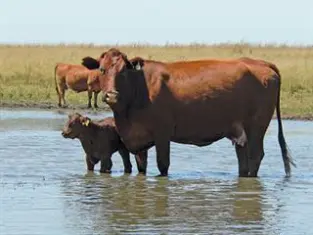
The way to profitable livestock production
Implementing precision farming practices in livestock farming is extremely important for ensuring long-term sustainability and profitability. In fact, it could make the difference between financial survival or ruin, SA Stud Book CEO Dr Pierre van Rooyen told Annelie Coleman.

The farmhouse of tomorrow?
There’s more to green building than merely sun and wind. Roelof Bezuidenhout investigates the latest option for comfortable, sustainable country living.

Sheep and goat productivity – progress report
An ongoing study shows that smallstock farmers are more successful on individually owned land than on commonage.

Biological crop protection
Pathogen resistance to conventional chemicals, political and ecological pressure and alternative methods of pest control has made biocontrols increasingly sought after.
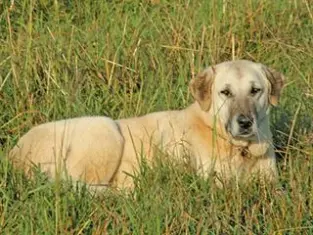
Lethal vs non-lethal control: the economic comparison
Guardian animals offer far better livestock protection than lethal methods, according to new research. They’re more effective, need less work, and are cheaper.

Cosmic probe sheds light on soil moisture
A proposed network of soil moisture probes in SA could have important consequences for food security and disaster mitigation.

Controlling the ‘famine weed’
Integrated management is needed to control parthenium, a member of the Asteraceae family and a noxious weed that threatens food security, biodiversity and human and animal health.
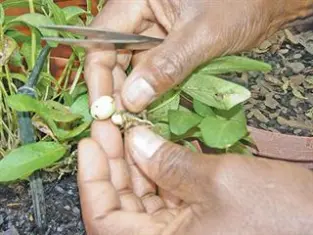
Digging up African treasure
Plant breeder Mohammed Mohammed, a PhD student at UKZN, is researching the Bambara groundnut, a high-protein legume.

Improving young pig performance
Dr Lia Hoving emphasises the significance of weight loss in sows during lactation. Her research shows that this can compromise a sow’s reproductive performance.

Allelopathy – test Results
In the second part of this two-part series,Dr Suzette Bezuidenhout discusses testing the allelopathic effect to control yellow nutsedge. Lloyd Phillips reports.

The allelopathic effect
Nature is truly remarkable. Plants employ strategies to reduce competition and keep other plants from growing too close. Crop scientist Dr Suzette Bezuidenhout says this has an application in weed control. Lloyd Phillips reports in part 1 of two parts.

Dung beetles to be used on New Zealand farms
A wave of South African dung beetles has arrived to start work on farms in New Zealand after a sojourn in Australia.

The benefits of Bt maize
Insect-resistant Bt maize is an important tool for the management of maize stem borers, according to Edson Ncube of the ARC-Grain Crops Institute (ARC-GCI) in Potchefstroom.

The fungal-bacterial ratio for soil health
Soil is a complex, integrated ecosystem. Microbiotic populations, essential to soil functioning, are indicators of soil health, says Dr Sarina Claassens.

How to stop plums from going brown
A plum can look good on the outside but be brown and inedible on the inside. Dr Mariana Jooste explains that the problem lies in the method of cold storage and can be solved.

Best practice for nitrogen applications
Farmers aiming for a better crop yield often apply nitrogen at higher than recommended rates. They may want to reconsider, once the hard costs and environmental risks have been assessed. Lindi van Rooyen reports.
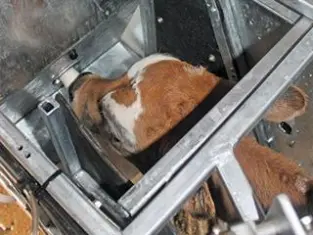
The magic of mechanising: calf feeders
A new calf feeding device designed by dairy farmer Gawie Willemse has the potential to streamline calf-rearing and improve conditions for farmers and their calves. Denene Erasmus reports.

Feral freshwater crayfish: ideal food
The Redclaw is found in abundance in SA’s rivers and provides a lucrative income, while taking pressure off our ocean’s stock. Lindi van Rooyen reports.

Solar energy use on the rise in SA
A number of agricultural businesses in the Western Cape are starting to reap the cost-saving benefits of investing in solar energy. Denene Erasmus reports.

A protein plus for peas
Peas are being touted as an important food source for livestock and human consumption, due to their high protein and essential amino acid content.