Latest articles
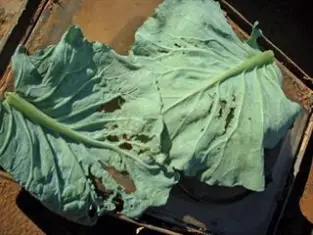
Mineral deficiencies in cabbages
It is very important to recognise and correct mineral deficiencies as soon as the first signs appear. Any delay is likely to have a profound influence on yield.

From a hot, dry, barren land to an irrigated farm
Dissie Kruger established his wheat, maize and soya bean farm on undeveloped land among the barren hills around Orania in the Northern Cape – and created an economically sustainable model farm.

Fiduciary responsibility
Act 12 of 1992, which regulates market agents, places strong emphasis on what a market agent may and may not do with a producer’s money.

Irrigating in extreme heat
The Lower Orange River, the country’s second-largest table grape-producing region, is known for its extreme summer temperatures during the peak harvesting season. Farmers have to plan carefully to optimise water usage without wasting this resource. Jaco Visser spoke to table grape and raisin producer Stefaans Zaaiman.

Be informed about Albugo (white blister)
White blister (Albugo candida) is also sometimes referred to as white rust.

ARC maize trials Part 2: eastern region
The ARC-Grain Crops Institute recently published its 2013/2014 National Maize Cultivar Trials results. Farmer’s Weekly presents the results for the best-yielding hybrids in South Africa’s eastern maize production region.
Politicians and the markets
We have to face facts: politics plays a disproportionate role in fresh produce markets. I use the word ‘disproportionate’ because what politics contributes in perceived benefits is far outweighed by the very real disasters it brings to markets. (I’m happy to supply examples on request.)
ARC maize trials Part 1: short-growing cultivars
The ARC-Grain Crops Institute recently published its 2013/2014 National Maize Cultivar Trials results as well as the multi-seasonal results dating back to 2008/2009. Farmer’s Weekly reports on the results for short-growing season hybrids.

Combating clubroot in cabbage
Clubroot is an extremely serious disease; if it gets into your lands, it can destroy the entire crop.
Price discovery at the markets
Many small-scale and other farmers seem to believe the only way to sell their fruit or vegetables is directly to a supermarket or wholesale buyer.
Venturing into viticulture on the Cape south coast
The Joubert family, who farm grain and livestock on the Cape south coast near Riversdale, produce their award-winning wine in an area not normally associated with viticulture.

Get to understand Sclerotinia
In my initial 12 years of cabbage farming I never came across Sclerotinia. I had encountered it in beans before, but never cabbage.
Insight into the fresh produce sector
Occasionally I deviate from the norm and try to give readers some insight into the wider world of fresh produce.

When no-till alone is not enough
No-till is now a well-established farming practice worldwide, with many benefits for soil health and crop yield. Bruce Shepherd feels that it should be combined with cover cropping.

Preventing blackleg in cabbage
Blackleg is a fungal disease that can be highly destructive. Fortunately, although there are no resistant varieties, it can be managed or prevented if you know how it spreads.

Fresh produce sector – looking forward
We’re into 2015. Time to haul out my crystal ball, give it a good shine and peer deep inside to see what lies in store for the year ahead.

Growing barley for beer – responsibly
The South African Breweries (SAB) has launched a project to encourage and support sustainable farming practices among barley farmers. This focuses primarily on water reduction and soil health, reports Denene Erasmus.
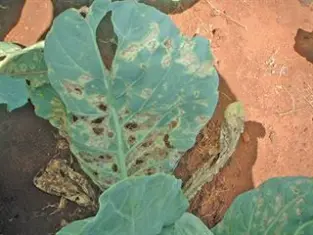
Cabbage disease: black rot
Black rot (Xanthomonas campestris) is the most important cabbage disease. Thriving in warm, wet conditions, it is most active at 25°C to 30°C and therefore more of a problem in late summer.
Work with market agents for best results
Some farmers think they can achieve good results only by sending their fruit or vegetables to one of the big markets.

Producing real vanilla on Réunion Island
Cultivating vanilla on Réunion Island – and elsewhere – is a drawn-out, specialised process done entirely by hand. Even the pollination is painstakingly carried out flower by flower. This explains why vanilla costs up to R5 600/kg. Lloyd Phillips visited an artisanal vanilla farm on Réunion Island.