

Making land reform farms work
Swimming against the tide of low investor confidence in South Africa's land reform processes, Futuregrowth Asset Management has created a R3 billion agri fund, and believes it has a model for investing in failed farms. Fund manager James Howard explained how it works to Sean Christie.
Getting practical about agricultural development
Amadlelo Agri (Pty) Ltd, an empowerment company driven by the expertise of 70 dairy farmers from the Eastern Cape and KZN, has attracted much attention for establishing commercially viable dairy projects in the former Ciskei - one of the few examples of truly viable agricultural development in the country.
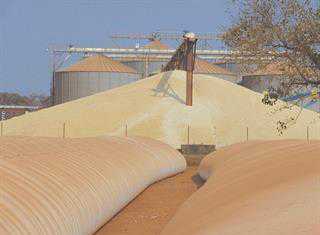
Eagle’s view of development in Africa
Known as an 'economic spy', Africa Project Access consultant Paul Runge has an eagle's view of development in Africa.He shared some of his insights with Robyn Joubert at the Africa Investor Agribusiness Investment Summit in Durban on 31 August.
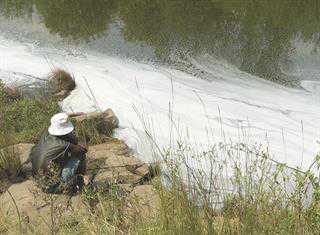
Water crisis warriors
Government's attitude towards our water crisis seems to be changing from denial to tentative action. This is largely thanks to the activism of a few determined men and women. Sean Christie spoke to three of them and found that each has learned unique lessons from agriculture that can help solve the current water crisis.
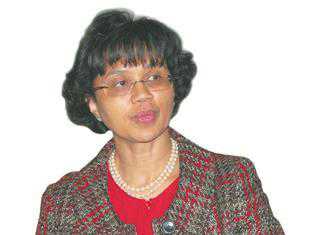
‘Overhaul needed, not an oil change’
After describing her communications department as “incapable of writing a letter”, agriculture minister Tina Joemat-Pettersson has hired the services of slick corporate propagandist Rams Mabote.
New broom for Eastern Cape agriculture
Agri Eastern Cape supports sustainable and responsibly executed land reform measures. It accepts that attempts at land reform by previous governments have, almost without exception, been unsuccessful, with a disastrous impact on individuals and communities.
Why land reform MUST succeed
Richard Tate, a former top farmer and leader in Zimbabwean farming circles,says it’s time for South African consumers and business people to realise that failed land reform will seriously affect the whole economy. Roelof Bezuidenhout spoke to him.
Changing commercial farmers’ public image
The views and expectations of South Africa’s farmers are being misrepresented by some groups and, all too often, the media. KwaZulu-Natal Agricultural Union (Kwanalu) president Robin Barnsley says the commercial farming community must set about marketing the truth about themselves. He spoke to Lloyd Phillips.
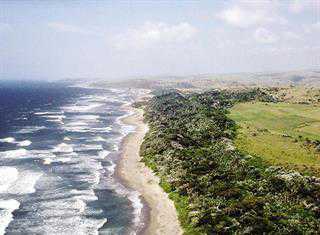
Protecting a meaningful way of life
Nobuntu Mazeka is an organic subsistence farmer and a staunch defender of her community’s way of life. But living in the vicinity of the proposed mine at Xolobeni, she finds herself up against two exceedingly tough opponents, an Australian mining company, and her very own government. Robyn Joubert visited her.
Not all bad:The political environment for agriculture in South Africa
Many concerns, such as immigration and unemployment, affect the environment in which the ANC will have to make critical choices. But, speaking at the 2010 Agricultural Business Chamber Congress, emeritus professor of political science Willie Breytenbach said there are still reasons to stay positive and opportunities for constructive contributions by agriculture. One such opportunity will be the Green Paper on land reform.
Certify your cows free-range
Father and son team Allan and Kevin Penderis from the Natal Midlands have developed the first legitimate, independent certification for free-range dairy in South Africa. Kevin tells Robyn Joubert that it couldn’t have come at a better time.
Transkei maize no easy task
In 2007 the Eastern Cape government established Asgisa Eastern Cape Pty Ltd to get rural development in the province off the ground. The main focus being large-scale maize production in the former Transkei. Now, after their first harvest, Mike Burgess asked Asgisa Eastern Cape CEO Simpiwe Somdyala how the project has fared, and discovers that it often tends to be a mixed bag of success.
Surviving agriculture in Zimbabwe
Deon Theron, vice president of the Commercial Farmers' Union (CFU) in Zimbabwe, was in Johannesburg for the recent emergency Southern African Development Community (SADC) summit. Rudi Massyn was there and caught up with him to discuss the neglect of commercial farmers in Zimbabwe.
Why invest in co-ops?
Jannie Mouton, investment maverick and CEO of Zeder Investment, started investing in agribusinesses in the early 1990s, when IT technology was all the buzz. Amidst much scepticism, Zeder is today established on the investment portfolio map, turning old co-ops profitable by investing in agribusinesses such as KWV and Kaap Agri.
Purchase is the new CEO of ABC
Markets are business, and globalisation is opening up markets to agribusiness. This is one of many reasons why Dr John Purchase is excited to be the new CEO of the Agricultural Business Chamber (ABC). As former CEO of Grain SA, he also understands the synergistic relationship of farmers and agribusinesses. Susan Botes found out more about his vision for ABC.
BEE: the do’s, the don’ts and the maybe’s
The five-year process of drafting the AgriBEE Charter is nearing completion and it could be finalised and gazetted in the next three months. Wilma den Hartigh asked Tobias Doyer, CEO of the Agricultural Business Chamber, to clarify a few uncertainties about BEE in agriculture and explain how farmers can make it work for them.
A jumpstart for sector productivity
Between 2004 and 2005, agriculture's real output grew at 4,1%, although employed labour was down by 10,9%. The National Productivity Institute (NPI) wants to develop a culture of productivity, and plans 39 turnaround solutions for 2007, impacting on more than 9 000 jobs. NPI's corporate services executive Bongani Coka spoke to Cornelia du Plooy
SA BIOFUEL INDUSTRY: do we have what it takes?
Maize farmers hope to sell their surpluses to the biofuel industry. A study has shown SA's maize belt in North West and the Free State is an ideal location for biofuel plants, because it provides a secure feedstock supply in the vicinity of feedlots and fuel refineries.
Climate change will crush Western Cape crops
The debate around whether global warming exists is well and truly over, says Dr Stephanie Midgley, a leading scientist in the field of climate change at the University of Stellenbosch. Her most recent research shows that climate change is already having a significant effect on agriculture in the Western Cape - the SA region that scientists predict will be hardest hit by rising temperatures and decreasing rainfall. Anneliese King reports.
The ARC looks to the future
Seven months after taking over as head of the Agricultural Research Council (ARC), Dr Shadrack Moephuli, chief executive officer, has many plans for the council, its shareholders and the country's farming community. Farmer's Weekly put to him some of the questions many have been longing to ask. Cornelia du Plooy reports.
- ADVERTISEMENT -
- ADVERTISEMENT -
MUST READS

- ADVERTISEMENT -