

Latest articles

‘Payment exchange’ – a good idea, in part
I heard a new proposal recently from a distinguished ‘market man’ whose opinion I rate highly.
Serious about seed potatoes
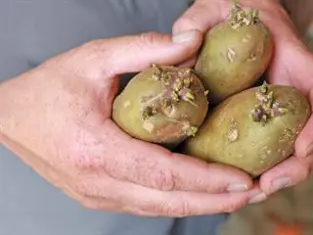
CEO of Agrivan Farming in North West, Werner du Plessis, spoke to Gerhard Uys about farming seed potatoes and how his business has remained at the top of its game for over 25 years.

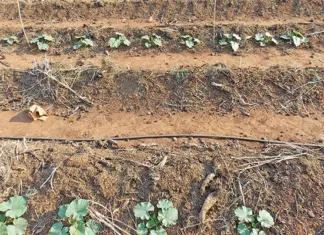
No-till vegetables: how to grow them
No-till vegetable production is not practical for everyone and is more suited to the small-scale organic farmer.
Well-deserved award for Project Rebirth
Last week, I wrote about the 70th birthday celebrations of the Institute of Market Agents of South Africa (Imasa) and predicted that it would be ‘an affair to remember’.

Imasa turns 70
I recently was in Bloemfontein with the Institute of Market Agents of South Africa (Imasa) to celebrate its 70th birthday.

The role of earthworms in boosting soil quality
Of all soil organisms, earthworms can be by far the largest component by weight. Their benefits are generally insufficiently appreciated by farmers.
Beating the drought with conservation farming
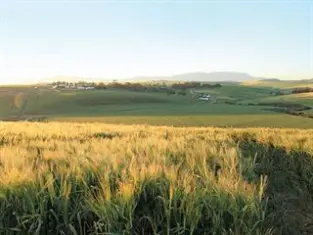
A farmer can significantly reduce climate-associated risk with conservation farming practices. Western Cape farmer, Michael Dippenaar, shares his journey with Glenneis Kriel.
Why can’t the markets do the same?
Last week, I wrote about the impressive new markets being established in Namibia.

Nematodes: not all bad
It may surprise many farmers that not all nematodes (eelworms) are harmful to crops.

Rootstocks for the future
While Kakamas seedlings and Marianne are old favourites amongst stone fruit producers, new higher-producing rootstocks are becoming available. Dr Piet Stassen shared his findings
with growers at an information day near Robertson.
Namibia plans ahead
As I write this, I’m midway through a two-week training programme at the Ongwediva Fresh Produce Business Hub (OFPBH) in the north of Namibia, en route to Angola.
The benefits of mycorrhiza
The name ‘mycorrhiza’ (a combination of two Greek words meaning ‘fungus’ and ‘roots’) is unlikely to ring a bell with most farmers as its use has been promoted only recently.
Adding canola pays off for Overberg wine farmer
Raka Wines started diversifying its farming business three years ago by introducing winter grains and canola. This was so successful that the enterprise’s canola crop achieved the highest yield in the 2014 Southern Cape canola competition.
Market prices – up, down & up again
As I write, the markets are awash with produce. Prices have tumbled in many cases. Our mild winter has resulted in extended production periods for some crops, which has meant an oversupply.
The value of bacteria
Each group of organisms living in the soil has a different function and these organisims’ interaction with one another should create a balance that benefits plants.

Natural crop resilience to pests, diseases and environmental challenges
The use of chemicals to control pests and diseases in crops is bad news for the environment and the farmer’s bottomline. During a visit early this year to South Africa, Graeme Sait, CEO of Nutri-Tech Solutions in Australia, offered cheaper, natural alternatives.
It’s all about attitude
Fresh produce markets and their agents face a multitude of challenges and it’s inevitable that comment on the market floor will be vociferous.
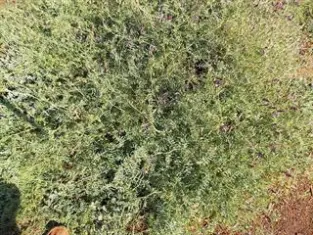
Fungi and bacteria: the balancing act
Healthy ‘living’ soil can contain up to 15t/ha of bacteria, actinomycetes, protozoa, algae, fungi, nematodes, earthworms and arthropods.