

Latest articles

Product prices, input costs, and what to do about them
Farming is not for the faint-hearted. In addition to adverse climatic conditions, farmers have to cope with rising costs and stagnant product prices.
SA’s wildlife industry: the bubble that burst
The spectacular growth and subsequent drop in game prices demonstrate all the properties of an economic ‘bubble’.
Living in, and surviving, disruptive times
Never mind dwindling terms of trade. Our farmers also have to deal with a steady flow of disrupters. But good management can lead to better profits.

Even better gear from John Deere
John Deere recently announced improvements and additions to the specifications of some of its tractors and combines.
Why size really does matter
The facts and figures are clear. If you want to stay in business as a farmer, it is essential to steadily expand your operation.
To be sustainable, innovate. But not too soon!
The correct use of new technology can help a farmer become more profitable. However, being an early adopter of new technology holds risks that must be managed.

Learning from Israel’s water woes
During a recent tour to farms and the AgriTech Israel exhibition in Israel, it was revealed that despite the large volumes of water used during irrigation, South Africa could learn from that country about managing water infrastructure.

Isuzu in the spotlight
General Motors has pulled out of South Africa, but Isuzu, with its legendary KB bakkies, is here to stay.

Prepare to sell much more fruit and veg online
The marketplace for fresh fruit and vegetables is becoming increasingly globalised and interconnected. This affects the way that fresh produce is transported from its origin to its destination. The Fruit Logistica Trend Report 2018 looks at ways in which the supply chain must evolve to meet these challenges. Walton Golightly summarises the report’s findings.
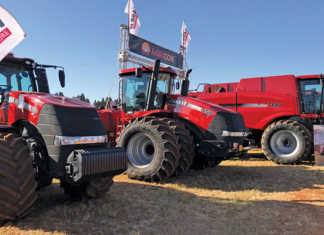
Highlights of Zimbabwe’s ADMA Agrishow
Case IH played a starring role in the fourth annual ADMA Agrishow.

Use nitrogen efficiently to save cash and the environment
Nitrogen may be an essential element in crop production, but its inefficient use wastes farmers’ money as well as contributing to potentially deadly pollution of the environment. Dr Alan Manson, a soil scientist with the KwaZulu-Natal Department of Agriculture and Rural Development, explains this subject further.
DIY security: the only way to ensure your safety
Farmers living under the constant threat of farm attacks do not have the luxury of discussing this issue in academic terms.
No transformation without training
Without proper education and mentorship, transformation projects are doomed to fail.
Biological farming: a great idea, but can you afford it?
Sustainable farming means taking care of the environment and making a profit. Farmers should be highly suspicious of advice that does not take this into account.
Eskom is pricing itself out of the market
South Africa’s power utility, under enormous financial pressure, is desperately increasing tariffs to survive. This, in turn, is worsening its woes as more and more consumers switch off.
Farmers, forget about price!
Farmers have little or no control over producer prices. They should therefore focus on production and marketing efficiencies.
Farming without government support
In many countries, farmers are supported in various ways by government. South Africa’s real competition lies not in these largely inefficient farming systems, but in other unsubsidised countries such as Australia, Chile and New Zealand.
How income and price changes affect demand
Higher income leads to increased demand for agricultural products. But in South Africa, demand growth is currently limited by the sharp increase in non-food prices due to lower supply.
Welcome to the brave new DIY future
The future will probably be one where farmers, individually and through their organisations, will have to fend for themselves.
What about collusion in the retail sector?
Large supermarket chains hold more than 70% of the market share nationally. They thus have the buying power to control pricing and trading conditions, yet they’re ignored by the Competition Commission.