

Denene Erasmus

Denene hails from a sugar cane farm in Pongola, KwaZulu-Natal, but after school she relocated to the Cape Winelands to study, for many years, at the University of Stellenbosch. She worked as a journalist for Farmer’s Weekly since 2009 and in 2015 moved to Johannesburg as Deputy editor for the magazine. In 2016 she was appointed editor, and at the end of 2021, she stepped down from her position to pursue her journalism career.
The secret to successful farming
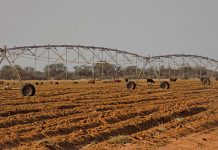
We have come to the end of a year, as well as the end of a decade, that seems to have tested South African farmers unlike any other.
Time for government to do as it says
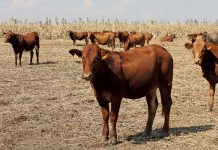
One of the things I find most frustrating about politics is that what politicians say and promise can differ almost completely from what they do and deliver, yet there are zero consequences.

Fendt’s beautiful beast wins big
By winning a platinum award in the world’s biggest international design competition, the Fendt IDEAL combine harvester has proved that it’s both beautiful and brawny.
Drought now a R1,3 billion disaster
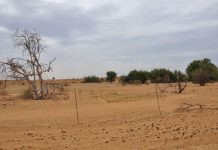
The local agriculture sector has emerged over the past two decades as a major asset in what has become an otherwise ailing economy.

Agri and land reform not immune to tightening of fiscal belt
Only passing reference was made to agriculture and land in the Medium-Term Budget Policy Statement (MTBPS), which was presented in Parliament on Wednesday by Minister of Finance Tito Mboweni.
Poor governance worsens drought
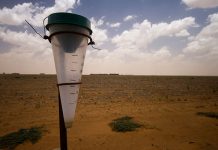
I’m not a fan of apportioning blame where it isn’t well deserved. However, while the weather is (thankfully) not controlled by government, and we thus can’t blame it for the lack of rain, we can blame the extent of the impact the drought has had on South Africans on the almost complete breakdown of proper governance at municipal level.
A turning point for tractor use in Africa
The latest tractor sales figures released by the South African Agricultural Machinery Association showed that year-to-date tractor sales were significantly down from last year, with the number of tractors sold up to the end of September having declined 22% to 3 919 from 5 034 sold in 2018.
What to do about farming job losses
All things considered, the farming sector in South Africa has not performed too poorly in terms of job losses since the turn of the century. According to Statistics South Africa, employment stood at just under one million in 2001, before declining to about 660 000 in 2012.
‘Crime and drought must not let farmers lose hope’ – Didiza
Safety and security on farms continues to be one of the main challenges that the South African farming sector has to grapple with, especially crimes such as stock theft and attacks on farmers and farmworkers.

Blame ANC for big farmers’ success
There were two highlights at the Transvaal Agricultural Union of South Africa’s (TAU SA) recent annual congress in Pretoria.
SA’s biggest land reform mistake
Perhaps the single biggest mistake South Africa has made with land reform since 1994 has been to entrust a government department with not only the transfer of land, but also the responsibility to provide support to land reform beneficiaries.
Africa’s quiet, but fierce, agri revolution
The well-known saying that change happens slowly at first, and then all at once, is probably a misquote from Ernest Hemingway’s 1926 novel, The Sun Also Rises, which reads: “How did you go bankrupt?” Bill asked. “Two ways,” Mike said. “Gradually and then suddenly.”
Mboweni’s economic plan says all the right things
Independent power producers, an independent water regulator, formalisation of the taxi industry, and hints about a state-subsidised agricultural insurance scheme are just some of the suggestions put forward by National Treasury in a new economic plan for South Africa.
Stealing wool off the sheep’s back
Last year, Coldiretti, Italy’s largest agriculture industry association, released a statement announcing that in 2017, Italian organised crime generated a turnover of €21,8 billion (about R370 billion) from agriculture.
Climate change: let farmers lead the way
As details about South Africa’s economic mess becomes clearer, and government fails to respond with any clear plan to navigate the country out of debt, many conversations inevitably turn to a discussion about options for leaving South Africa, or, at the very least, sending money away to a safe harbour.

Big food waste while people go hungry
South Africa’s food poverty line, also known as the extreme poverty line, which refers to the amount of money that an individual will need to afford the minimum required daily energy intake, has increased from R547 (figures adjusted for inflation) in 2018 to R561 this year.
Getting South Africa ‘unstuck’ on land
Feeling stuck in life is awful. It is demoralising, makes you unproductive, leaves you feeling gloomy about the future, and the longer you remain stuck the more difficult it becomes to escape.
Land panel report ‘takes discussion forward’
The final report by the Expert Advisory Panel on Land Reform and Agriculture, which was recently published for public comment and was intended to guide the future dialogue around land reform in South Africa, has not been met with overwhelming support from organisations representing commercial farmers and agribusinesses.
A new old broom for agriculture
I was left with two overwhelming impressions after reading through Agriculture Minister Thoko Didiza’s Budget Vote speech for the Department of Agriculture, Land Reform and Rural Development that was delivered in Parliament recently.
Low prices: a plague for farmers
If I had to draw a single conclusion from the ‘Agricultural Outlook: 2019 to 2028’ published by the Organisation for Economic Co-operation and the Food and Agriculture Organization of the United Nations at the beginning of July, it would be that South African farmers will require much better assistance from government if they are to remain globally competitive.
- ADVERTISEMENT -
- ADVERTISEMENT -
MUST READS

- ADVERTISEMENT -



